WELCOME TO THE DRAFT BOOK
Please note - this is designed to be read on a mobile screen, as in an e-book.
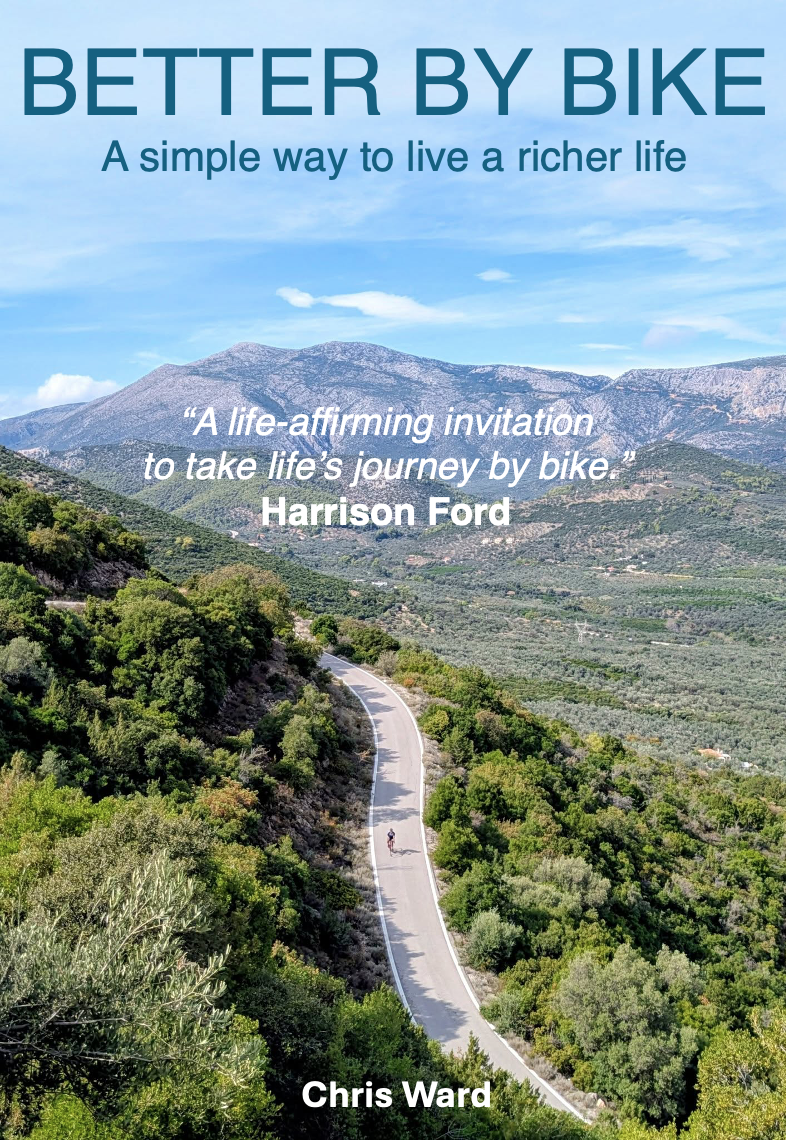
This is an almost final draft of my upcoming third book. This will be a small, cool book - filled with great photographs and inspiring text, wrapped in white space. It has been written to inspire anyone that riding just a bit more is not only possible, it can lead to a richer life - whether you have never cycled, simply commute, are a club member, or already bike-pack globally. It will make the perfect inspiring gift for and from the cyclists in your life.
In between my career as a director of global causes (Comic Relief, London 2012, UN Global Goals etc) I have been part of the growth in cycling - having written for cycling websites, cycled in over 85 countries and broken records on a bike. My life has been bigger and better because I ride and I have seen the same in many others.
This book is not about riding faster or further than anyone else, it is about what happens to your head, your body and your outlook on life when you spend some time moving, undistracted through the real world under your own power.
It is for both people who already cycle regularly and those who have not sat on a bike for a long time but suspect that getting back on one might just be a good thing.
The book has a unique structure - six sections based around the time the reader has available - from beginners at 30 minutes, through a few hours, a whole day, a few days, time to go abroad and time to see the world - with insider tips, inspiring people to follow and useful websites for each section.
For all enquiries.
Chris - chris@chrisward.cc / 0044 7932 746591
"Life is like riding a bicycle.
To keep your balance, you must keep moving."
Albert Einstein
I REMEMBER HOW IT MADE ME FEEL
LIKE IT WAS YESTERDAY…
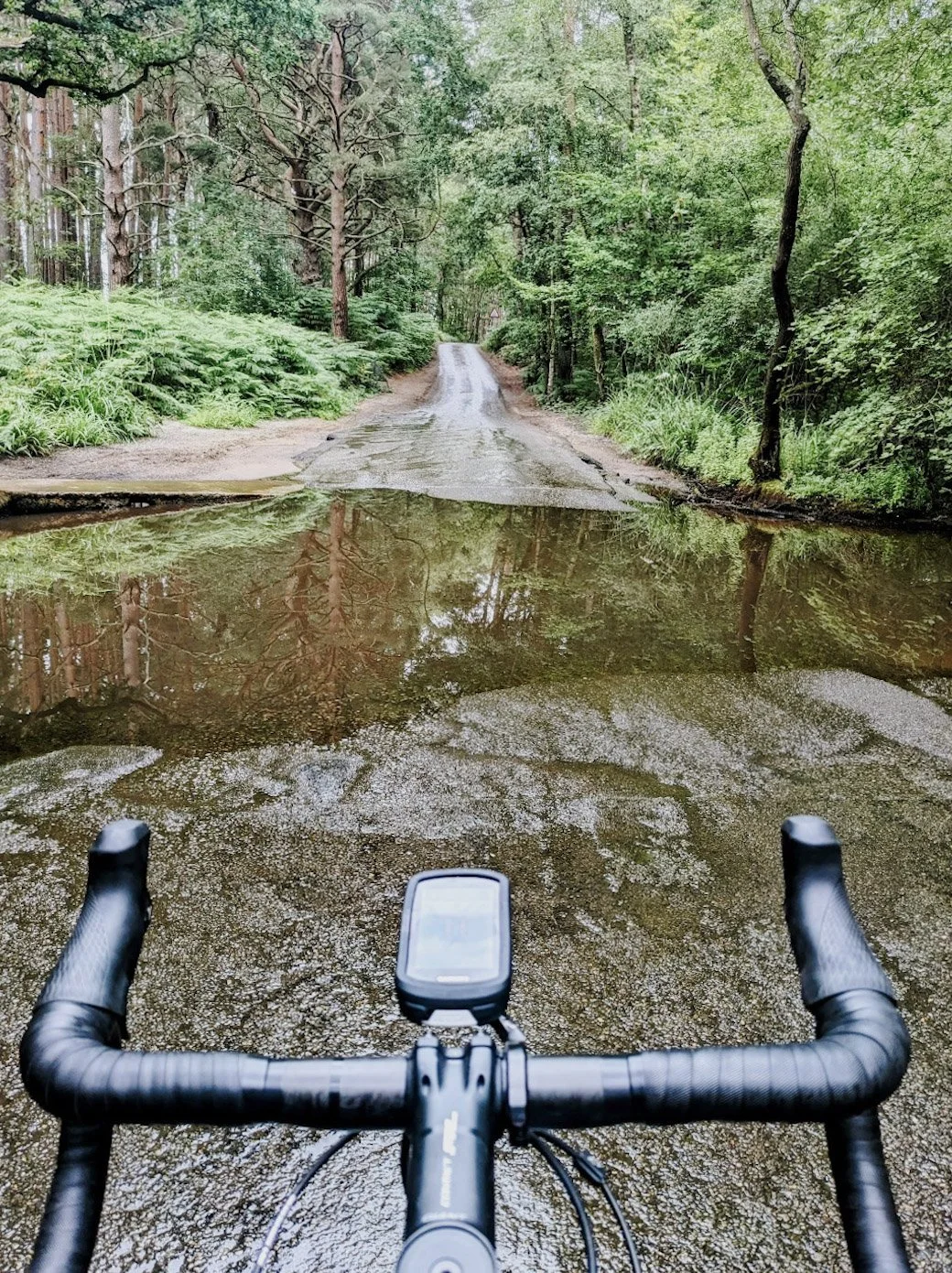
I was cycling home instead of taking my normal train – I needed some fresh air and headspace from the ever increasing demands at work.
I didn’t want to go straight home as I knew I would be carrying my stress through our front door with me, so I took the longer towpath.
The first puddle I went through was annoying; by the second, I had stopped dwelling on work, and by the third, I was starting to enjoy it. Getting muddy – laughing to myself, just having a little play.
I stopped at a pub I’ve never stopped at before for a pint and just sat there, just thinking how easy it was to get this simple feeling of relaxing freedom - I was choosing what I wanted to do, where and for how long!
As my worries shrank to the size I should always have seen them, my day started to feel a little bit better.
I started using my bike more often after that.
THIS IS NOT A CYCLING BOOK
This is a book about how we can make life grow a bit bigger and better using one of the simplest tools ever invented.
Think of this as your guide to rediscovering simple joy and freedom in life, which many of us remember enjoying before we lost it somewhere in our battle to survive and thrive in the modern adult world.
In some cities, cycling has, over recent years, developed some reputation for being serious, competitive and occasionally dangerous, but that image says far more about the way the bike industry has been trying to sell you expensive gear, than about the experience of cycling itself, as millions of people riding bikes to get places, for fun, to stay healthy, to clear their heads, to give themselves a bit of freedom or to see more of the world will tell you.
This book is not about riding faster or further than anyone else. It is about what happens to your head, your body and your outlook on life when you spend some time moving, undistracted through the real world under your own power.
It is for both people who already cycle regularly and those who have not sat on a bike for a long time but suspect that getting back on one might just be a good thing.
WHY WE NEED THIS NOW
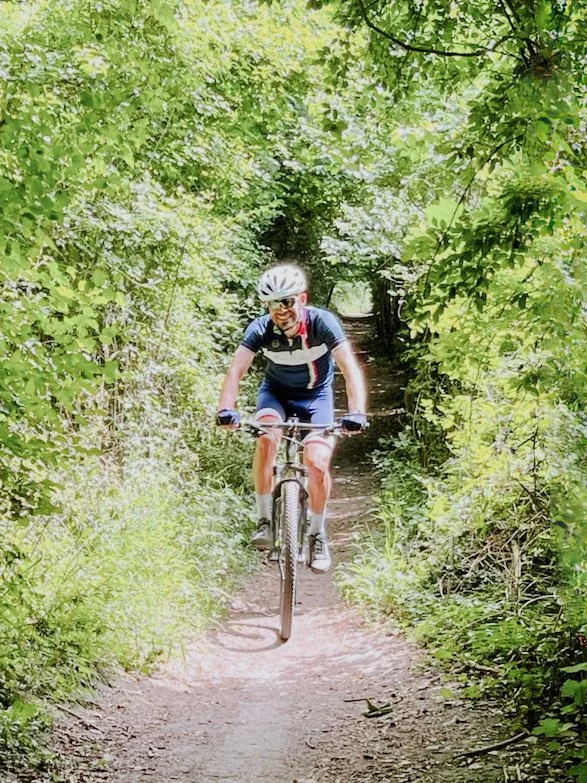
Most of us enter adult life believing our world will enlarge as we grow into it. We imagine exciting travel, new relationships, interesting work and the gradual discovery of new possibilities, places and experiences. For a while, that is exactly what happens; our lives do become genuinely larger, but then slowly and almost without noticing, our world stops getting much bigger.
Instead, the constraints on us multiply as careers, families and mortgages appear. Days become organised around the things we must do, rather than the things we used to enjoy doing.
Life now means that an extraordinary amount of our time is spent, literally, without leaving the same chair – work, relationships, food, and entertainment appear so conveniently on screens right in front of our faces. Entire days can pass where our minds travel everywhere except the physical world outside our own front door.
If life really is a journey, this convenience is enabling us to spend all of it in the outside lane of a fast, straight-line highway.
As this screen-based world constantly expands, our physical world is shrinking further and further. We spend more time living in our own heads, observing life rather than participating in it. We read about places rather than visit them. We communicate constantly still, but by typing and reading rather than through the richness of face-to-face encounters. Work follows us into every room of our home, as slowly the only way we get to experience the life we want to live is vicariously through, what we consider, our few adventurous friends.
We are having fewer experiences, and life is becoming less rich. Most of us know it, we feel it - our days lack moments of spontaneity, serendipity and discovery. Of simple fun and play, even.
We are lacking the natural human experiences of doing things outside, in the real world, and, critically, also without distraction. Moments when our minds and bodies are so engrossed in what we are doing that we regain headspace, as the problems that have been filling it become less important, and that recovered space allows us to enjoy living right in that present moment.
These are the moments that make us happier, more relaxed and nicer people to be around - because life regains its proper priorities and proportion.
Many of us are longing to spend more of our time in the analogue world.
And that is why this book exists now.
To inspire you to that by using a bike you can regain those moment.
What many of us need is simply a practical excuse to regain some time in the physical world, with something that moves our body and stops our mind from wandering to stressful distractions.
For reasons that will be both obvious and sometimes surprising, a bicycle turns out to be the simplest way of doing exactly that.
WHY A BIKE
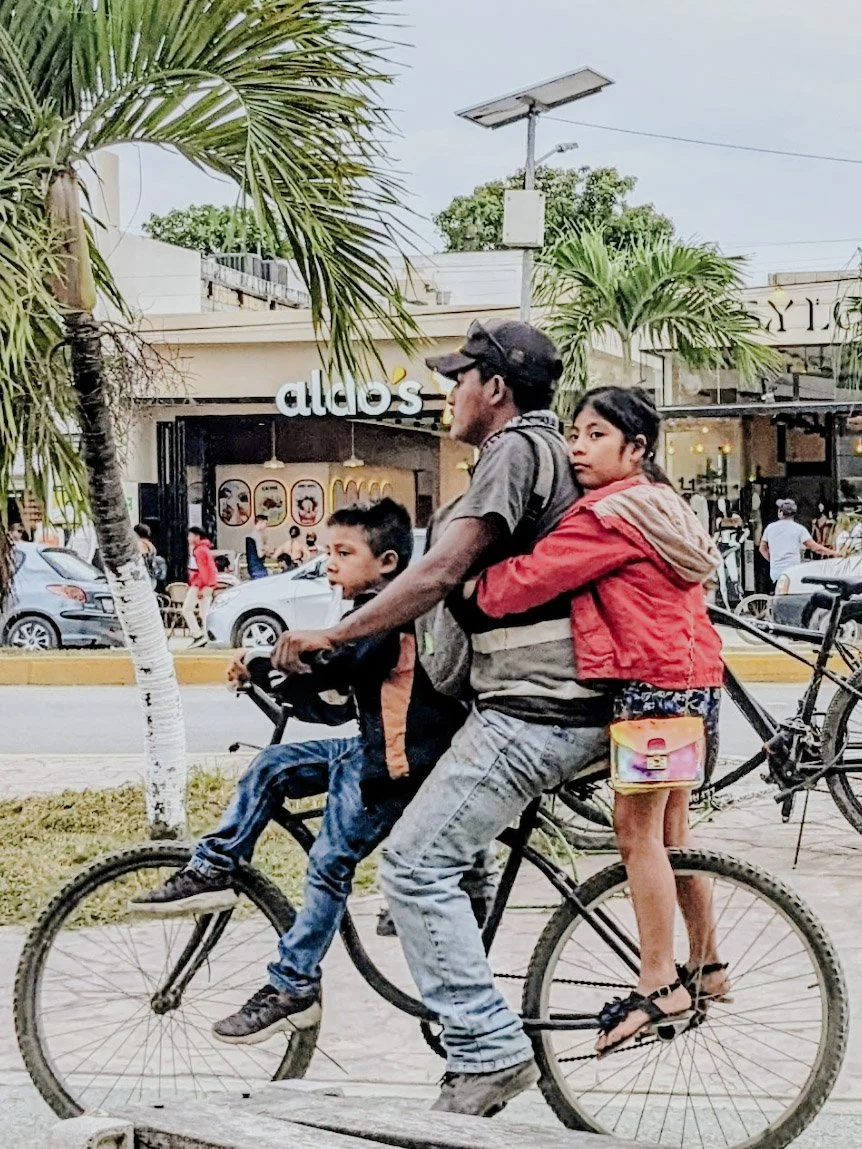
Almost everyone who has ever ridden a bicycle knows the feeling...
You leave the house and begin pedalling, your body starts moving, and your mind follows. Within a few minutes, any noise in your head begins to reduce as you focus on navigating the physical world around you.
Within half an hour, you have have stopped worrying about what was on your screen, your body feels a little bit better and your world has become a little bit bigger.
This small transformation is one of the reasons bicycles have remained so popular for more than a century. Long before cycling became associated with racing teams, Lycra, and an aesthetic built around speed and suffering, the bicycle was simply a practical machine that allowed ordinary people to travel farther or faster than they could on foot, stay healthy, and connect with each other and with places they would otherwise never have seen. It made movement cheap, independent and possible for almost anyone.
Across huge areas of Europe, Asia and Africa, millions of people still cycle to work, to school, to markets, to meet friends and family, to travel and occasionally to race each other – for fun! It is not treated as a sport or a way of identifying yourself. It is simply a cheap, reliable way of moving around the world.
Whether they are wearing Lycra or not, tens of millions around the world enjoy cycling every day.
Just thirty minutes can clear your head before the day runs away with you. A few hours can reset your mood before you go home. A whole day can remind you what living in the present actually feels like. A few days can restore your faith in people and in your own capability. Traveling by bike means your world gets bigger, and when your world gets bigger, your life tends to follow.
This book shows you how to best use a bike to make the most of this opportunity.
You don’t need to make a big commitment or plan a big adventure. We all live busy lives, so the book is built around the most important factor - the simple, practical question.
How long have you got?
MY STORY
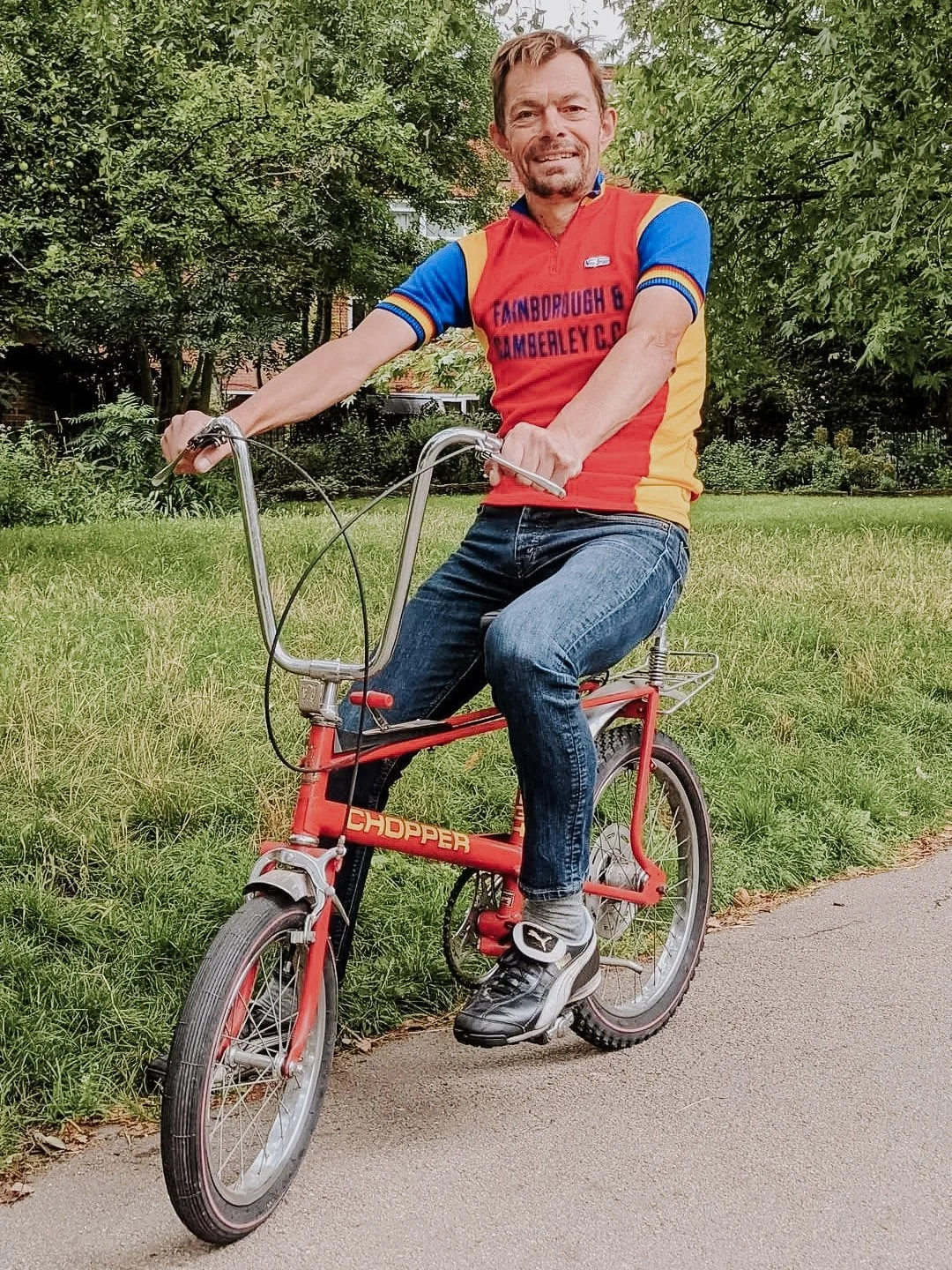
It wasn’t until recently, as I've got older and reflected, that I really appreciated how much bigger and better my life has been because of the simple fact I’ve ridden my bike to get places – from thirty minutes to the local park for a clearer head to a month long trip to Mount Everest for a genuine feeling of being in awe of our planet.
On this journey of life, like millions of others, I certainly haven’t taken the convenient motorway route, but the slower, slightly hilly at times, scenic road, less travelled.
At times it’s been bumpy but overall it has made life far more interesting and real and I wouldn’t have taken it any other way.
I started riding, like many, when I was young – because it gave me everything a teenage boy needs – self-esteem, confidence and friendship.
I wasn’t a good student, and I wasn’t particularly good at sports either - so I certainly wasn’t invited to be one of the in-crowd. But finding some other uncool outliers who liked riding brought us together. It was an activity that helped us all experience some friendship.
I wasn’t talented on a bike either, though - my early memories involve a lot of fairly daft accidents. Riding straight into the back of a parked car because I was too busy talking instead of looking where I was going (as my parents had instructed me to always do). I crossed main roads I had promised my mum I wouldn’t cross. I tried to carry an Action Man under one arm while steering with the other, fell off, and still have the brake lever scar on my thigh to match the one on my toy soldier's cheek.
But what I was good at was inventing reasons to ride somewhere - and that’s what gave me a reason to belong in the group and at the same time make my tiny world a bit bigger.
We’d go en masse to an away match of our village football team, to the rumoured best record shop in the next town, to a field with a tent and no real plan, beyond not dying or to the local airfield to see famous people’s planes.
Riding made my teenage years liveable - and more often than not, even fun.
But then adulthood came along: college, work, mortgage, more work, a family, more work still. I put everything into it and built businesses that did well. I married someone brilliant, and we had four children who filled our house and most of my calendar.
From the outside, I appeared happy and successful, but inside, I felt permanently stressed and anxious. In midlife, I realised I really wasn’t enjoying everything as much as I had hoped.
I felt like I lived in the suburbs of my own life, not in the centre – where I wanted to be.
So, I went back to what got me through my teens: I bought a bike to help centre me again.
I just wanted something physical to do that got me off my screens. I began with short rides to work, which progressed to little detours on the way home. I’d leave work tightly coiled and distracted and come back calmer and clearer. I felt better, having something other than work and home in my life – a third space - that I could make as big as I needed it to be.
I kept riding, so eventually, over the last thirty years, it has got very big.
I persuaded a few friends to join me and discovered that, just as in childhood, the shared physical effort brought us closer together – with the bonus of a few relaxing beers at the end of a route. Tiring my body physically stopped my office work from feeling all encompassing.
My time on the bike grew, and as it did, my world expanded, physically at first but also mentally – I became more confident, empathetic, kinder. I became a better version of myself – the version I wished I could always be.
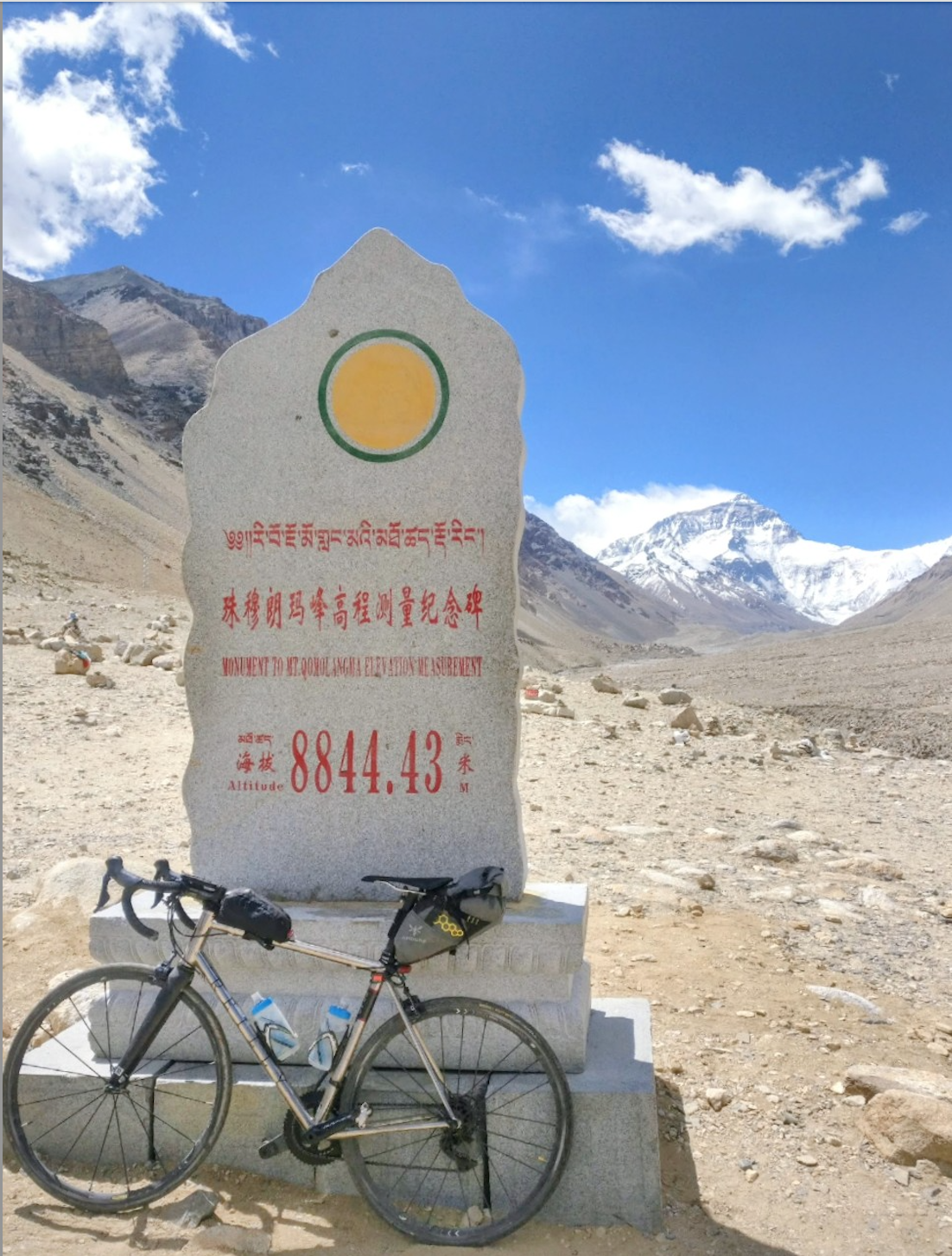
My confidence also grew, and I rode across Britain, Europe, then Australia, India, and numerous other faraway towns - that people told me were unsafe, but I was always met with kindness. I rode across the Rockies and the Alps and later found myself sitting at Everest Base Camp with the same bike beside me, aware of how far that unconfident boy had travelled – in body, mind and spirit.
Riding brought me back to my real self in the most natural and simplest way possible.
Whether I’ve still just got thirty minutes or occasionally still enough time to cycle around a little more of the world, I continue to ride, and my life continues to be bigger and better than it would be otherwise.
INDEX
HOW LONG HAVE YOU GOT?
1. THIRTY MINUTES
Just Go
The first ride that could change your life
Headspace
The simple rides that clear your head
Good Health
The rides that coincidentally build fitness
2. A FEW HOURS
Escape
The rides where you escape your constraints
Nature
The rides that reconnect you to the real world
3. A WHOLE DAY
Being There
The rides that slow down time
Being Together
The rides where you meet like-minded souls
Play
The rides that make you feel young again
4. A FEW DAYS
Kindness
The rides that remind you of the kindness of strangers
Mindful
The rides that remind you that time is finite
5. TIME TO GO ABROAD
Confidence
The rides that show you what you’re capable of
Richer Life
The rides that show you how far you can really go
6. TIME TO SEE THE WORLD
Common Ground
The rides that remind you we have more in common than that which divides us
History
The rides that put you in your place
Serendipty
The rides that can change your life
7 COMING HOME
Coming back to your life feeling a little better
8 ALL YOU NEED TO GO
Tips from those who’ve gone before you
1.
THIRTY MINUTES
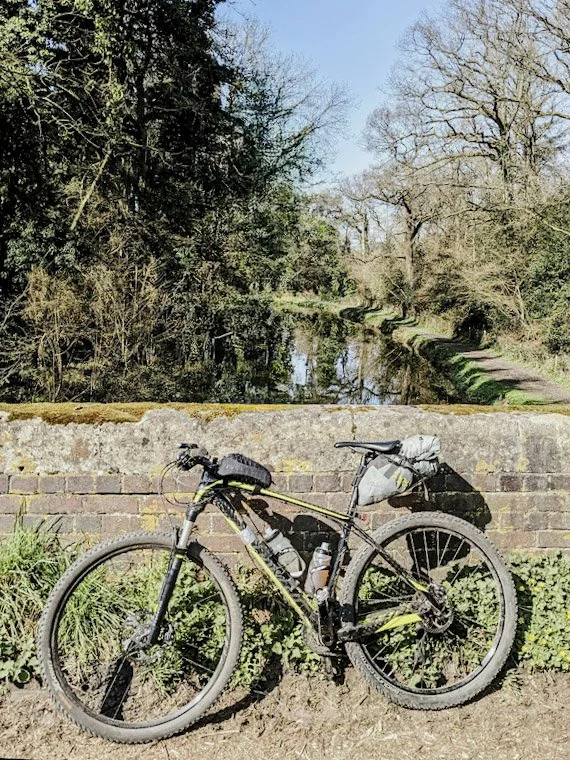
PROPORTION
Just thirty minutes of riding can give you what you need.
It’s enough time to step away from the noise in your head.
Enough time for your shoulders to relax and your thoughts to slow down.
You don’t escape anything.
You simply cycle away from it for a little while.
Cycling gives your body something else to do
And your head something else to think about.
When you come back, the day is still the same.
Except now you have it in proportion
What you need
A bike that works
Ideally a helmet
That’s it
JUST GO
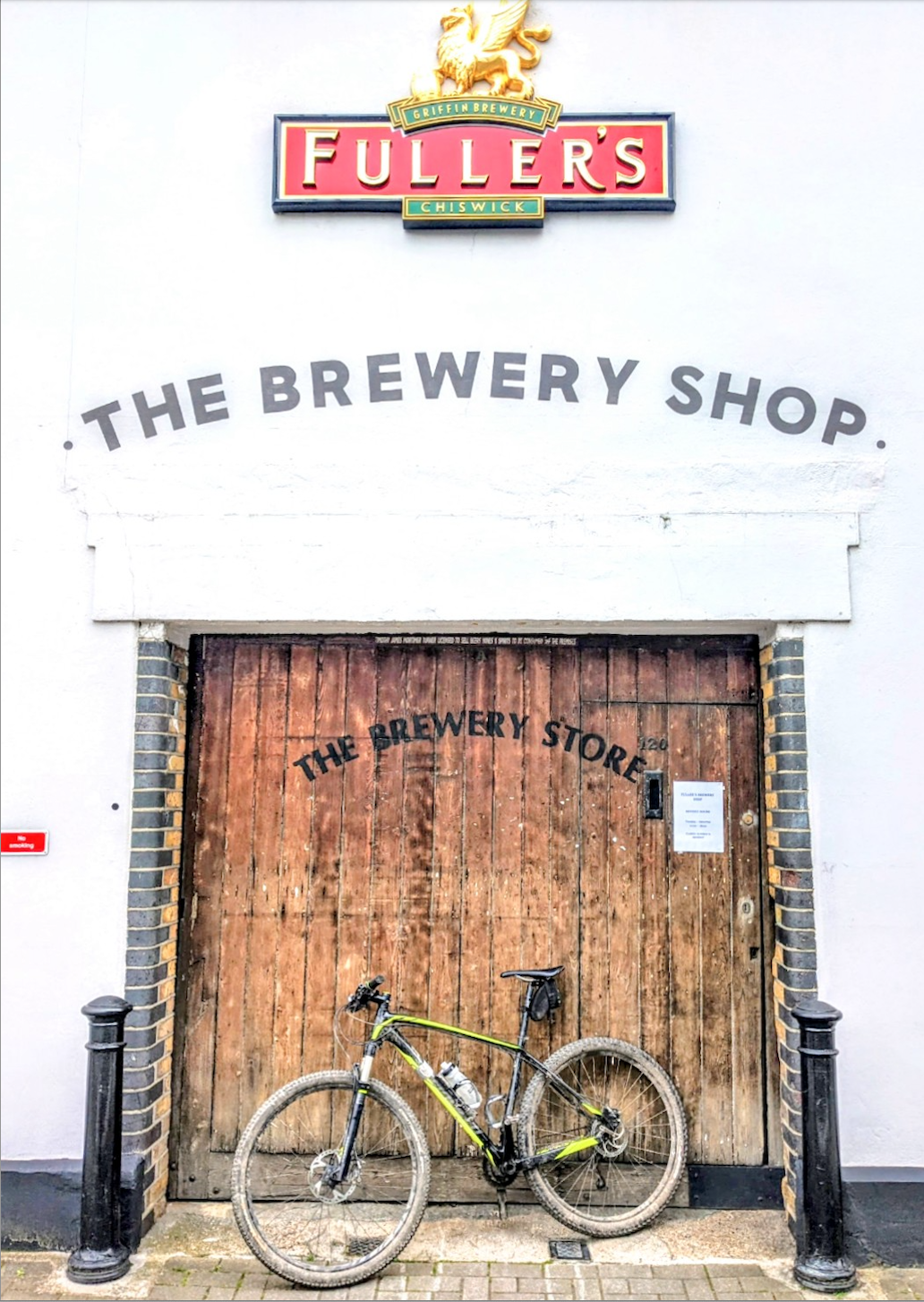
The first ride that could change your life
We feel so judged by others these days that too often we won’t do anything new unless we believe we can do it perfectly. That is physically impossible, but its what stops so many of us from living the life we could live.
We are too scared of what other people think if we’re unable to achieve the impossible.
So, we often take something simple and bury it in research, comparison, equipment, hesitation, imagined complications and the feeling that we should probably sort a few other things out first. We do anything we can think of to stop us from doing the actual thing.
We procrastinate… Is the bike good enough? Do I need padded shorts? Are the roads too busy? Should I get fitter first? Is there any point if I only have thirty minutes? Isn’t it too embarrassing to be someone of my age wobbling about on the road?
That is a lot of thought for something that can literally begin with just sitting on a bicycle and pedalling away from your front door.
Most of the time, the barrier is not cycling. It is overthinking it.
You will not start perfectly. You will not have a perfect route, or the perfect kind of bag attached to the perfect kind of handlebars. You do not need to know much about your bike. You do not need to commit to becoming the sort of person who talks about the perfect tyre pressure over the perfect coffee.
You don’t have to commit to anything at all;
You just need to do one short ride.
If you are unfit, start unfit.
If you are busy, start busy.
If you are doubtful, start doubtful.
But if it’s raining, wait for it to stop!
Round the block is enough, so is to the shops, to the coffee shop and back, along a towpath - anywhere. The point is not to impress anyone but simply to begin. Once you do, the rest will take care of itself. You’ll realise what might make the next ride better. Maybe you pump up the tyres, put a light on the bike, wear a different jacket, or discover a quieter road you haven’t been down before.
This is how every person riding a bike in the world started - scrappily - but finding they enjoyed it or it made them feel a little bit better.
Enough to want to do it again.
The perfect moment for doing anything new does not exist, so just start as you are.
Do not set yourself any targets and turn a simple activity into another thing by which to judge yourself.
Simply go for a ride and see how you feel. That’s it.
If you enjoyed it, you will naturally find the time to do it again.
HEADSPACE
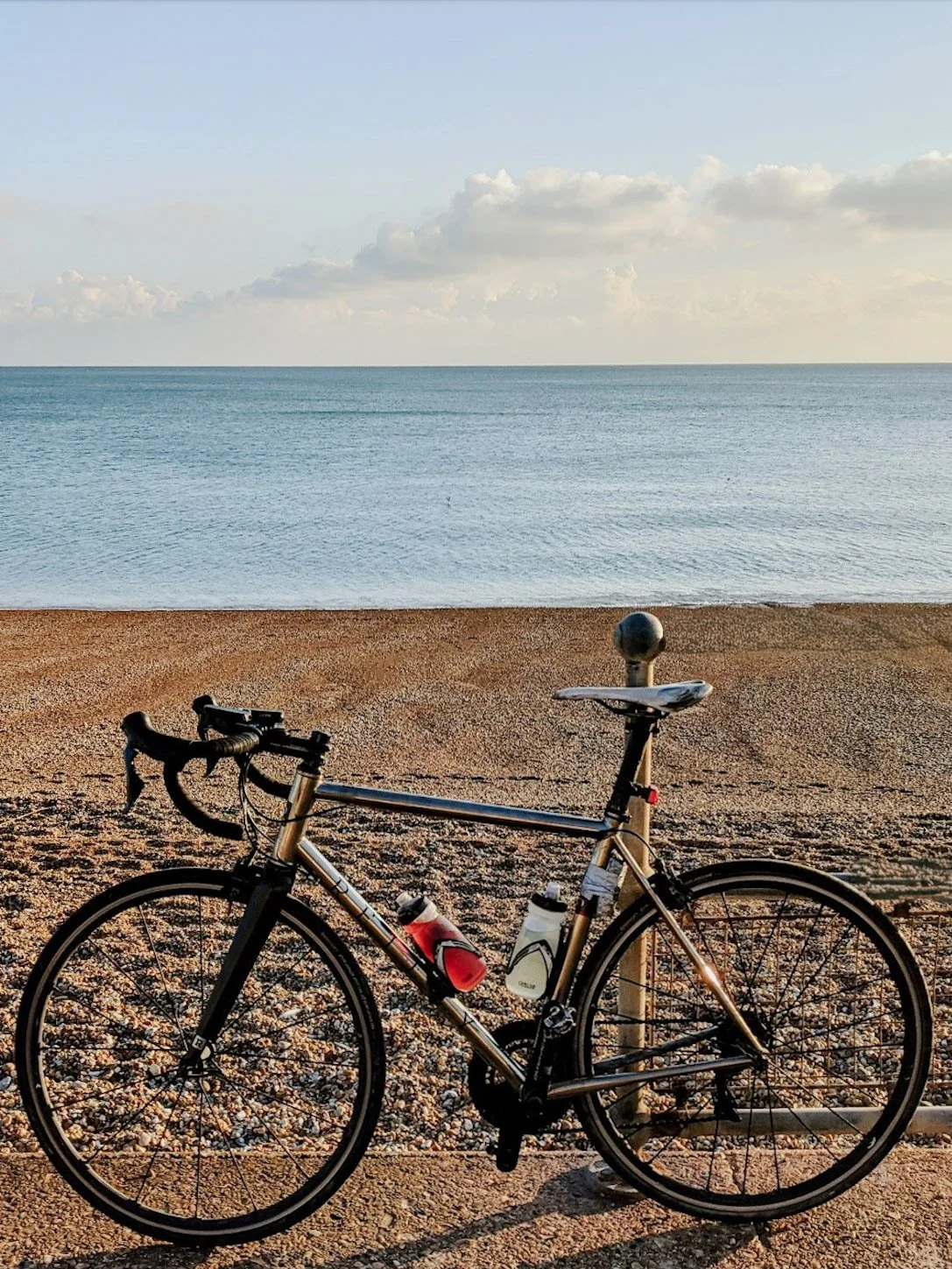
The simple rides that clear your head
Sometime soon after cycling out of your street, as your speed increases and you have to concentrate fully on what you’re doing, you will find your mind moves down a notch from top gear.
Your shoulders start to drop because you can now think straight, and the day is no longer clogging up the inside of your head.
Nothing has changed, except for the stuff spinning around your head - your running list of tasks, a replay of that misunderstood email exchange, the background sense that you should be somewhere else, doing something more productive. All you have to do is ride away from it for a short while, and it will all start to sound distant, as the noise is replaced by some quiet space inside your head.
I didn’t start riding in adulthood for my mental health. I didn’t see myself in the mirror and then buy a bike like a well‑behaved modern adult. I started riding because I wanted a break outside from everything before I became too much of an unpleasant person to live and work with.
It worked, but what made the difference and kept me riding was how consistent the effect was.
We live in a world that wants you managing yourself at all times - optimising your mornings, tracking your sleep score, changing your habits, improving your mindset and ultimately always aiming to become a better version of you. Preferably while also monetising a side hustle and hitting your daily step count.
It all appears useful, but instead often creates a background pressure that eventually takes its toll, and if you don’t succeed and believe your willpower has failed you, where others always appear to succeed, it leaves you feeling anxious, flat and outwardly not as nice to your loved ones as you want to be.
Cycling doesn’t need willpower or optimisation or tracking - It simply offers the best tool to remove yourself from the pressure by fully engrossing your mind and body in doing something else, outside, in real, physical life.
Even just thirty minutes offers relief from the modern world because when you’re moving at cycling speed, you can’t be in ten places at the same time. You can’t reply to messages and be present at the same time. You can’t be “catching up” while pretending to relax.
When I run, I can still find myself mulling over the problems I was trying to leave behind, but on my bike, I have no choice but to use all my mind on getting somewhere whilst avoiding things – potholes, pedestrians and parked cars mainly.
The only thing I sometimes struggle to leave behind is the last song I heard on the radio, it often becomes an ear worm for the first part of the ride!
It’s all just simple common sense though. Cycling engages your whole body, all your senses are required and your complete attention is required here, rather than in its usual loop of distracted worry, comparison and judgement.
A short bike ride can reset your head for the day,
for most of us, that’s also how our overall feelings improve.
GOOD HEALTH
The rides that coincidentally build fitness
Cycling anywhere is exercise - to the coffee shop, to see a friend, or simply to work.
Anywhere you ride, your legs work, your lungs work and your heart has to get involved, whether it likes it or not.
But surprisingly, the main benefit comes from the fact you go somewhere, because that means the cycling makes a difference, not just to your body, but to your head also.
When you move from “I should go to the gym” to “I cycled here”, the psychological shift is enormous. You stop treating exercise as an extra task you have to schedule in, and it just becomes part of how you live more healthily.
You don’t have to procrastinate until you hate the amount of time you’ve wasted enough to put on your gym kit or running shoes and leave the house. You just use your bike to go somewhere you have to go. That’s it, the exercise happens on the way.
When I used to cycle across London, I deliberately rode the cheapest, heaviest bikes I could find. One of them cost less than a few pints in the pub. Another was my wife’s, embarrassingly way too small for me, but I persisted until a few years later, when it collapsed under my weight in the middle of London.
I looked ridiculous but I didn’t care, because riding them turned my commute into a small workout, and I arrived at work already awake, already exercised, and already having achieved something worthwhile with my day before most people had opened their inbox.
Your day feels very different if you start it by scrolling through your phone or start it by using your body to move you to where you need to be. One leaves you feeling stuck in the mundane, the other makes you alert - and ready to get yourself out of the mundane. Cycling has saved me money and kept me healthy, but it has also improved my motivation on the mundane days.
According to the health professionals, regular moderate cycling improves cardiovascular health, reduces blood pressure and lowers the risk of heart disease and type 2 diabetes. It also improves your sleep - without you having to track it, and it’s one of the few exercises you can sustain well into older age because it’s low-impact and kind to joints.
You don’t need to count kilometres, buy an expensive bike, track your heart rate or eat energy bars – my diet, even when I was racing on my bike, was made up entirely of our four kids’ leftovers – four barely touched dinners and four barely left puddings!
When you ride often, you stop obsessing over your body shape and what you’ve eaten, because you’re doing something with it. Instead, you start treating your body as something to just enjoy life with. And once that relationship improves your self-confidence, even slightly, the rest of life does in fact become a bit better.
You don’t need to ride many times for it to feel natural to move your body as part of your daily life - but like your bike, it works better and lasts longer if it’s looked after and used a little more often.
Cycling takes you outside, travelling under your own steam, likely eating a bit more of what you like whilst making a mundane day feel better – what’s not to like?
And that’s why cycling provides the best tool to ‘stay in shape’ – both mentally and physically.
Good reasons to ride for thirty minutes
Wake yourself up properly
Get to work or college
Clear your head between meetings
Go to a coffee shop instead of scrolling at home
Interrupt a bad mood
Turn a flat day into a better one
Feel the weather
Get a bit of exercise
Save using a car
Get to the pub & back
Inspiring people to follow
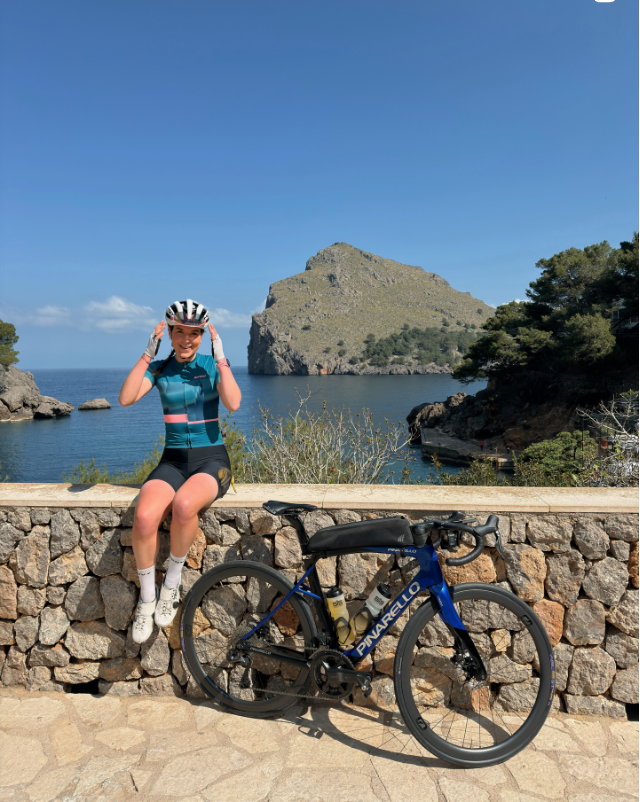
Amy Hudson’s cycling journey is truly inspiring. Although an occasional cyclist in her youth, the 29-year-old suffered a mental health breakdown during Covid lockdown that prompted her husband to buy her a bike. It kickstarted what has become a transformative quest and the publication of her book, Finding Happiness Pedal by Pedal
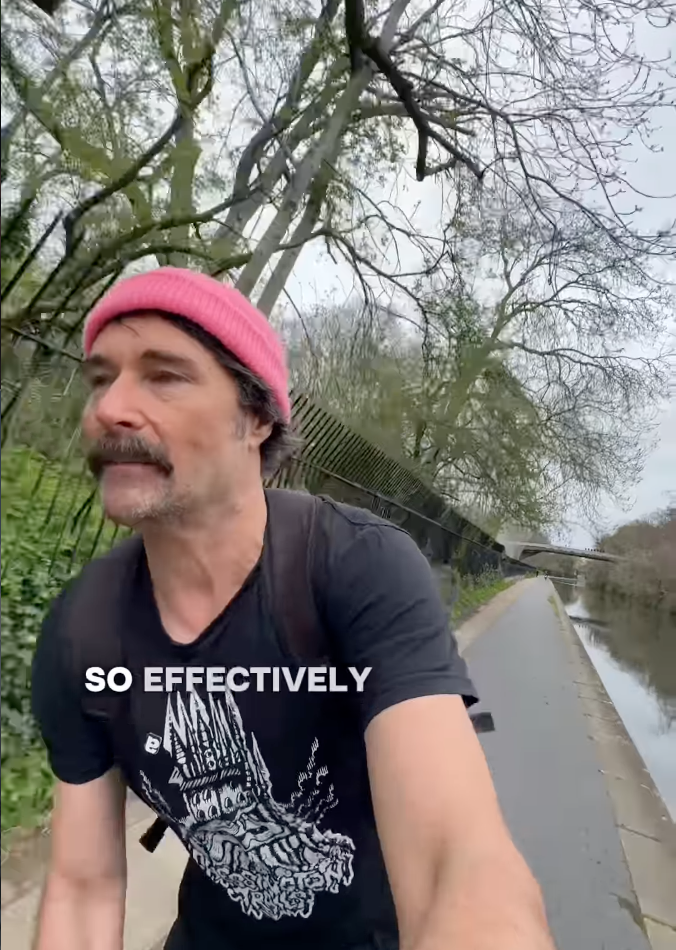
Johno is an inspiring practical insomniac in a pink hat, riding his bike in search of stories, history and conversation around London before the city wakes up
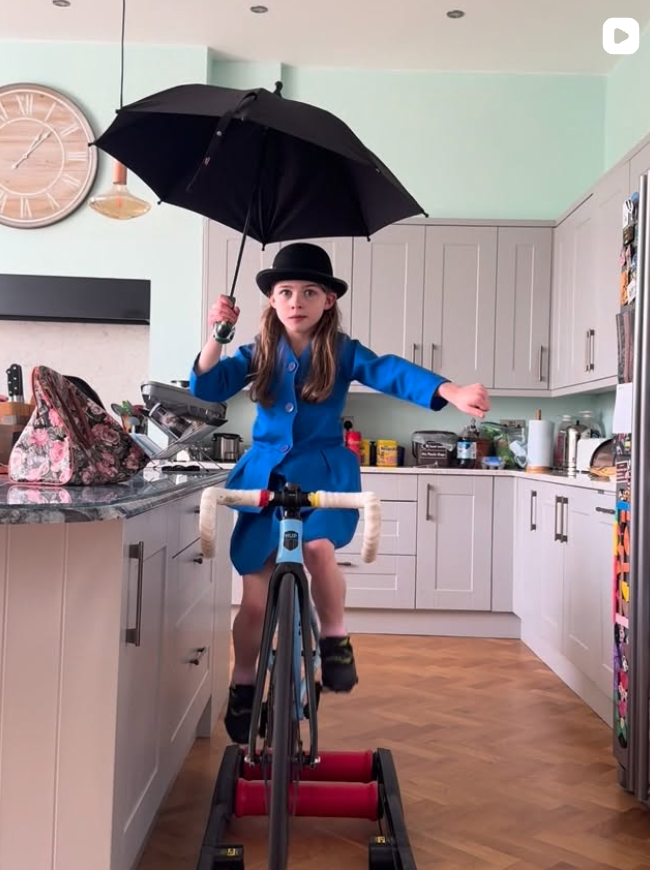
Eight year old Daisy Adams, whose bike is her happy place.
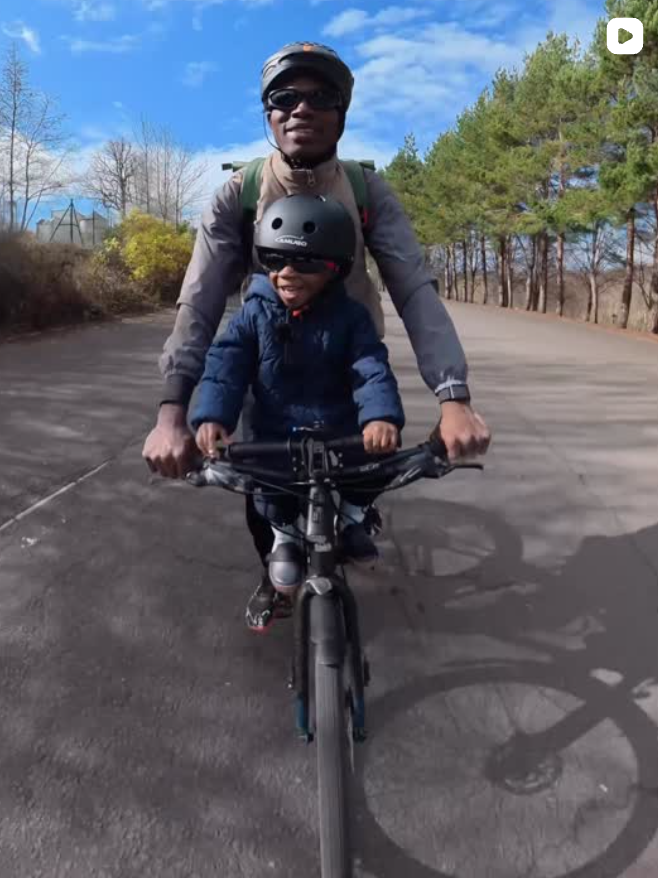
Father and toddler son on daily bike rides.
Useful websites
You don’t need any to ride for thirty minutes.
2.
A FEW HOURS
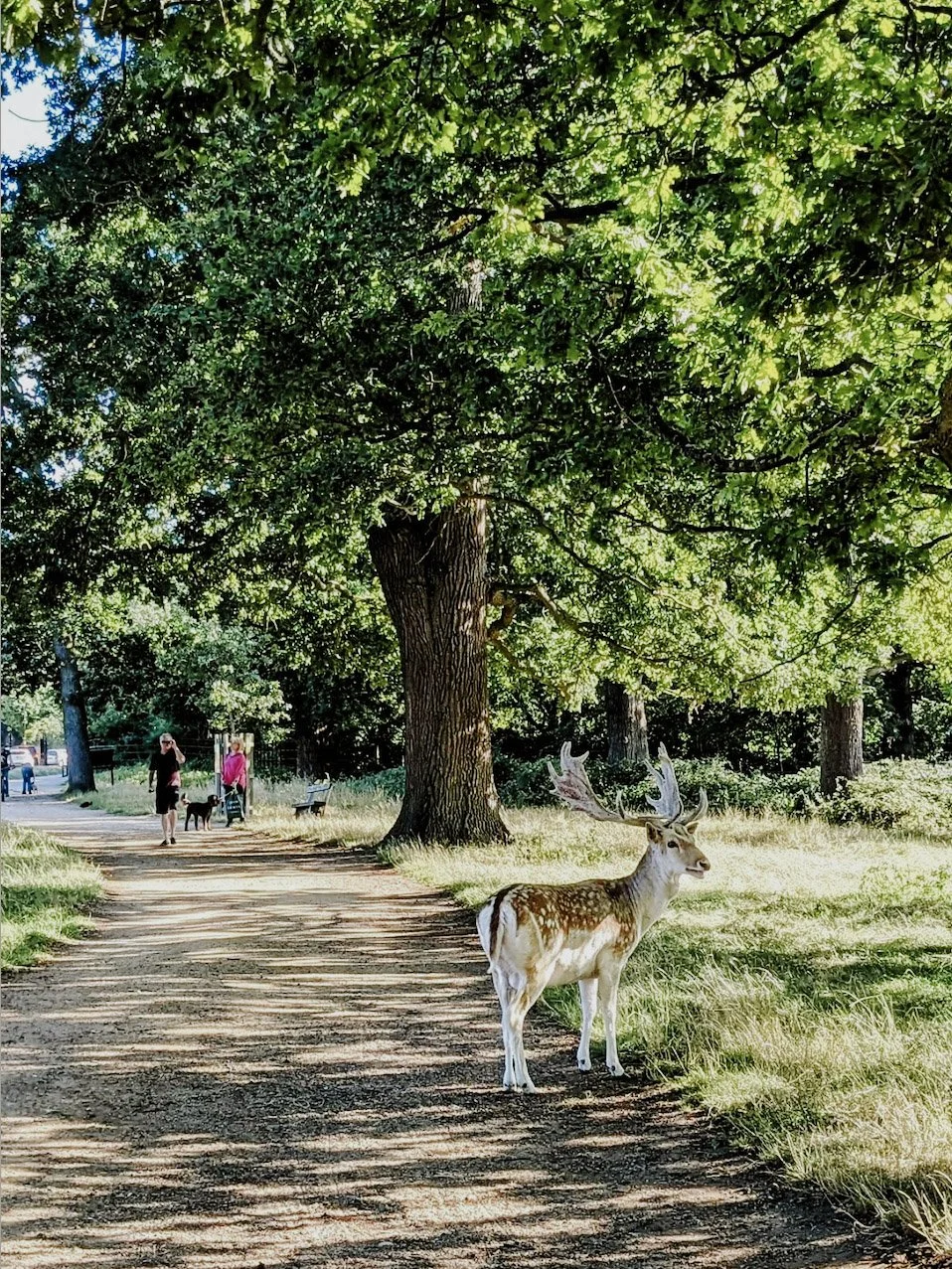
FREEDOM
A few hours of riding can change your whole day.
Thirty minutes clears your head.
A few hours become a micro-adventure
What began as an ordinary day becomes one that ends with stories
You can ride somewhere you have never been before.
Or just ride to the café and spend longer there!
Your day started as routine.
But it finishes with a new memory
What extra you need
The same bike
A lock
A pump
Some water
Money for coffee
A puncture repair kit
ESCAPE
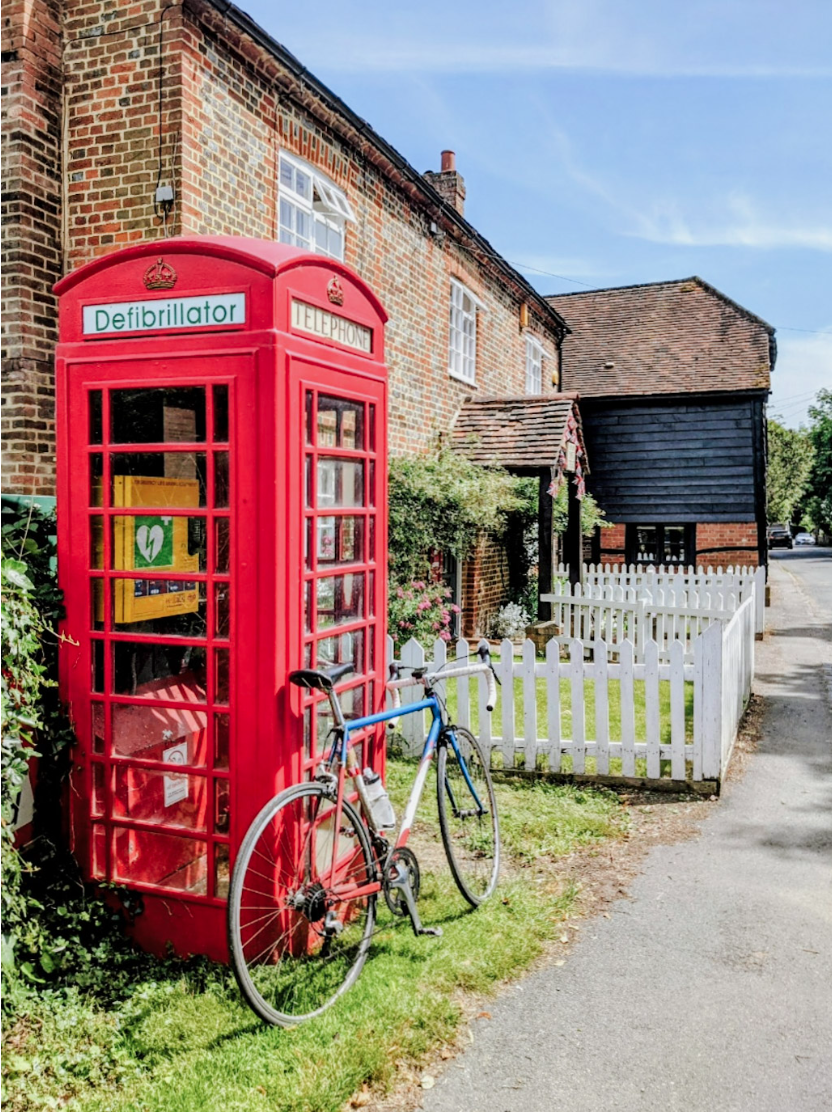
The rides where you escape your constraints
Adult life seems to be predominantly made up of demands on your time.
Can you do Tuesday?
Can you send that by five?
Parents’ evening is at six.
Call at seven?
Reply when you can.
Even when absolutely nothing is urgent, everything feels like it is. You run from one obligation to the next, rarely at a speed of your choosing, mostly just reacting. After a while, you stop noticing your days are completely prioritised by other people’s meetings, expectations and requirements. You are someone’s colleague, someone’s parent, someone’s partner, someone’s problem‑solver. It’s all important, but boy, does it all accumulate fast.
Then you go for a ride for a couple of hours, and for a short while, you can choose exactly what you want to do with your own time.
Just start moving, and suddenly your life is yours again. You get to choose exactly where you want to go, exactly how long you want to spend there, whether you want to read a book or do absolutely nothing and exactly how much cake you are going to eat while doing that.
No one knowing where you are or expecting you somewhere at a particular time is not a small thing;
it is the definition of the simple, contented, feeling of freedom.
For many years, with four children and a growing business, I lived tightly bound by these constraints. Staff, clients, payroll, school runs, you could see it in my face – not happy - as my mind was trying to solve tomorrow’s work problem, while I was still reading today’s bedtime stories to my children.
I discovered that a couple of hours out on a bike helped me restore the rightful priorities and proportion to everything in my life. The thing that felt enormous at 6pm often looked manageable by 9am. Not because it magically disappeared, but because having a longer ride on the way home made me realise it wasn’t the most important thing in the world… and was a reminder that it never should have been.
We are all constrained by demands on our time, but a few hours riding gives us the freedom to put them in perspective - we’re not just here on earth to answer to everyone else.
Time for ourselves is one of the most important things we need.
NATURE
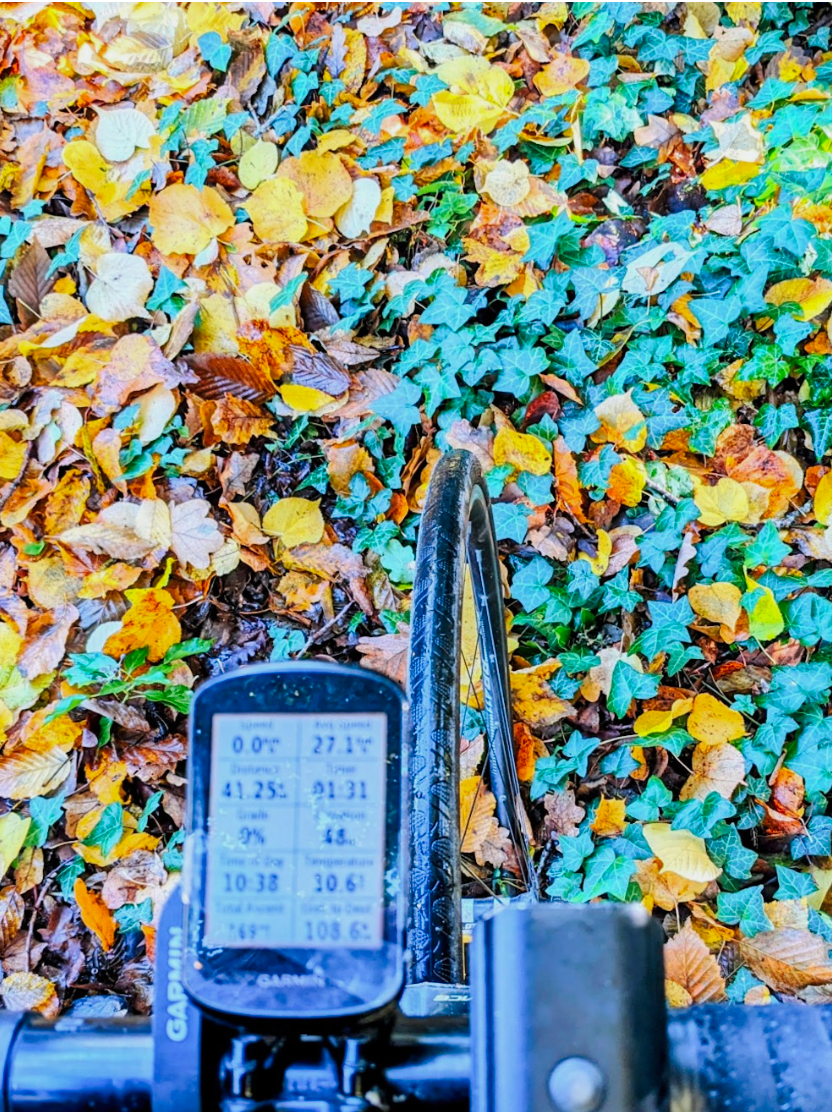
The rides that reconnect you to the real world
You don’t have to cycle far to find some nature to reignite your senses. You don’t need much, and there’s a bit around most corners.
In London, within ten minutes of leaving my office, I can be riding along the River Thames towpath, with herons lifting off the water, reeds brushing my legs and the smell of damp earth under my tyres.
That not only feels good – it looks, smells and sounds good too. Nature is real life at its most basic level, and we all need its restorative benefits.
A few minutes earlier, I was stressed. The fact that instant change is possible and used regularly tells you everything you need to know about how we live now.
Most of modern life is climate‑controlled - lights on, heating on, window shut, temperature constant. Unless you go out of your way, you can spend days barely noticing the season outside. In this environment, we need nature in order to survive and thrive.
Jump on a bike, and you instantly become part of that outside world. You feel the rain as wet, the heat as hot, the smell of trees before you see them, the sound of the wind blowing or the sight of a squirrel scuttling up a tree. You notice the seasons because you are in them – they are happening to you.
And ride a bit more, you gain the privilege of learning what humanity always had to do - adapt to living with the weather - starting early to avoid the heat of the midday sun, dealing with storms that arrive with no warning, changing direction to avoid dark clouds and letting early misty mornings and beautiful evening sunsets dictate the time you ride.
There is nothing more grounding and better at connecting you with yourself and the world around you than being out in nature.
The same truth applies both to the perfect ride and any grey Wednesday ride, anywhere. You are in the elements and not sitting in a room oblivious to them.
It might sound idealistic, but after a few hours of riding in nature, I feel fully restored and truly alive - and I benefit so much from that feeling.
Good reasons to ride for a few hours
Because it’s a sunny day
Try a mountain bike and ride off-road
Reach the best local cycling routes
Visit roads and towns with silly names
To lunch somewhere away from everyone
Anywhere with a friend
Drink coffee at the best café you’ve only heard rumours about
Ahead of your partner, when driving anywhere
Taking a child riding for the first time
For a velodrome introductory ride
For laughs in a bike park
Inspiring people to follow
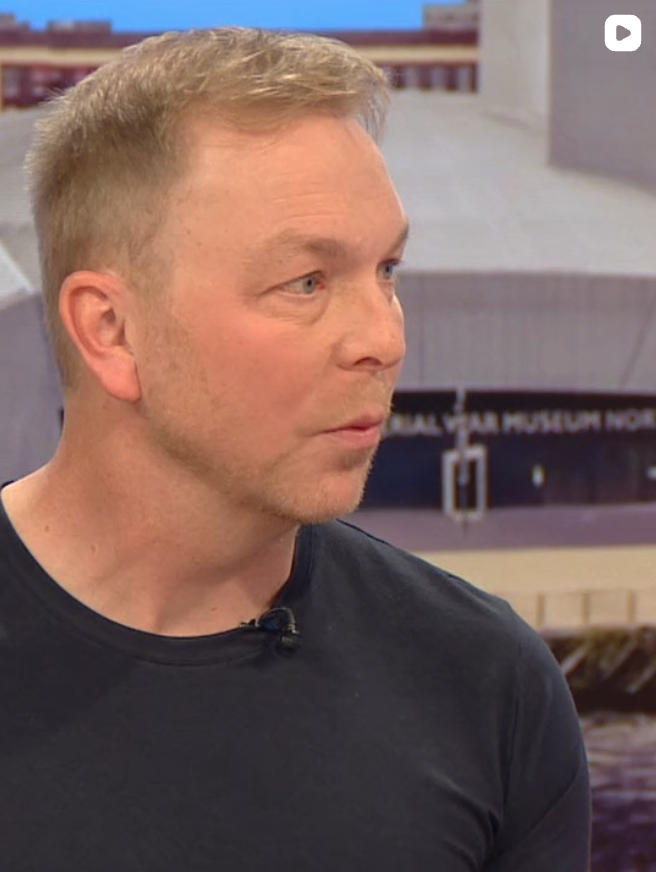
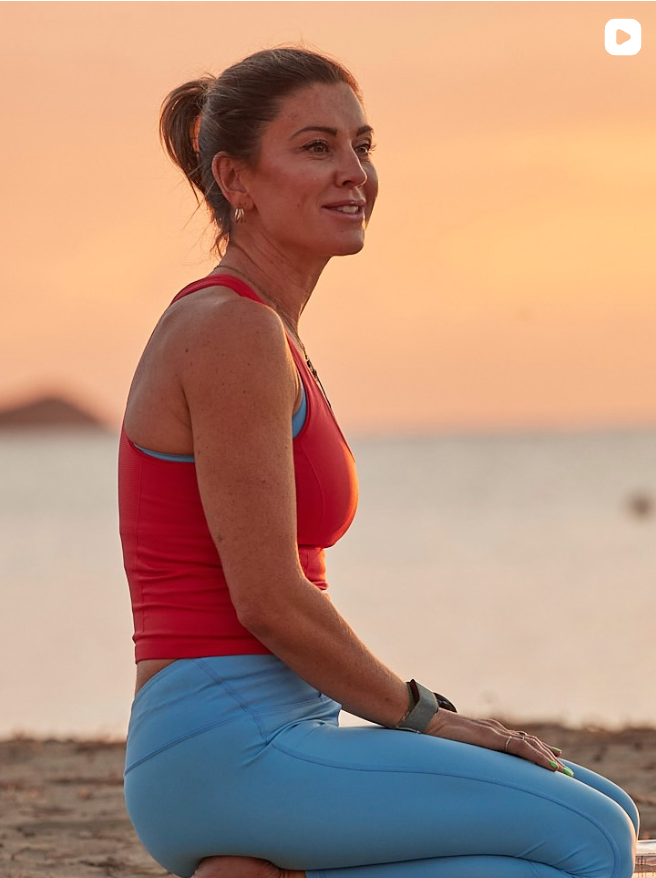
Inspiring sports (incl cycling) broadcaster, founder of @tentimesbraver (helping people overcome the fears holding them back). & creator of two kids.
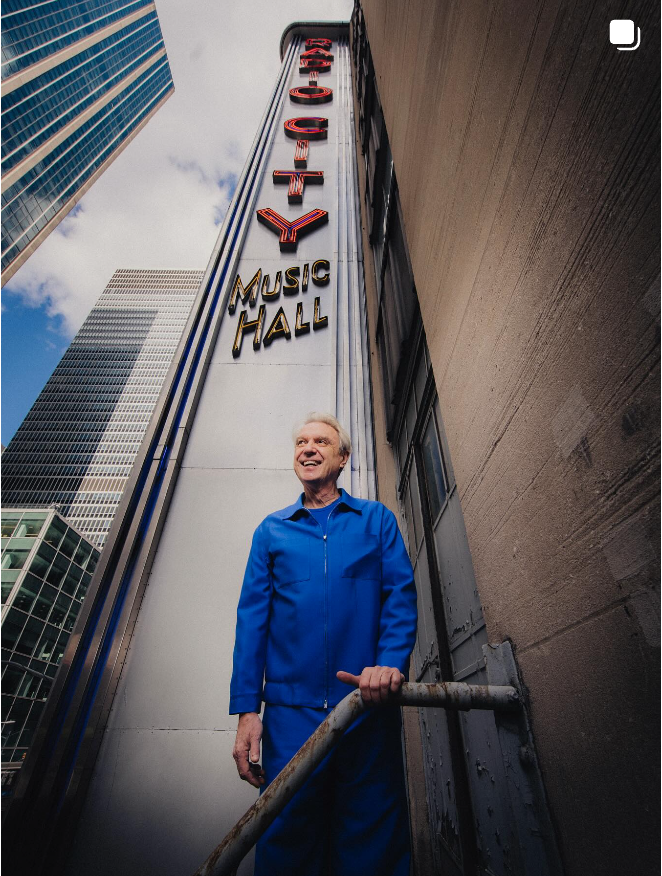
David Byrne, co-founder of the group Talking Heads, has been riding a bicycle as his principal means of transportation since the 1980's. When he tours, Byrne travels with a folding bicycle, bringing it to cities like London, Berlin, Buenos Aires, Istanbul, Manila, New York, Detroit and San Francisco. The view from his bike seat has given Byrne a panoramic window on urban life all over the world.
Britain’s most decorated cyclist with 6x Olympic, 11x World and 34x World Cup. Inspirational speaker and author of Sunday Times Bestseller
Useful websites
Famous for its YouTube channel, GCN provides accessible, engaging, and in-depth video content for beginners, including maintenance tips, training advice, and buying guides.
The UK charity inspiring millions more people to cycle providing skills, motivation, advice, and support to enable everyone to ride a bike.
Widely recognised as one of the best apps for planning routes, offering navigation specifically for cycling types (road, gravel, mountain).
A guide to all the velodromes globally.
3.
A WHOLE DAY
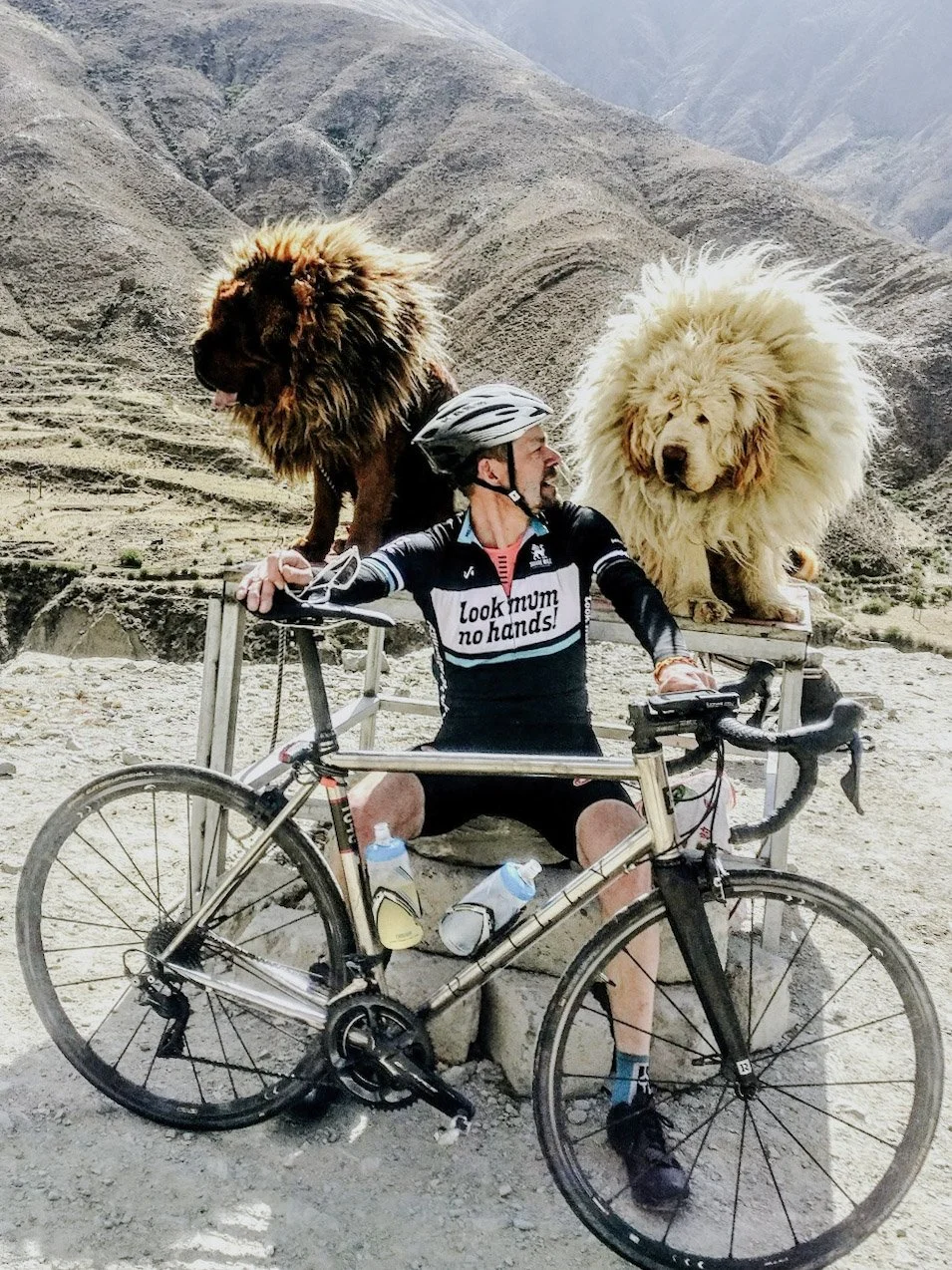
FRIENDSHIP
A whole day riding feels like a small holiday.
You leave in the morning in no real rush.
You ride, stop, chat, eat, ride again.
If the effort is shared, you feel part of a team
With banter and natural silences.
Hours pass without anyone watching the clock.
The road keeps going, and the day keeps stretching.
By the time you return home,
you have spent an entire day somewhere else.
And you arrive back with a quiet glow.
What extra you need
bike lights
Some snacks
Clothing for the weather
Whatever cycle clothes you want to wear
BEING THERE
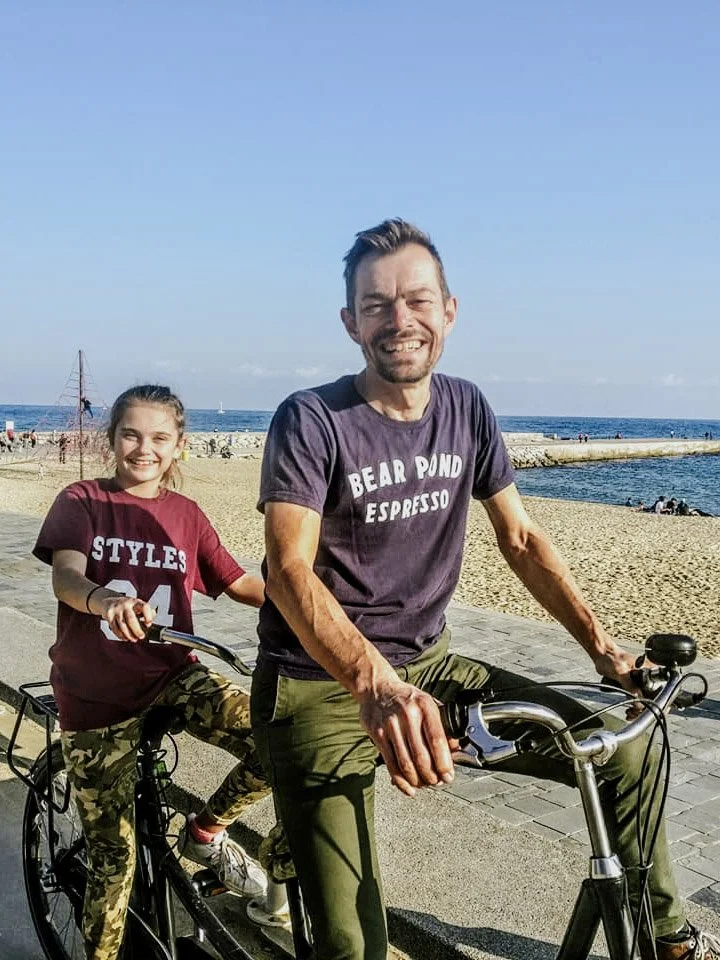
The rides that slow down time
Life disappears very quickly; it normally happens while we’re busy being distracted by something unimportant.
It’s all too easy to be both physically present and mentally elsewhere. You tell yourself you’re too busy for good reasons - you’re providing, building or responsible for everything. All true, but while you’re busy, the life you want to live just carries on without you.
One day, you look up, and the child you coaxed on their first bike ride is suddenly cycling to the pub with their friends. Videos from ten years ago feel both ancient and ‘like yesterday’. You’re shocked that it’s a lot longer than you thought - and by how quickly the time in-between has just disappeared.
Riding with someone changes the quality of your attention - and that slows time down - so that you can capture and process the new memories you are creating.
Your brain has a limit for multi-tasking.
You are either on a ride or you aren’t on a ride.
Your mind can’t drift somewhere else while you’re riding with others.
You cannot dwell on yesterday or worry about tomorrow while you’re
chatting and working out what turn you should both be taking next.
I really learned this properly while cycling with my daughter to a chip shop twenty‑five miles away because a pop star she loved had once been there. That was the entire justification. It sounded childlike, but that is often the very best reason for a good ride.
We didn’t have any special cycling kit or big plans. We just packed snacks, a rough route, and the willingness to let the day take as long as it took. She rode with complete commitment - no bargaining or negotiating and certainly no adult worries about yesterday or tomorrow. Halfway up a hill, a serious‑looking rider passed and said, “I struggle on this one.” She beamed for the rest of the day.
We were on an adventure, father and daughter together, just the two of us.
When we got to the chip shop, she stood still and took it all in properly - the sign, the smell, the exact spot he stood. She tasted every chip.
It was a great day for both of us. It was never about chips or cycling a long way, it was about me being fully there for her, helping her do something that mattered to her, on her terms, without me being half on my phone, half thinking of something else and really only half there.
On the ride home, I felt guilty about how rarely I made moments like this happen, no screens, no agenda, no rush, just shared effort and a shared story to tell.
Riding with others for a day gives you something a few hours can’t: this genuine, unrushed presence. It forces you into being properly there, and so accordingly you take more of it in - and that is how time appears to slow down – each minute has a memory associated with it, rather than rushing through a day thinking about everything except where you are and what you’re doing.
Providing for others obviously matters, but being there for them matters more - cycling together gives you that opportunity.
BEING TOGETHER
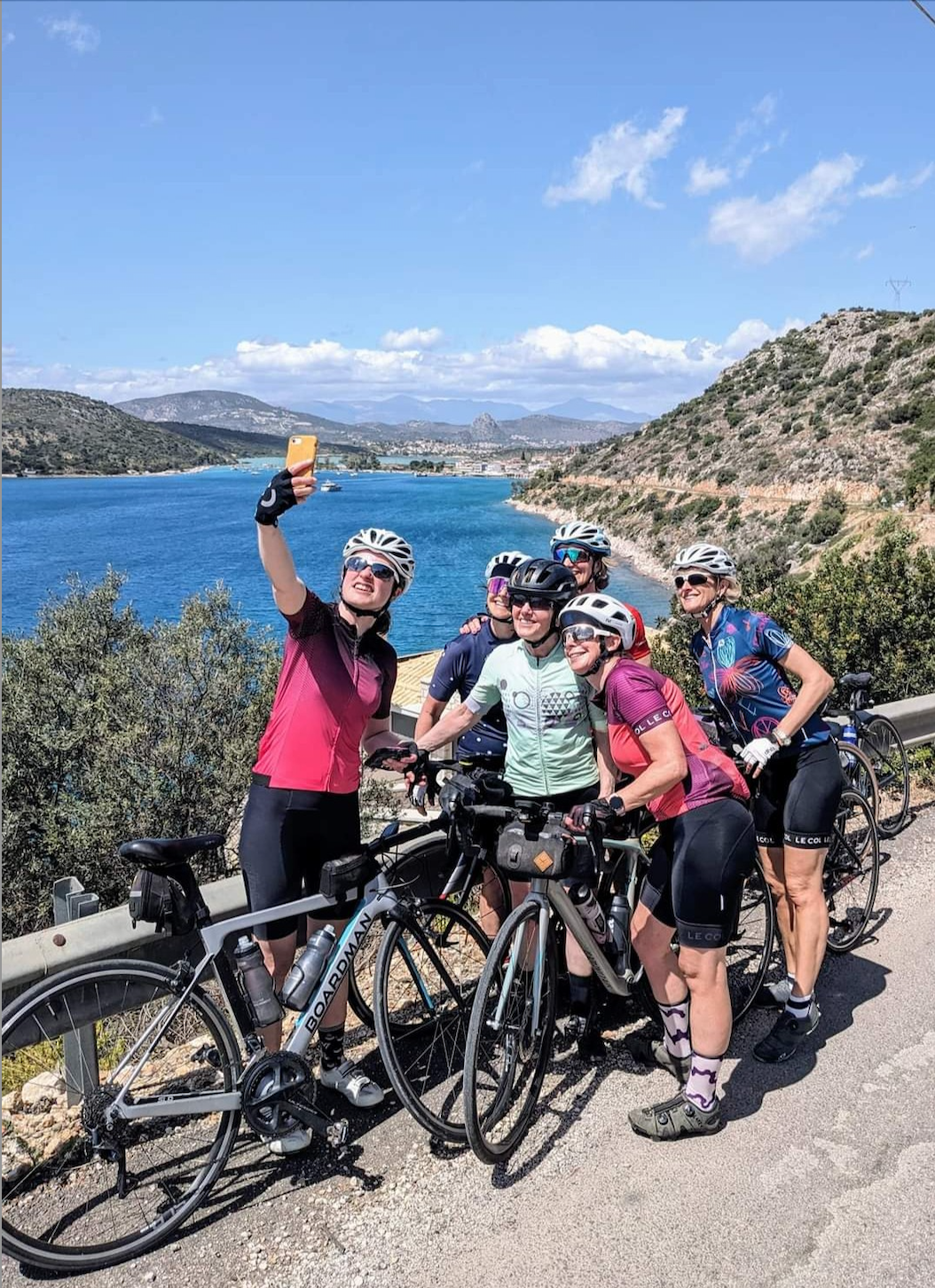
The rides where you meet like-minded souls
I didn't start cycling to “find my tribe”. At some point, I just wanted to try cycling longer distances and felt I needed the support of more experienced cyclists.
But as I started heading out on group rides, I discovered that on a bike ride, the usual social labels quickly become totally irrelevant. Nobody cares what you do for a living, and nobody’s impressed by your job title. It’s purely about how you show up as a human being in an activity that involves working as a team and consideration of others.
Riding with friends, in a group or with a cycling club, you see each other when you’re on top form but also when you’re tired, hungry and slightly grumpy. Is everyone still willing to take their turn riding at the front of the group, still happy to wait at the top for the others, still happy to share whatever snacks they have left?
And because you’re doing something mildly difficult together, it accelerates the getting-to-know-you period.
Strangers become friends much faster while sitting on bikes than while sitting across tables.
There are conversations people will have on a bike that they would never have while sitting across a table. I don’t know whether it’s the shared effort or the fact that when you’re riding side by side, you’re looking in the same direction rather than directly at each other’s eyes, but people do find it easier to open up.
We’d start by talking about where we were going on the bike and finish by having the same conversations about our entire lives.
I found myself being a much better person on a weekend ride than I was on weekdays in the office. It’s easier to just be your real self when you're living in the moment, doing something physical and with a start and finish to it. Your human nature comes to the fore, overriding any anxieties.
Those weekend rides became a weekly reset I didn’t know I needed - We’d ride, stop, eat too much cake, talk, share, laugh, solve none of our problems, but somehow return home better equipped to handle them.
In a world where connection is often filtered and transactional, being part of a group like that feels more genuine. It’s not about performance or networking; it’s simply people travelling through life in the same direction for a while.
It’s a physical reminder we’re not doing life on our own.
PLAY
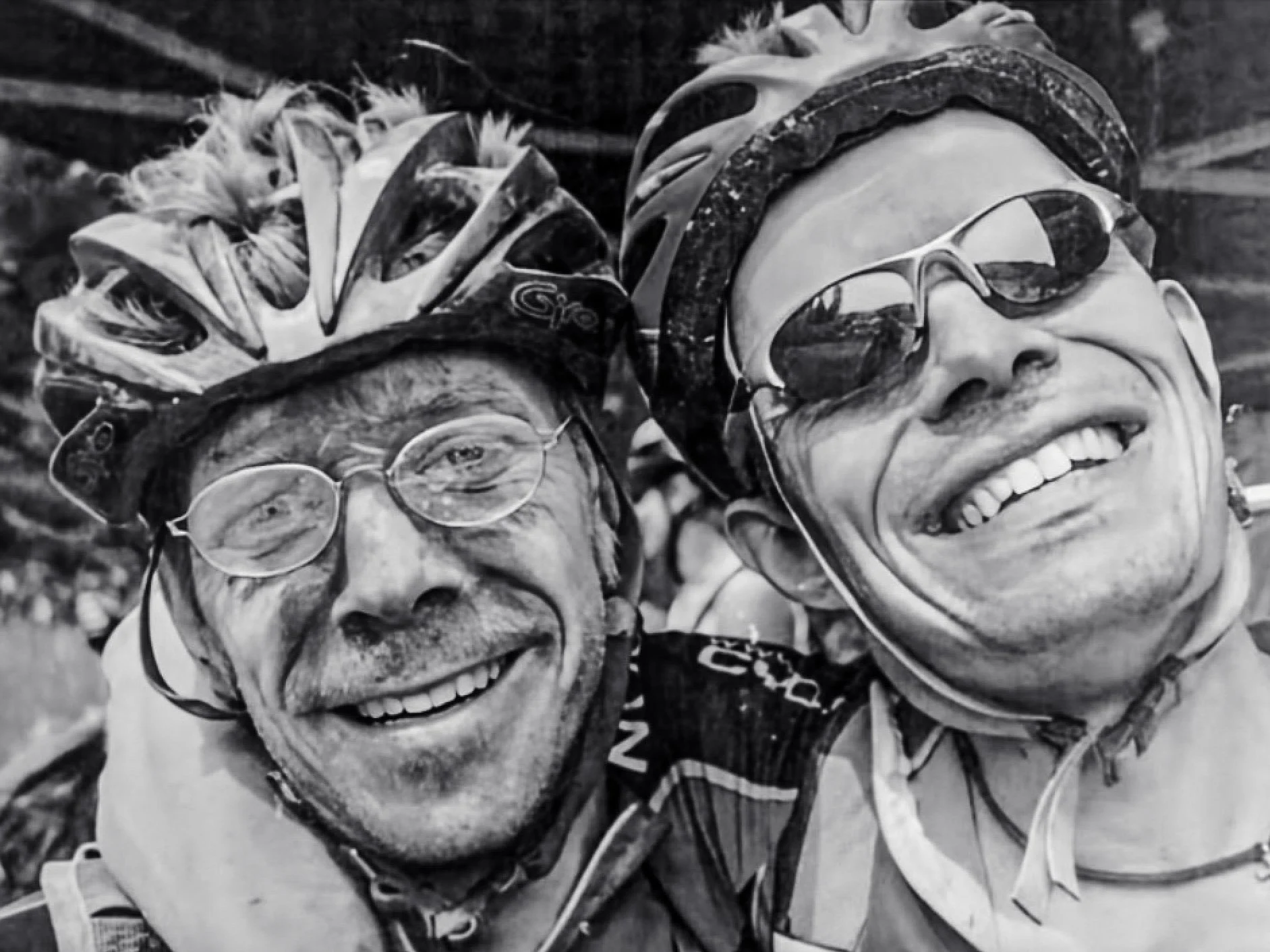
The rides that make you feel young again
Somewhere along the way, it was somehow decided that adult life has to be constantly productive. Even doing something silly has to be “good for you” or at the very least, instagrammable and monatised.
The rides I remember most fondly have almost never been productive or at all impressive. They’ve normally been stupidly silly and taken on with childlike zeal.
A lot of them have been while riding mountain bikes with my friend Bill. From riding routes out of London only via forest paths - where we simply have to make sure we don’t crash into trees or come to a dead stop in the middle of very deep puddles – to cycling over The Rockies or The Alps on the same bikes, very foolishly convinced if we could do it around London parks, we could do it over the biggest mountains on earth. Laughing at the stupidity of our thinking and each other, like kids.
When the first of our four children went to university in Bath - conveniently a hundred miles away – it was the perfect reason to ride somewhere for fun. Then it became Bournemouth, then Leeds, then Manchester. At some point, I became suspicious that my children were deliberately choosing ever-distant universities purely to stop me from being the embarrassing dad turning up in Lycra.
One weekend, a group of us rode two hundred miles around the whole of London on the roads closest to the M25 motorway. Officially grey, noisy & completely pointless, but it turned into one of the best days we’d had in years. Mainly because we were doing something for no good reason, which actually turned out to be a lot better than expected.
My favourite rides now are when we check the weather forecast and just go in whatever direction the wind is blowing, purely because it will make us go really fast. We convince ourselves we’re as fit as our younger selves and then get on a train for the journey back home, deeply satisfied with our entirely unearned brilliance.
This is simple, unadulterated, uncompromising play and making time for it really matters, because adult life squeezes play and joy out of all of us.
There are so many different reasons to ride a bike, but one of the best is the legitimate excuse it gives you to behave like a teenager, with too much confidence, zero adult responsibilities, and imaginary missions. You get home tired, relaxed, and feeling lighter, simply because you’ve been outside, playing for a while.
You don’t stop playing because you age. You age because you stop playing.
Good reasons to ride all day
Avoiding trees
Getting to the seaside
Visiting famous TV locations
Getting lost on purpose
Taking the train out and riding back
Giving your day something memorable
Riding in whatever direction the wind is blowing
Visiting every football stadium in your closest city
visiting your children at university
To have a mini holiday
To do a ride for charity
To do a sportive or Audax ride
Inspiring people to follow
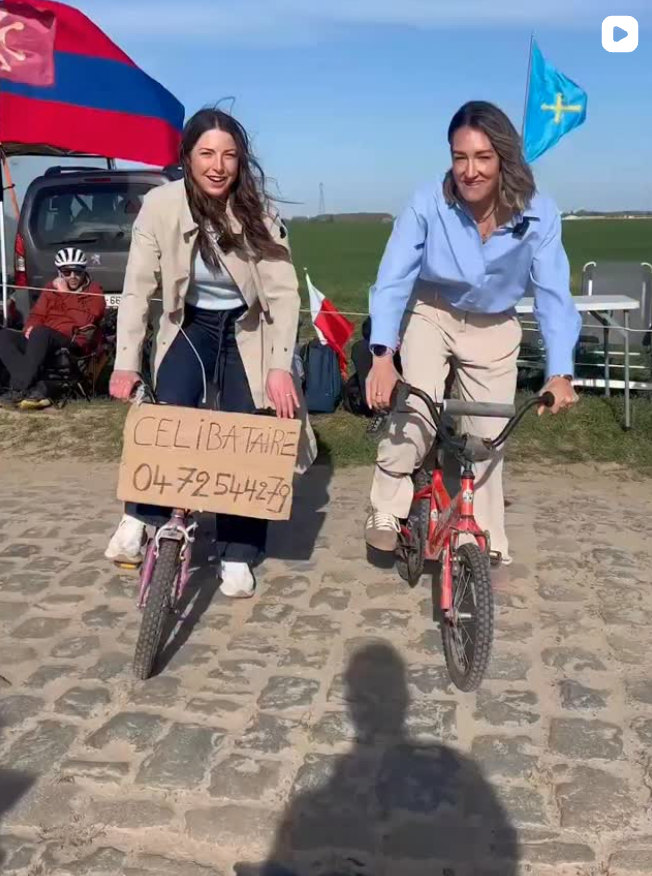
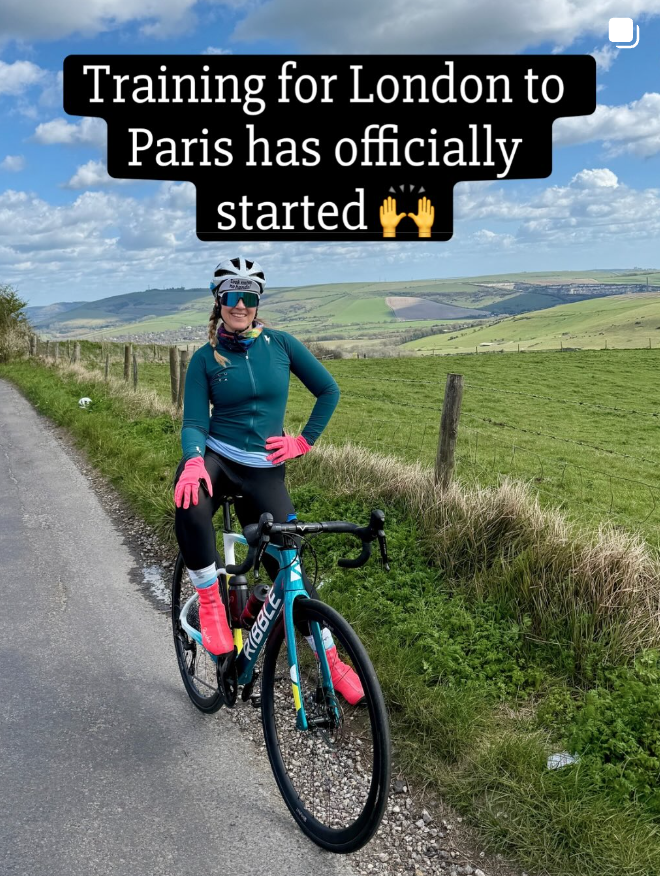
Inspiring adventure cyclist and athlete.
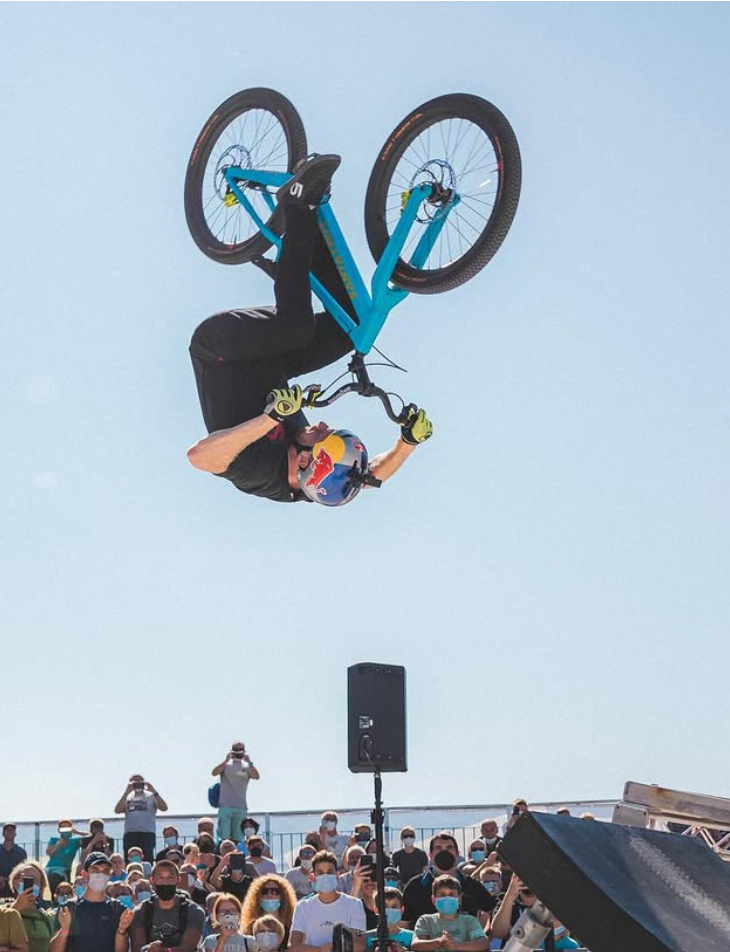
The most famous mountain bike and street trials rider
Sport TV presenter and all round inspiring person.
Useful websites
Find your local cycle club
Sportives are mass participation events that aren’t races - for all abilities. Sportive.com provide a comprehensive, up-to-date calendar of cycling events, including road, gravel, and ultra-sportives.
Host high-quality, well-organised, and popular sportives across the UK.
Audax cycling, also known as randonneuring, is long-distance, non-competitive form of mass cycling.
The go-to app for tracking your rides, monitoring progress, and discovering popular local routes.
Guide to the best trail centres in England
4.
A FEW DAYS
TRUST
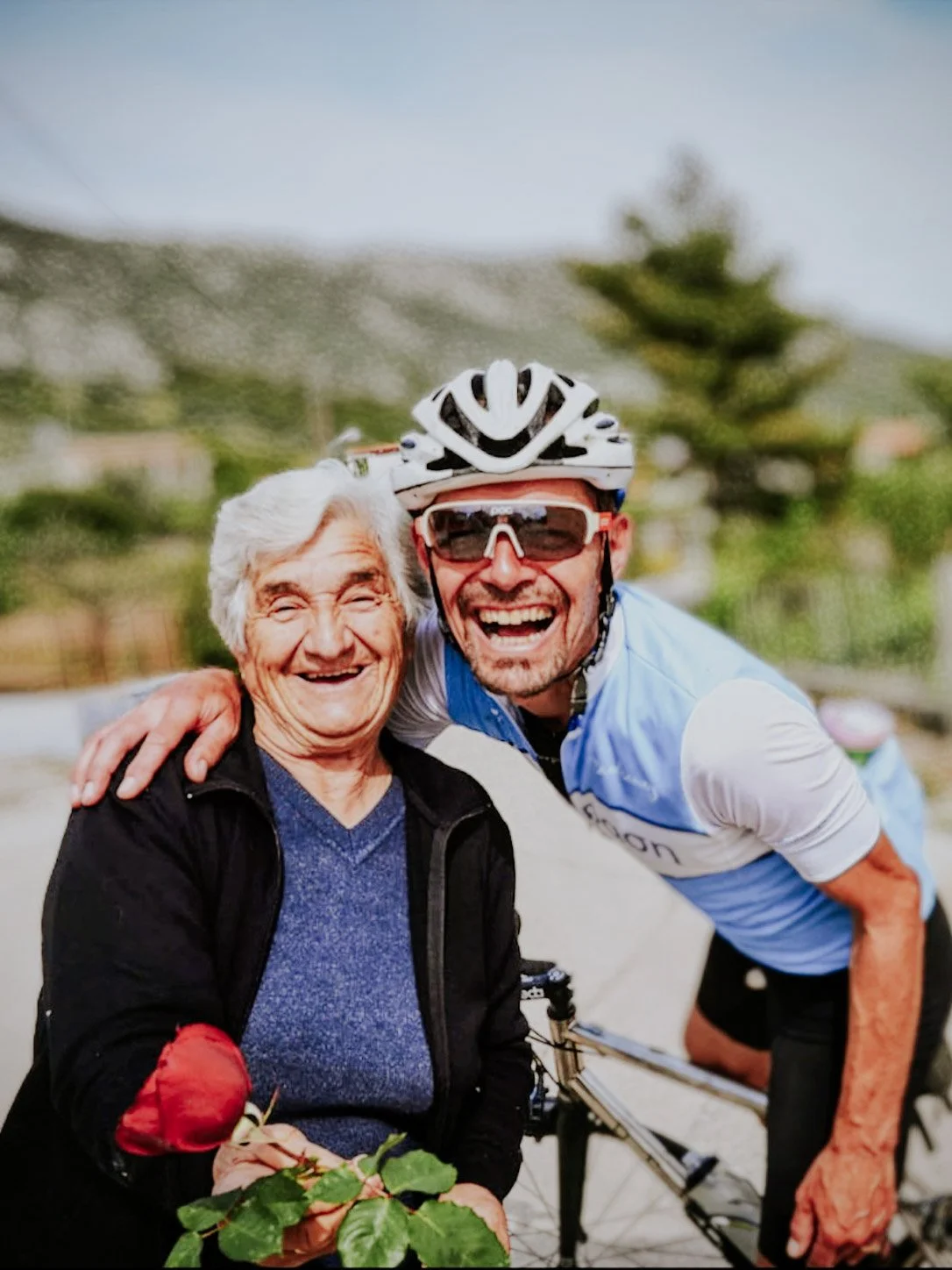
A few days riding changes your thinking – literally.
You stop thinking about emails
And start thinking about where you’re going, what you’ll eat, where you might sleep.
The world becomes practical again.
You have to talk to people instead of messaging them
And through that it’s easier to see their kindness.
and you learn the world is easier to cycle through than you expected.
What extra you need
Backpack or bike bags (panniers)
A plan for sleeping
A bike you trust
Less than you think
KINDNESS
The rides that remind you of the kindness of strangers
If you watch the news, it’s easy to believe towns and cities are splitting apart. It’s full of outrage, extremes and people shouting over each other. Social media rewards whoever is loudest, making it feel as if everyone is angry with everyone else.
But most people don’t live on the internet; they live at home, at school gates, in offices, shops, warehouses, cafes, and pubs – just trying to make enough money to support their families and have a laugh with friends.
When you travel at cycling speed through the real world,
it looks very different to the shouty online one – completely and utterly different.
A few years ago, I rode north for a week deliberately without my mobile phone. Everyone told me it was ridiculous. “You’ll get lost.” “What if something happens? How will you get help?” “Why are you making it impossible for yourself?”
I just wanted to see what would happen if I didn’t outsource every question to that thing in my pocket and try to rely on people instead. The same way I was raised.
So, off I set, with the only initial difference being that every few hours I had to stop and ask the same question: “Excuse me - do you know the way to Newcastle?”
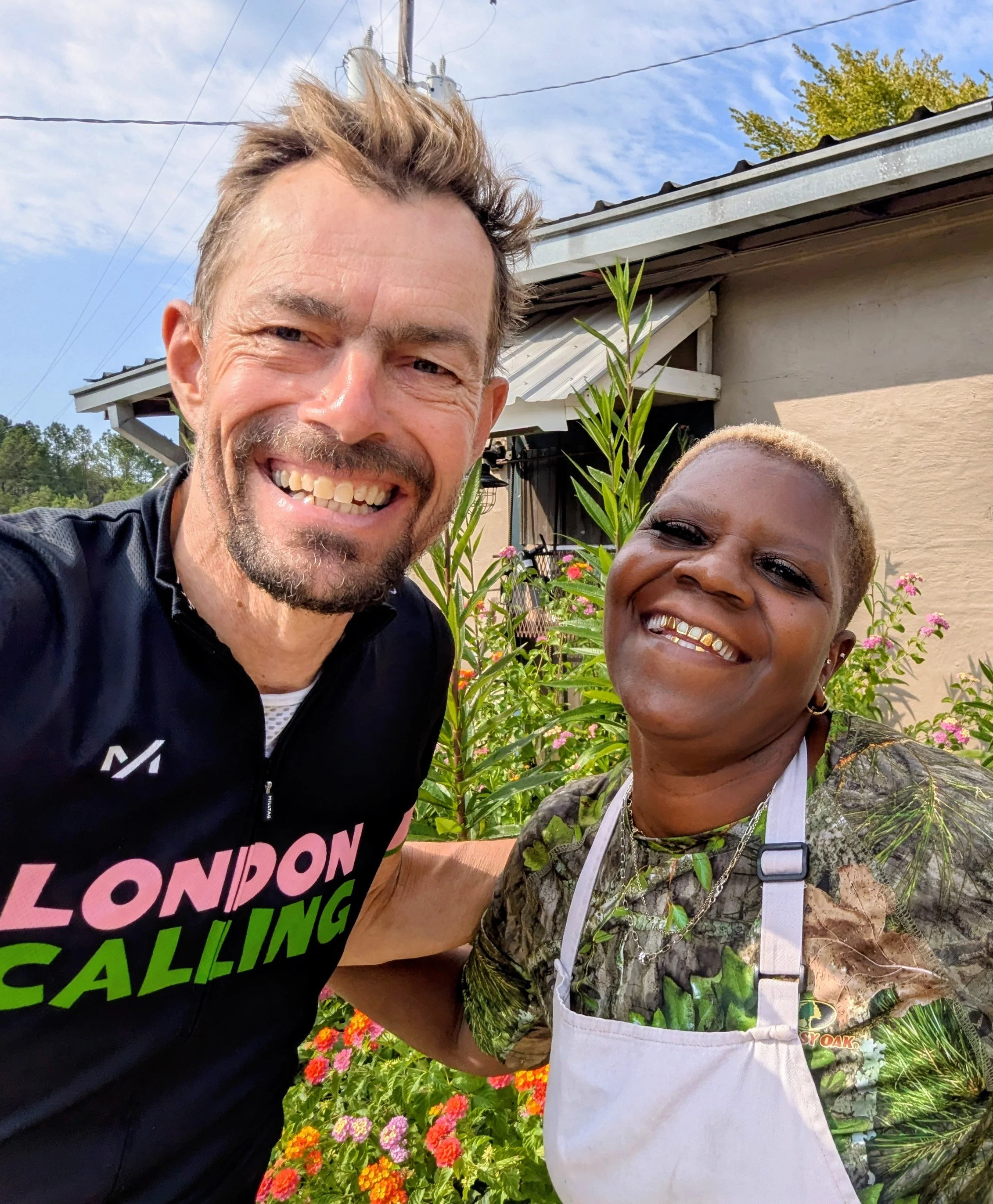
It felt a bit embarrassing at first. I was appearing suddenly in other people’s lives without any of the knowledge they would expect me to have to hand. But what stopped the awkwardness was how positive people responded. A student rode out of her way to put me back on the right path, a couple refilled my bottles from their garden picnic and insisted I take biscuits for the journey, and a woman gave directions so detailed I gave up pretending to memorise them and just followed her car through three villages.
I talked to more people than I do in a normal working week, sat at home.
The tech giants treat us as if we are half-robot, because we live with constant access to everything we need. The only thing left to upgrade, they say, is the interface - from our fingers to our thoughts. Maybe they’re right, but as I rolled north through the English countryside, I began to realise we are trading this computerised convenience for our very human nature. And no one I talked to wants that to happen.
One by one, these small encounters stitched my route together for me. Each time I asked for help, someone gave it, and each time we fell into the same topics of conversation: "Where are you going?" Why are you doing it? “Tell me more.” We’d start with directions and end up talking about our lives, our futures and how little people actually need to be happy.
It wasn’t a big cycling challenge, and to be honest, I only just found Newcastle. But more importantly, I discovered a country that still worked in the way I thought it no longer did - kind, funny, helpful and human. Nothing like the one in the headlines or online.
Personally, it also restored the trust in others that the digital world had been stealing from me - trust in simple, human-to-human kindness. People were helping me with no expectation of anything in return.
Cycling across a country without a mobile phone helped me regain my belief in human nature.
MINDFUL
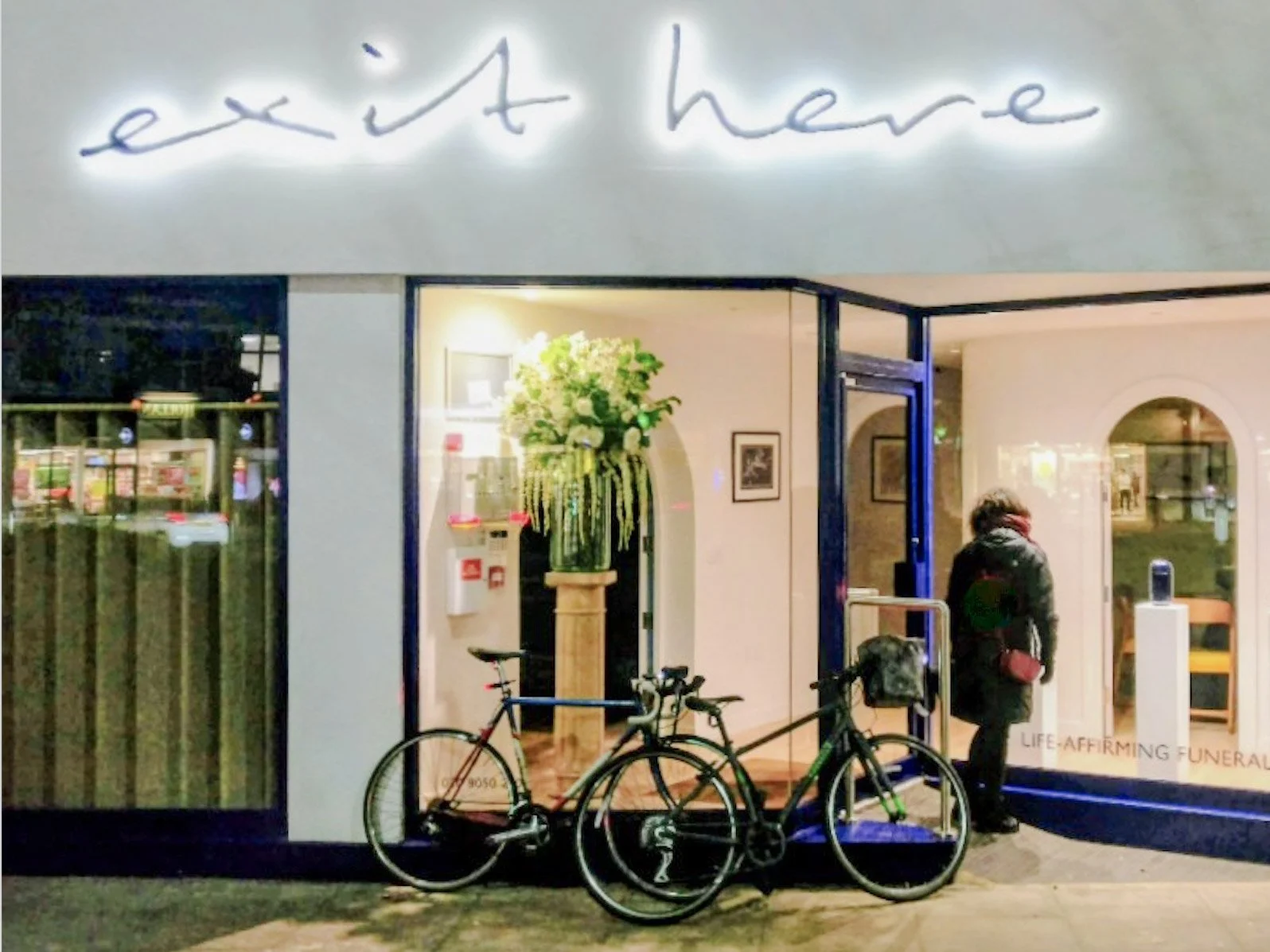
The rides that remind you that time is finite
Ride for long enough, and one day you will no doubt find yourself slightly outside your comfort zone - taken a wrong turning, had a close call with a car, seeing the daylight disappear and realising you still have miles to go, riding after dark when you hadn’t planned to, lying in a bed, that’s not your own, more tired than you expected to be.
In these moments, your body feels more fragile than it does in normal life, you become aware of your breath, your pulse and the fact that you are not actually indestructible.
At some stage, either your aching body or your uncomfortable mind will remind you of your mortality.
Cycling makes you feel alive in a way few activities do. You’re not in a protected shell but out in the open, moving faster than you can run - next to many things either moving much faster or not moving at all. You need to pay attention and have all your senses switched on.
You can feel exposed - but awareness of your vulnerability focuses your mind and brings clarity.
We all talk about changing our lives when something dramatic happens - a diagnosis, a scare, a wake-up call. But you don’t need a catastrophe to evaluate your life. On the bike, those questions become simpler – because you are more alive to them.
I’ve obviously had a few crashes over the years, normally, my own fault, when I’ve been trying to go too fast. I’ve always said to Helen, if anything happens to me, don’t let them say, “At least he was doing what he loved.” I love cycling - it has changed my life for the better tenfold – but it has also made me realise how much more I love my family.
Being mindful of your own mortality helps put many of the supposed anxieties and fears of life into perspective and focuses you more on what you should really be prioritising.
Am I spending enough time with the people most important to me?
Am I putting off things that I really want to do?
If time is finite, am I spending it on the things that matter most to me?
Being outside your comfort zone, having time to think, you might well find yourself having conversations with yourself you’ve been meaning to have for a very long while.
Good reasons to ride for a few days
Have a real adventure
See how far your body can take you
Visit friends and family in other parts of the country
To be able to eat whatever you want
Ride from one end of your country to the other
Ride without your mobile phone
Find out what type of riding you most enjoy
To try camping
Give yourself time to re-evaluate things
Inspiring people to follow
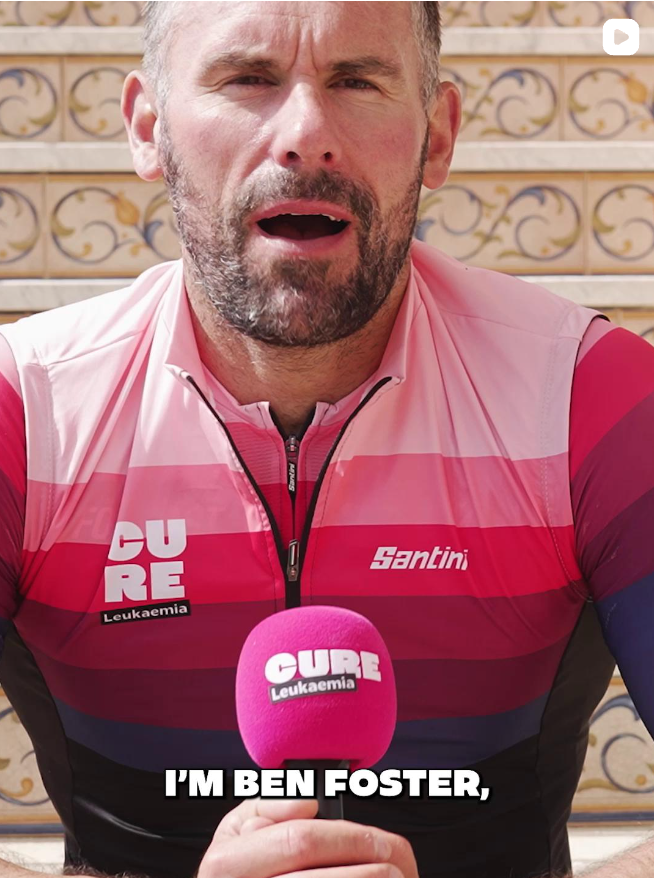
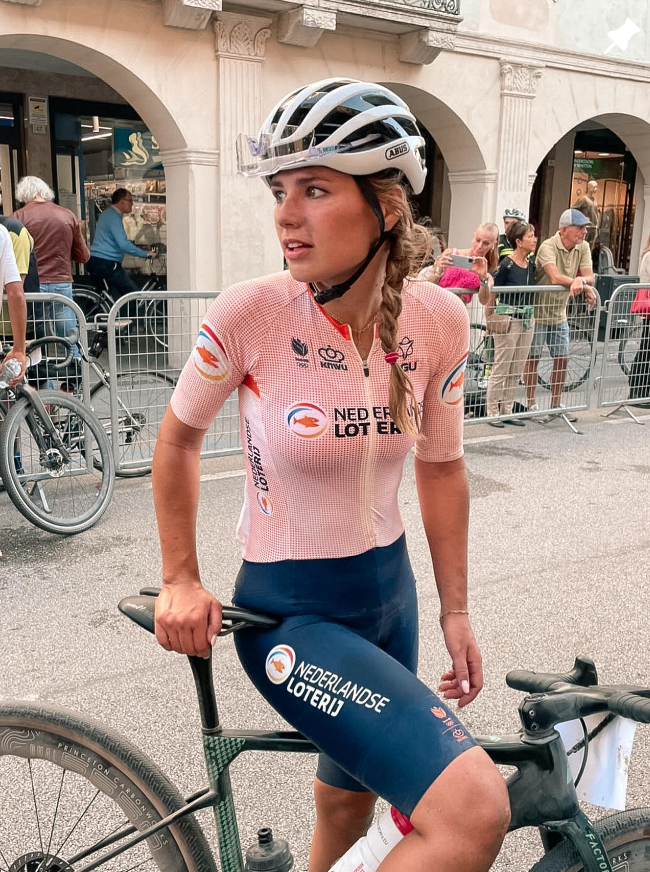
Riding bikes and making videos. All about cycling, bikes, training, bikepacking, road and Gravel. Video to watch - I learned a lot from my first Bikepacking trip
Former English Premiership goalkeeper with a video of his first overnight bike-packing trip.
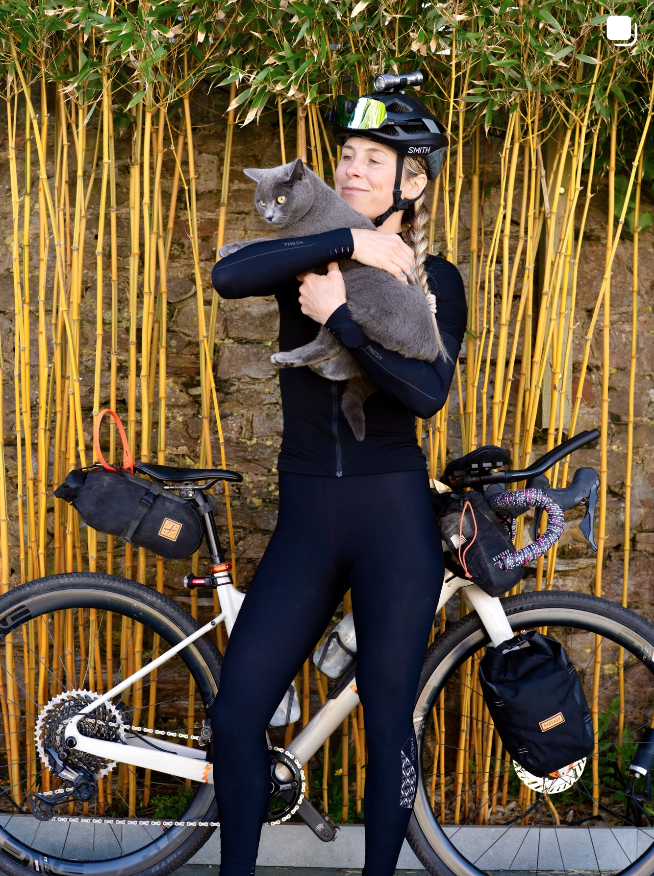
Juliet is a multi-discipline bike racer who loves big adventures. Named one of Bike Biz’s 'Most Influential Women in Cycling,’ and a ‘Woman To Watch’ by YouTube. She enjoys sharing inspirational cycling stories on all platforms.
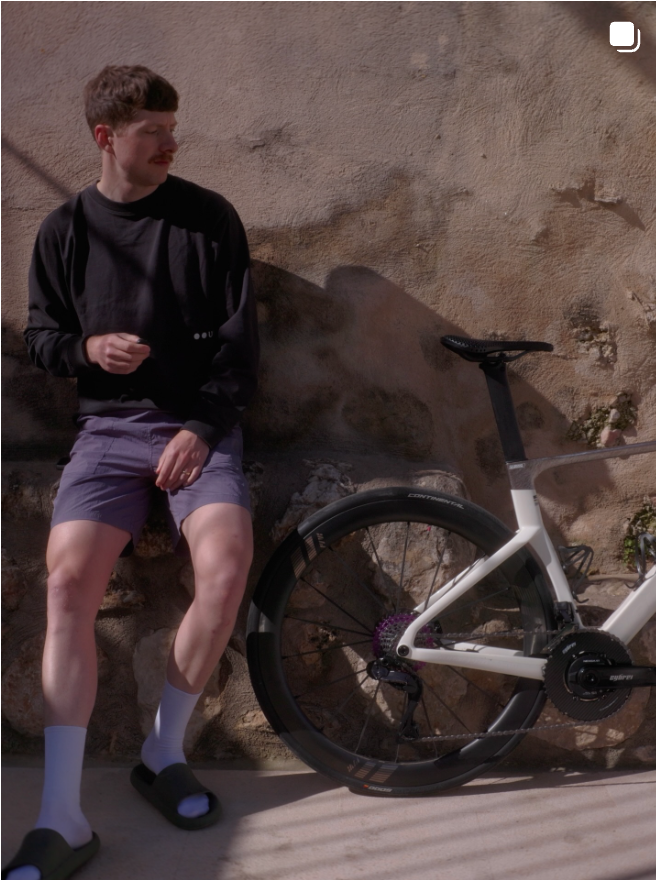
multi-disciplined bike racer - sometimes drawing and painting. lover of all things fast but will ride for food and coffee
Useful websites
Offers excellent, curated UK-based routes along with advice and community,
5.
TIME TO GO ABROAD
GROWTH
Taking a bike abroad expands your comfort zone.
You arrive somewhere unfamiliar, unpack the bike
and ride out into a country you’ve never seen before.
At first, everything feels new.
The roads, the signs, and the sounds
But after a while, you realise something simple.
A road is still a road.
A hill is still a hill.
People are still people.
And the riding is still riding.
That realisation grows confidence very quickly.
What extra you need
Cardboard bike box
Your passport
A bike you enjoy riding (you could rent one there)
Newish tyres
Clothing for riding and relaxing
CONFIDENCE
Rides that show you what you’re capable of
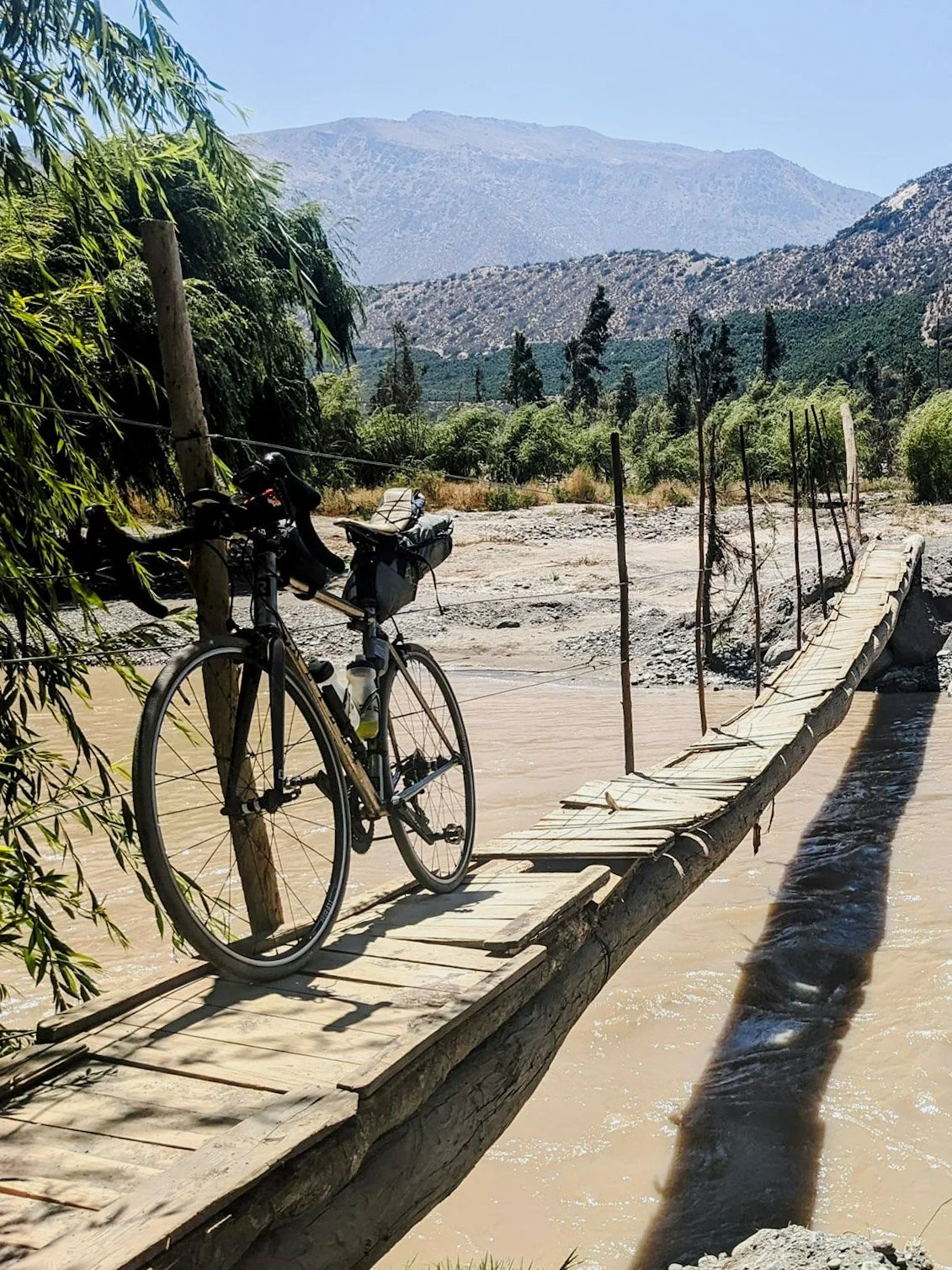
Taking a bike abroad is physically very easy, but mentally quite dangerous. You get it there OK, but then it tempts you into doing things you might otherwise sensibly talk yourself out of. You feel the same, but everything’s new, different and exciting, so you decide to explore a bit further, or it’s a beautiful sunny day, and you just want to stay outside, or someone mentions a café on the other side of a mountain, and you find yourself agreeing like that’s now a normal suggestion.
That’s how your confidence grows on a bike: by stealth. You find you’ve cycled more than you thought you were capable of before you ever even decided to try.
The first time I took my bike abroad was to cycle a big ride in the Alps called The Marmotte – I ended up walking lots of it until I managed to get more food down me! The following year, I managed to finish it without walking!
I had gone further, faster and higher than I had convinced myself I ever would be able to; it felt good, really good. I managed it because the day was decent, my legs felt okay, and I just kept going. It wasn’t until I finished, surprised at myself and thought, “Oh, I can do that.”
Years later, I became the oldest Briton to cycle up Mount Ventoux six times in a day, and that was still because it was a good day, my legs felt okay, and I just kept going.
A few years after that, I was sitting with the same bike at the base camp of Mount Everest – just staring in wonder at the mountain, still with disbelief at myself that I could cycle there.
I’ve done some stupidly big rides around the world. The confidence to do them came from the hundreds of smaller outings beforehand: the days I turned around because I couldn’t do it, the days I walked, the days I started badly but finished feeling really good, and the days I surprised myself that I could do it.
The brilliant thing is that this newfound confidence doesn’t stay wherever you discover it; it travels home with you. The next time life feels intimidating, you’ve got a piece of evidence that the voice in your head that’s saying “you can’t” can very often be wrong.
It really is a positive side effect of riding a bike; it teaches you, repeatedly, that you can handle more than you think. Not perfectly and certainly not every time, but enough to change how you see yourself and what you can do.
And once that shifts your head, from seeing yourself as someone who can avoid hard things to someone who can work through them, a lot of the rest of life genuinely becomes a bit easier.
And you start riding to even more interesting places.
RICHER WORLD
The rides that make your life richer
One day, beyond your usual bike rides, maybe quite a lot further from home than you normally are, you will discover that nothing bad has happened, and realise there’s actually nothing at all to stop you from just keeping going.
You might not be able to read the road signs or understand the voices in the café, and lunch is happening in a city you didn’t know existed the day before. Everything may be different, but you and your cycling are exactly the same.
The distance between our ordinary and extraordinary is far smaller than we believe.
My first long bike trip was ten days across Britain, from Land’s End to John O’Groats. We had handwritten lists of villages to cycle through, and a general sense that north was up. Some days we got lost, but it just meant we discovered villages and pubs we would never have found on purpose. There was no tracking, no live updates, no quick glance at a glowing screen to reassure us we were “on route.” It was a real adventure.
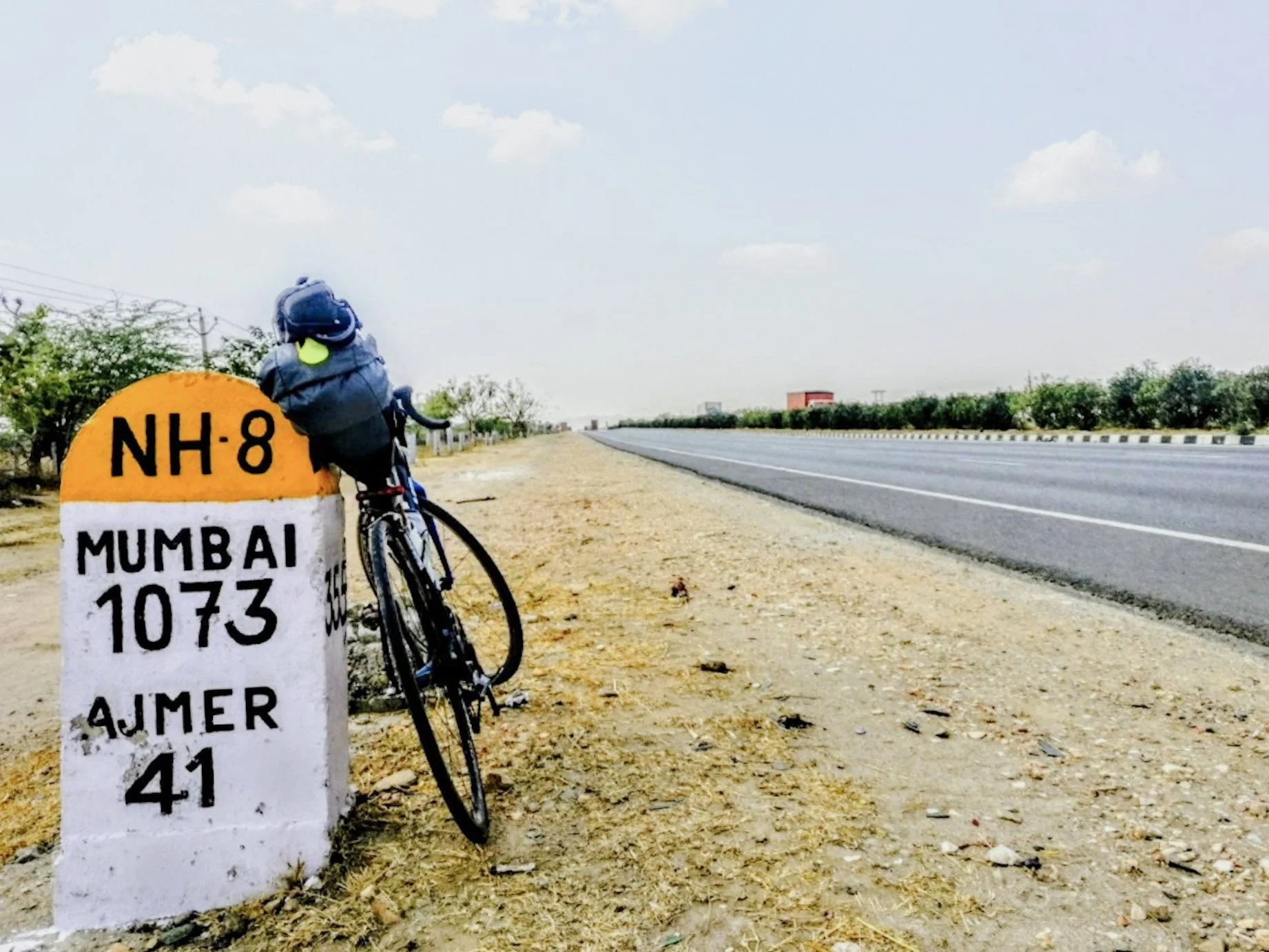
Years later, I rode another ten-day trip – across India, from Delhi to Mumbai. People told me not to do it. It’s too chaotic. Too crazy. Too unpredictable. It was all of those things, but by then, having gained all the experiences in this book, I loved it.
Thirty-five degrees, more traffic than seemed possible and every form of ‘vehicle’ appearing from whichever direction it chose - buses, tuk-tuks, tractors, pedestrians, elephants and cows. Often straight at me, but not at one point any road rage. Indian traffic moves like a school of fish – all together in synch with each other. Whilst mopeds would pull alongside and ask where I was from, and coachloads of pilgrims shouted out of windows, to insist I stop and eat with them. Everywhere I cycled, I was surrounded by smiling groups asking about the bike, my journey, and the craziness of being on riding. I stuck out like a fish out of the Indian Ocean.
A local motorcyclist told me, “If you can cycle here, you can cycle anywhere in the world.”
Most people just assume this access-all-areas pass to the world is for other people; those with an inbuilt sense of adventure, more time and money, or with a better bike and stronger legs. We imagine that seeing the world requires a sabbatical or a perfectly timed window of life that never quite appears.
In reality, it often requires simply a willingness to go a little further than you have before.
If you ride far enough that breakfast and lunch happen in different places. Ride slowly enough that people can stop and ask where you’re from, then the world will open up to you - wherever you are.
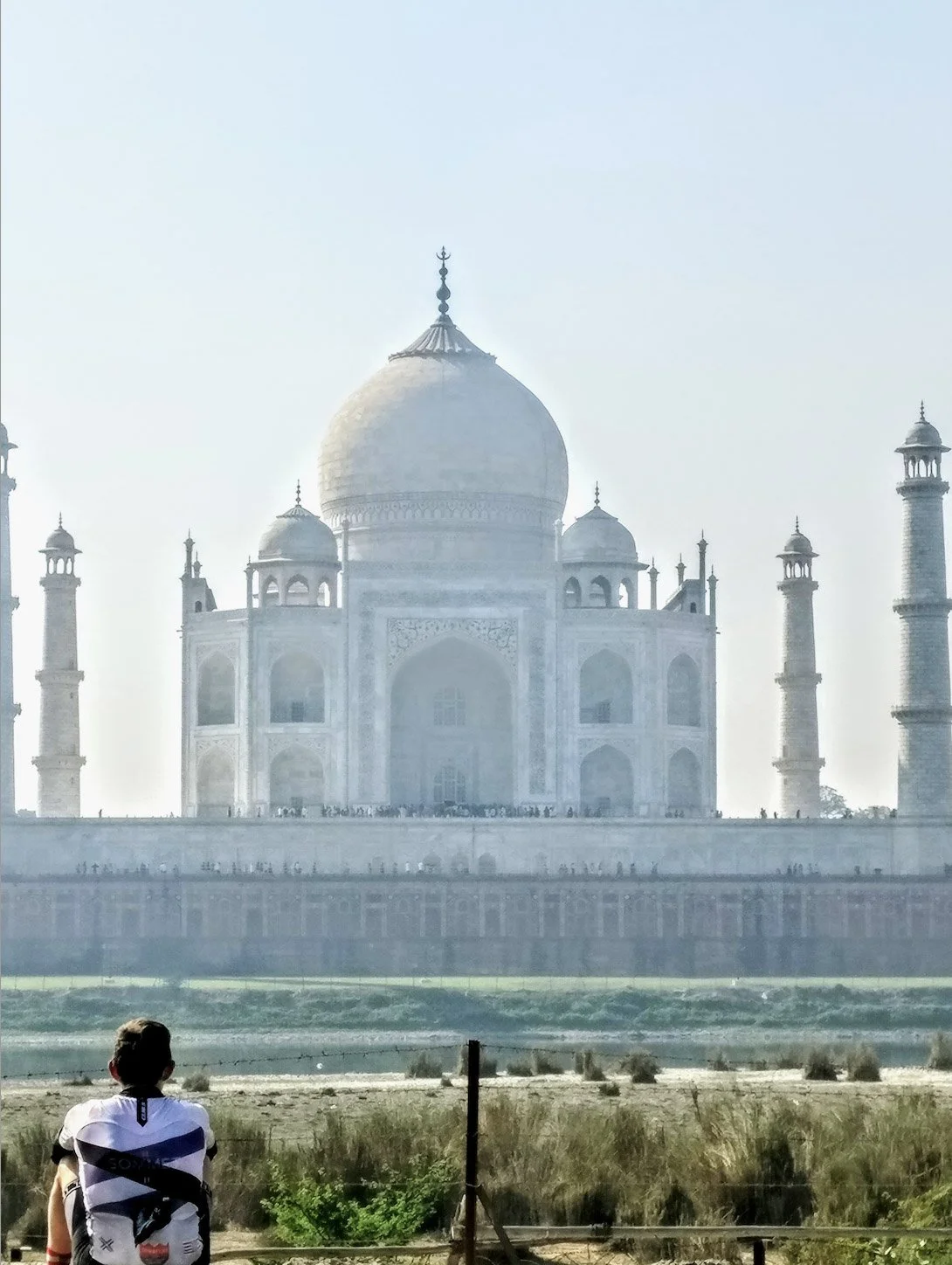
Extraordinary certainly doesn’t have to begin at the Taj Mahal; it begins at the edge of what you currently consider your own normal.
Cycling can make life a bit richer – not financially richer – but one where life itself feels rich – more conversations and more experiences, over more of the planet.
Good reasons to ride abroad
Take your bike on family holidays
Ride from one end of any country to the other
Have a Cycling Holiday
Taste different food and drink
immerse yourself in a different culture
Cycle over mountains
Ride an iconic route
Create an adventurous trip
Enjoy your favourite way to ride – but in another country
Ride a Gran Fondo
Go to Mallorca
Ride a Eurovelo route
Inspiring people to follow
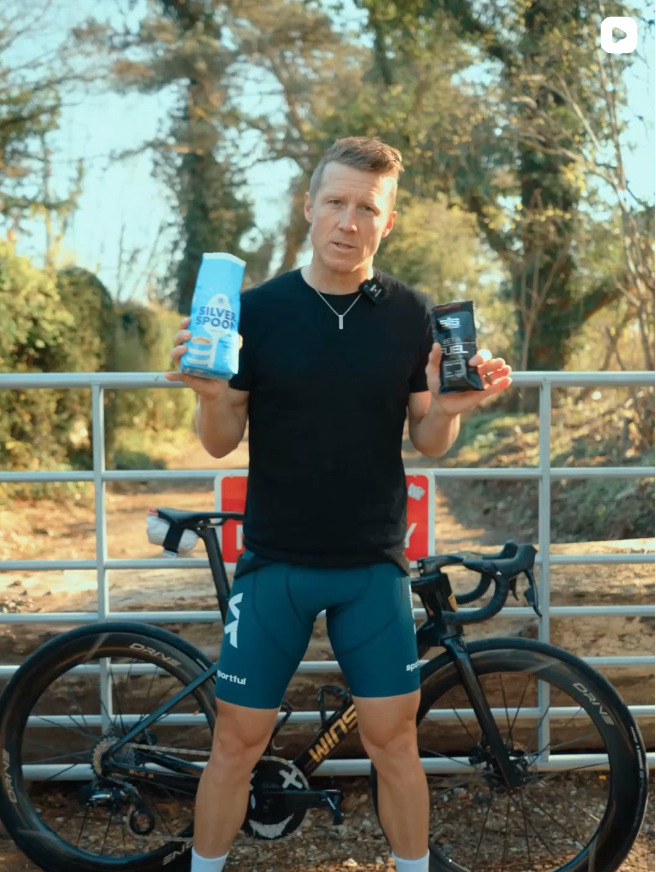
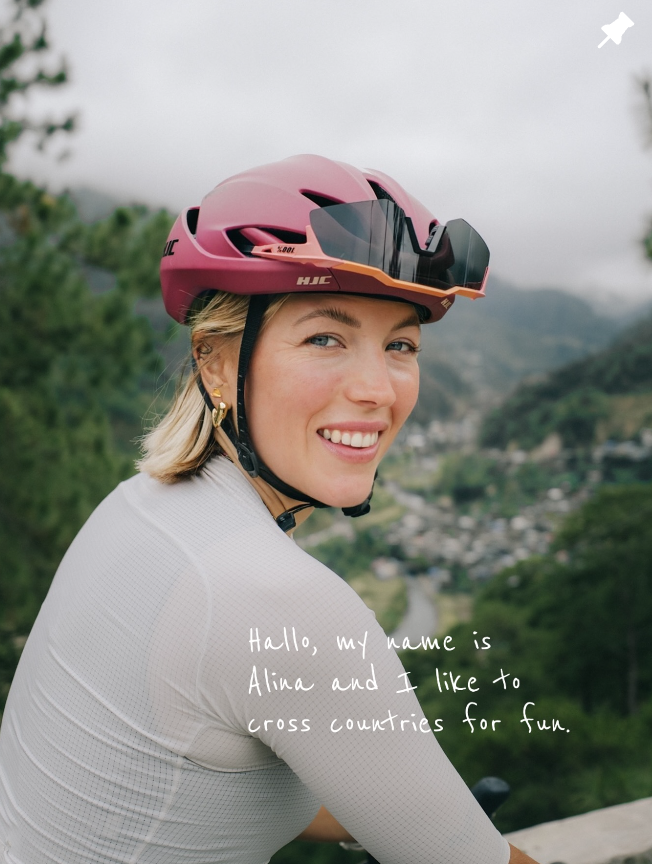
A bicycle adventurer and general outdoor enthusiast, who creates humorous videos, posts and merchandise around reminding people that adventure is not just for bearded men with expensive gear, it’s for everyone. Especially women. Everything she does is rooted in one message: Everything is an adventure and Tegan also does her own stunts but not on purpose.
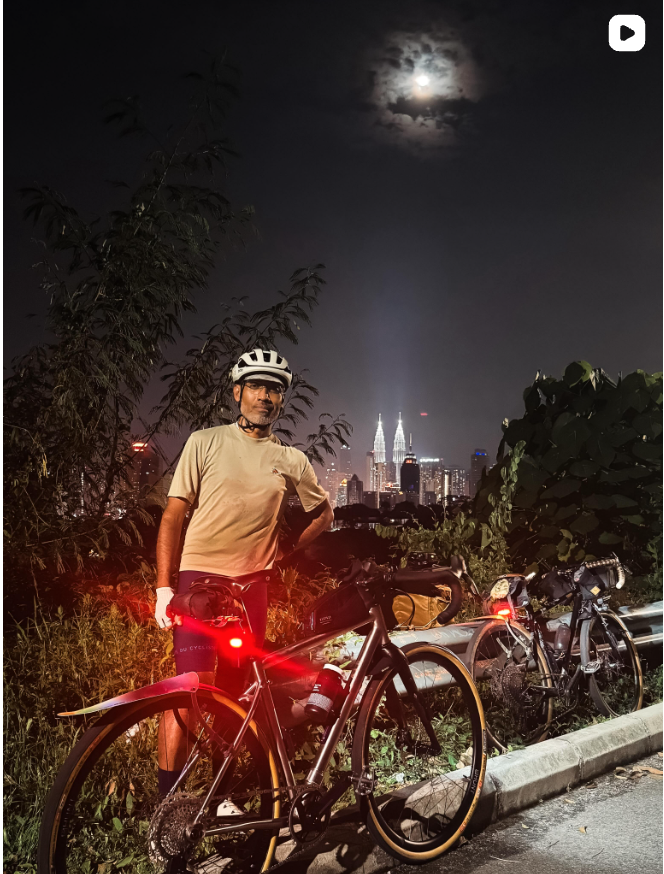
Cyclist, Ultra Runner, Photographer & YouTuber. Mostly riding bikes for adventures around the globe.
Exploring places with bikes and Jimny
Video of YouTuber's First time cycling abroad - in Girona
Useful websites
The home of the world of bikepacking & gravel cycling adventures.
A Gran Fondo is a type of long-distance road cycling ride originating in Italy in 1970, and roughly translates into English as "Big Ride". Gran Fondo Guide is the largest cycling calendar with over 4000 events worldwide in over 150+ countries.
Guide to the best cycling holidays worldwide
6.
TIME TO SEE THE WORLD
LIFE AFFIRMING
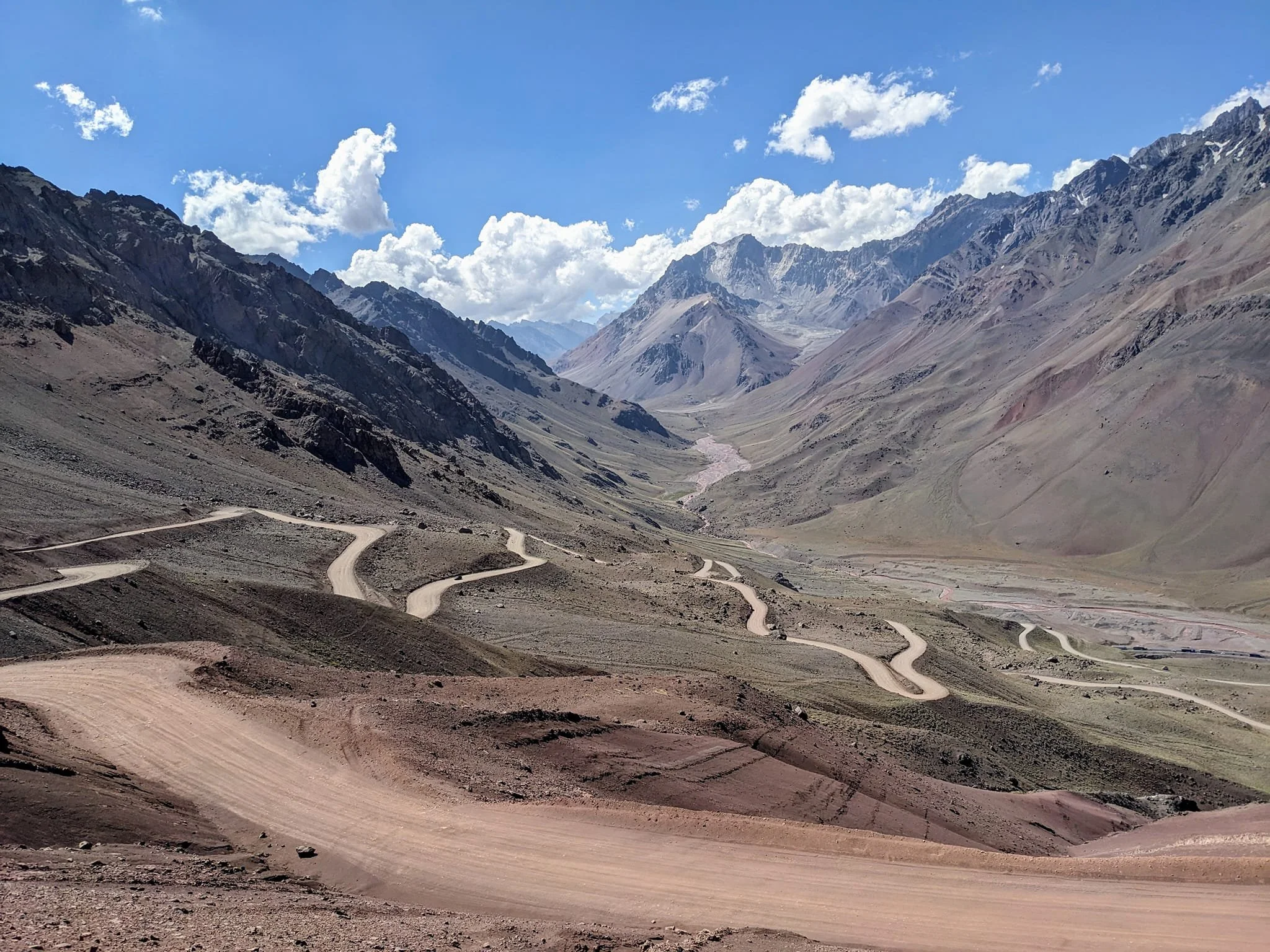
If you ride through different parts of the world,
something life-affirming happens.
You see places in a way that is impossible from a car or a coach window.
You are out on the road where people actually live their lives.
And those people wave, ask questions, and offer directions.
After enough of these small connections, you realise
that the things which connect us are far stronger than that which divides us.
That most people are simply getting on with their lives,
Travelling slowly through it lets you see that properly.
What extra you need
A few essential bike spares
Whatever personal things matter to you
Curiosity
A loose plan
Everything else is optional.
Check bookwebsite.com for all options
COMMON GROUND
The rides that remind us we have more in common than that which divides us
Riding across America was not at all what everyone warned me it would be.
“Please be careful out there”
And according to the media, they were right to warn me. The country looked split straight down the middle - half angry, half name-calling, and all shouting. Everyone is furious, no one is changing their view, and everyone has a gun.
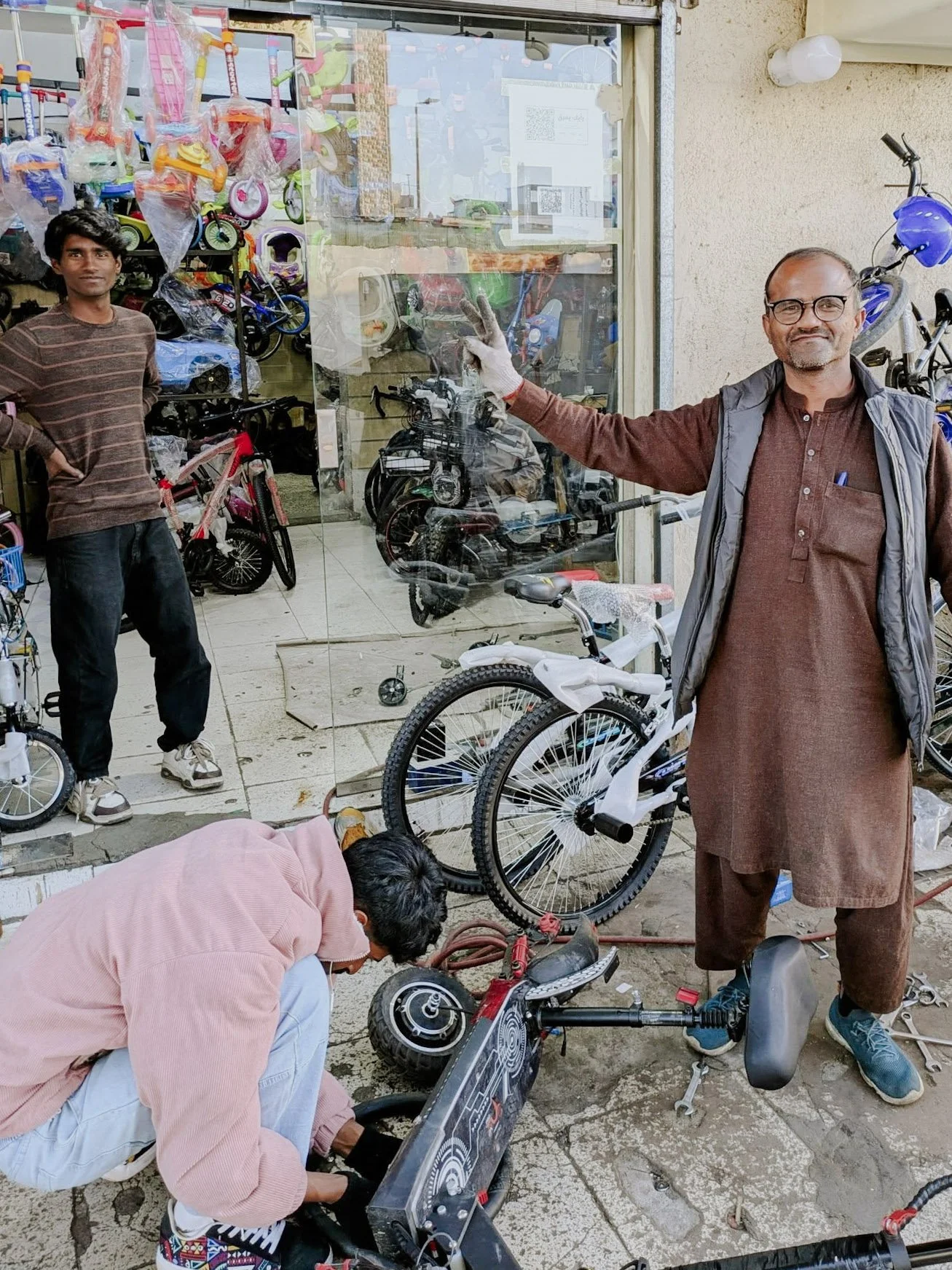
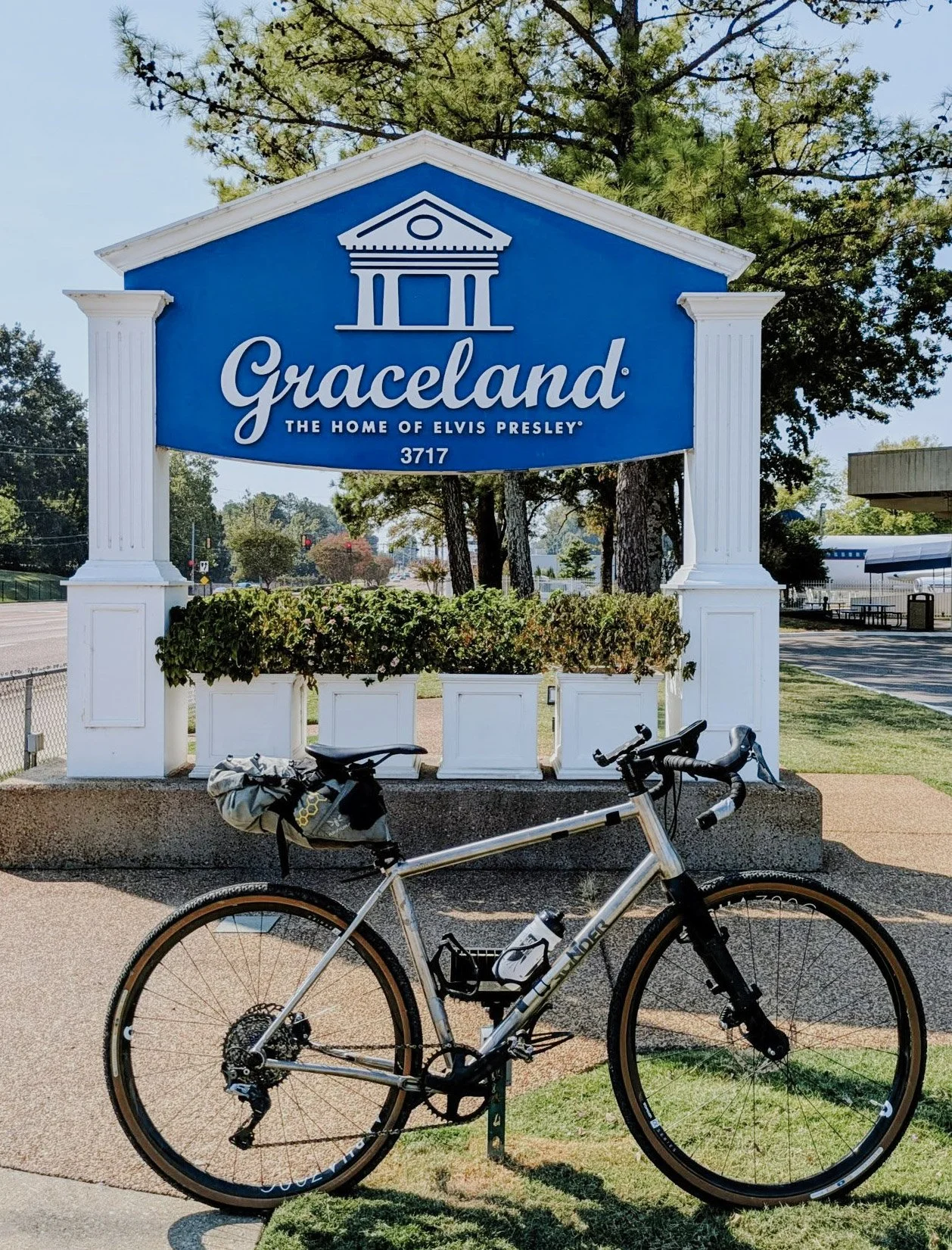
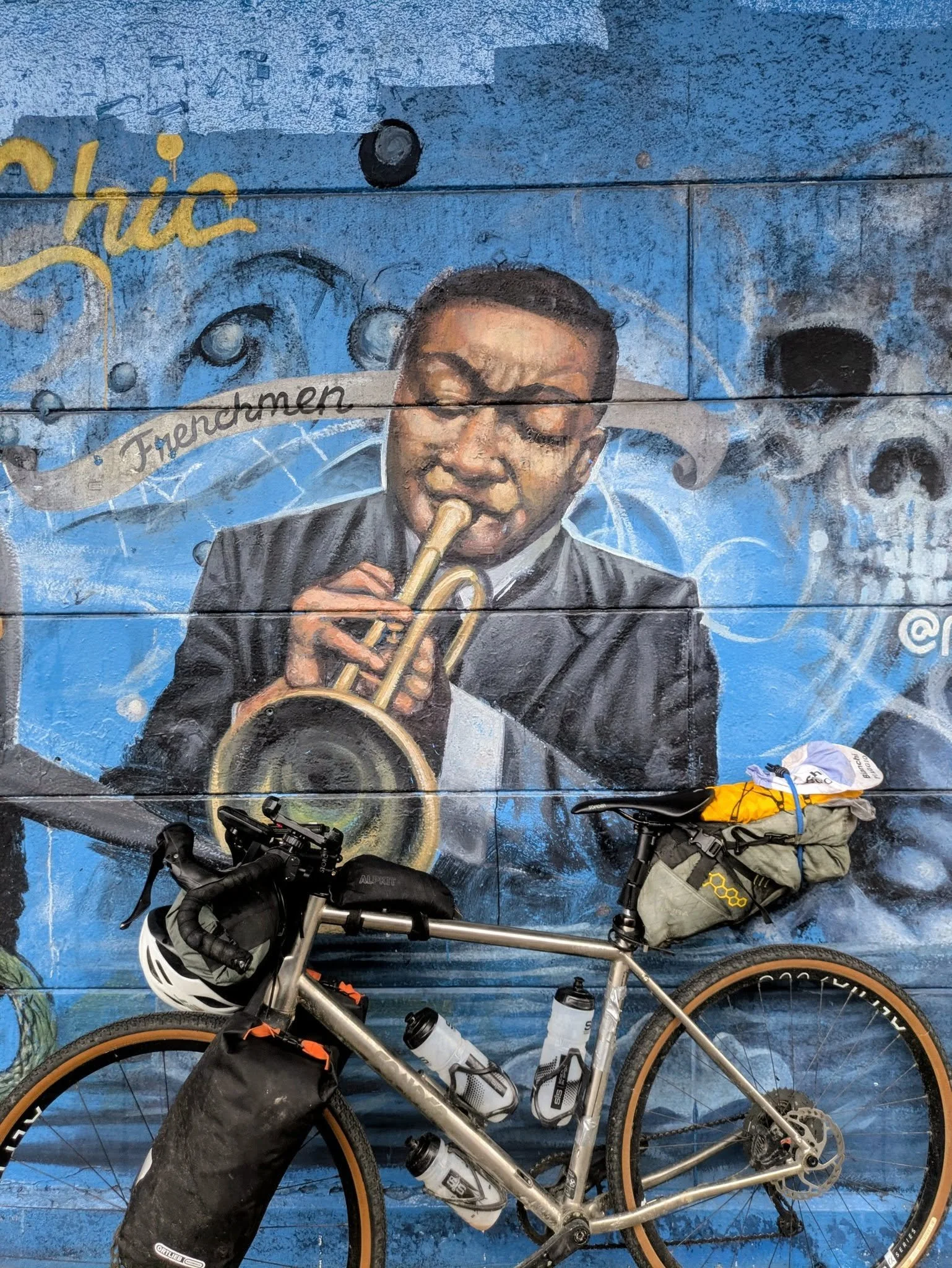
So, when I decided to cycle straight down that middle to visit all the famous music recording studios and civil rights locations, I was a little nervous - and then I got there - and found people were just ordinary, funny and kind. Exactly like on my ride across Britain without my mobile phone.
Over one month, I rode three thousand kilometres through eleven states, twenty-two cities, and had tens of conversations that changed the way I saw the world and maybe also did the same for those I was talking to.
Whenever I stopped, people would ask where I was from and what I was doing. I’d tell them and they’d reply, “Crazy Brit” and then they’d want to help. Taproom managers gave me free meals, food truck owners refilled my bottles, and motel owners gave me discounts and stories.
When I asked them what their life was like, the answers were always the same.
Not politics or ideology. Just the reality - “Business is slow.” “Bills are crazy.” “Our kids can’t afford to move out.” “We just want to enjoy a nice, normal life again, you know?”
The words could’ve been spoken by any of my neighbours back home in Britain.
Two nations, nearly four thousand miles apart, worrying about the same things. And behind those worries, the same hopes: just to have enough, to be happy, and to be together.
The people I met never appear in the media; the waitress outside Nashville, whom I cycled alongside to work, the retired teacher who built bikes for local kids, the (very) tattooed biker in Louisiana who prayed for me at a roadside café. Not one of them told me who they voted for; they asked if I wanted more pie.
At cycling speed, America wasn’t red or blue. It was green, generous and unfortunately for an aging cyclist, endlessly rolling up and down.
So, south I cycled, until I reached New Orleans, and realised I wasn’t cycling through the country that appears in the media. I was in a vastly different one - the one that actually exists but doesn’t make any headlines.
More recently, on another continent, riding through the Saudi Arabian desert, the same thing happened in a different culture with different beliefs and a different language. I saw almost no traffic, but half the cars that did pass would stop and offer water. People pressing bottles and food into my hands, insisting I sit in the shade. A few times every day, people would invite me to stay the night as their guest in their homes. I didn’t need help; I was just a normal person moving slowly through their world, and they wanted to help.
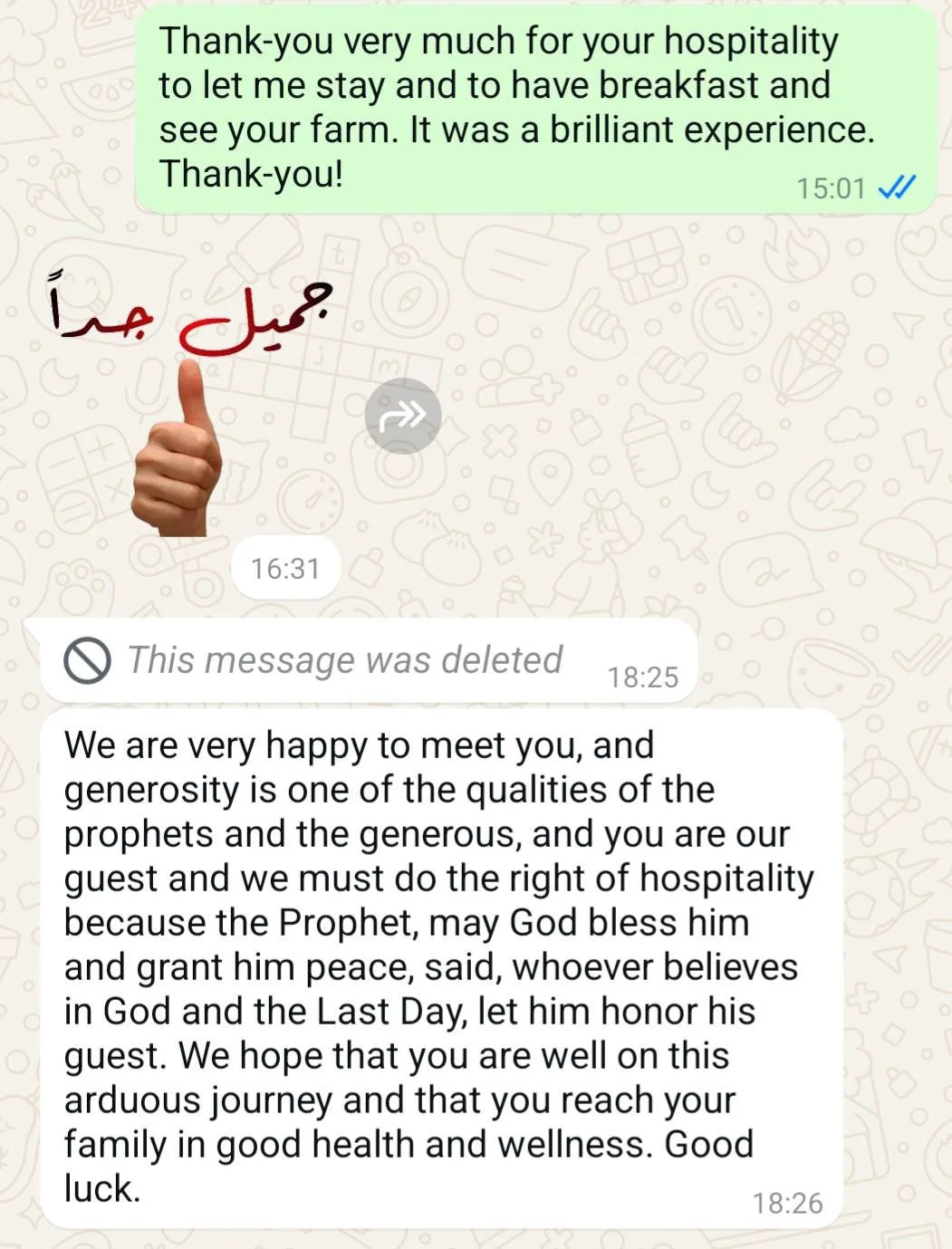
Cycling gives you the opportunity to not just read about countries, but experience them, and the fact that most people are living broadly similar lives under very different flags - and that the vast majority are decent.
When you arrive somewhere new on a bike, you arrive unmistakably human. Not in an online comment section, or anonymously, or as a threat. You’re just a slightly tired person who can’t hide behind anything, and people everywhere respond to that.
Cycling is often seen as a solitary pursuit, but I visited these countries alone, knowing that when you travel in cycling gear, you get to talk to more people than you would if you were sitting at home staring at a screen.
It isn’t cultural, or national or political. It’s about human curiosity and kindness, but it’s not just about theirs; it’s also about mine. Without distractions and global headlines, I become less guarded, fully present in the moment, and more open.
I’ve never taken a bicycle lock with me on these global travels, never had need to. People will help you look after your bike.
It doesn’t mean there aren’t bad people or bad days, but it means the loud version of the world you scroll through isn’t the only version. There’s another one, the real one, populated by ordinary people who are just getting on with trying to make the best of their situations.
You find it when you’re prepared to be a little vulnerable, or when you have to ask for directions, or simply when you ride a bike.
HISTORY
The rides that put you in your place
One of the best things about riding further is that you can actually choose to ride yourself right back through history.
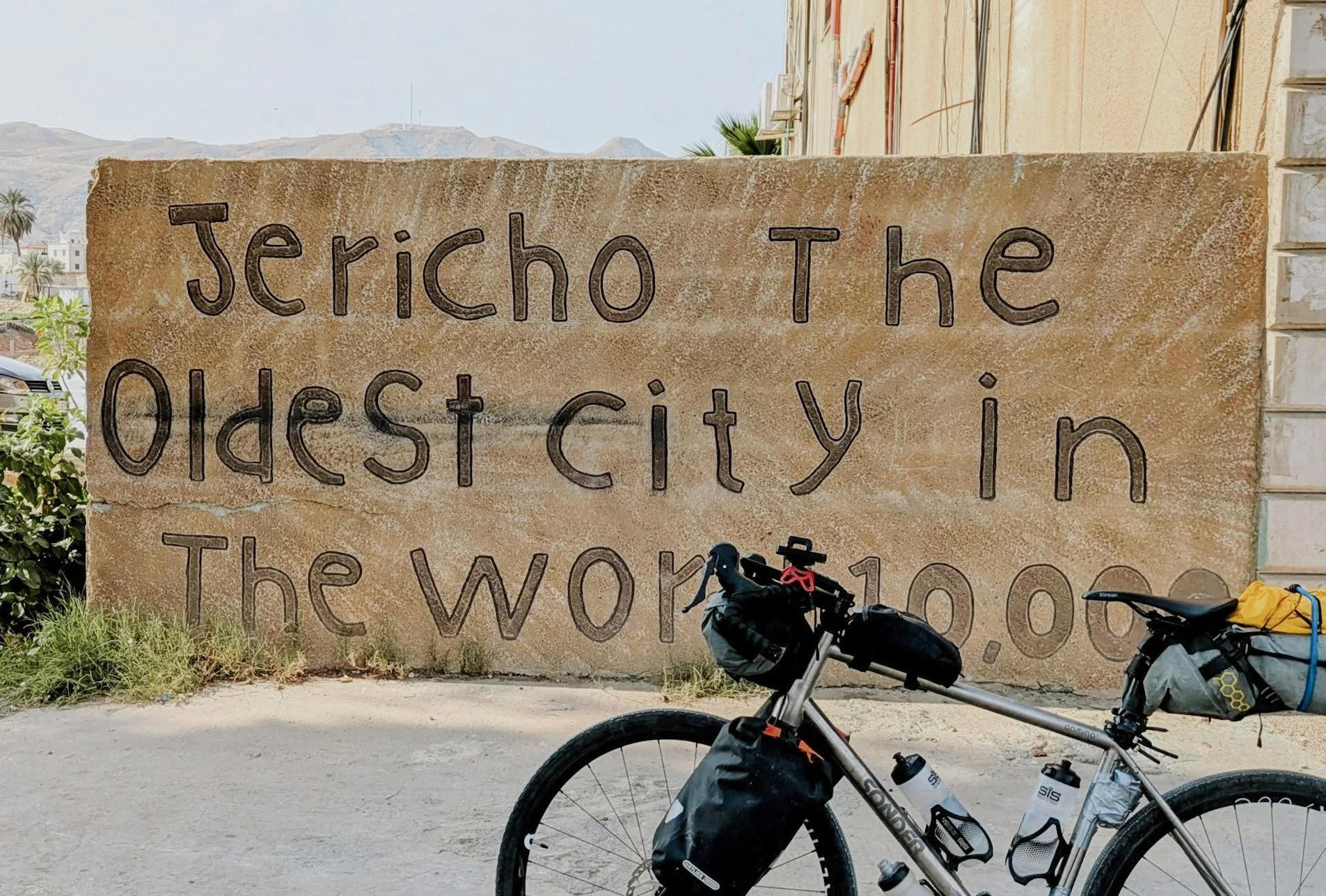
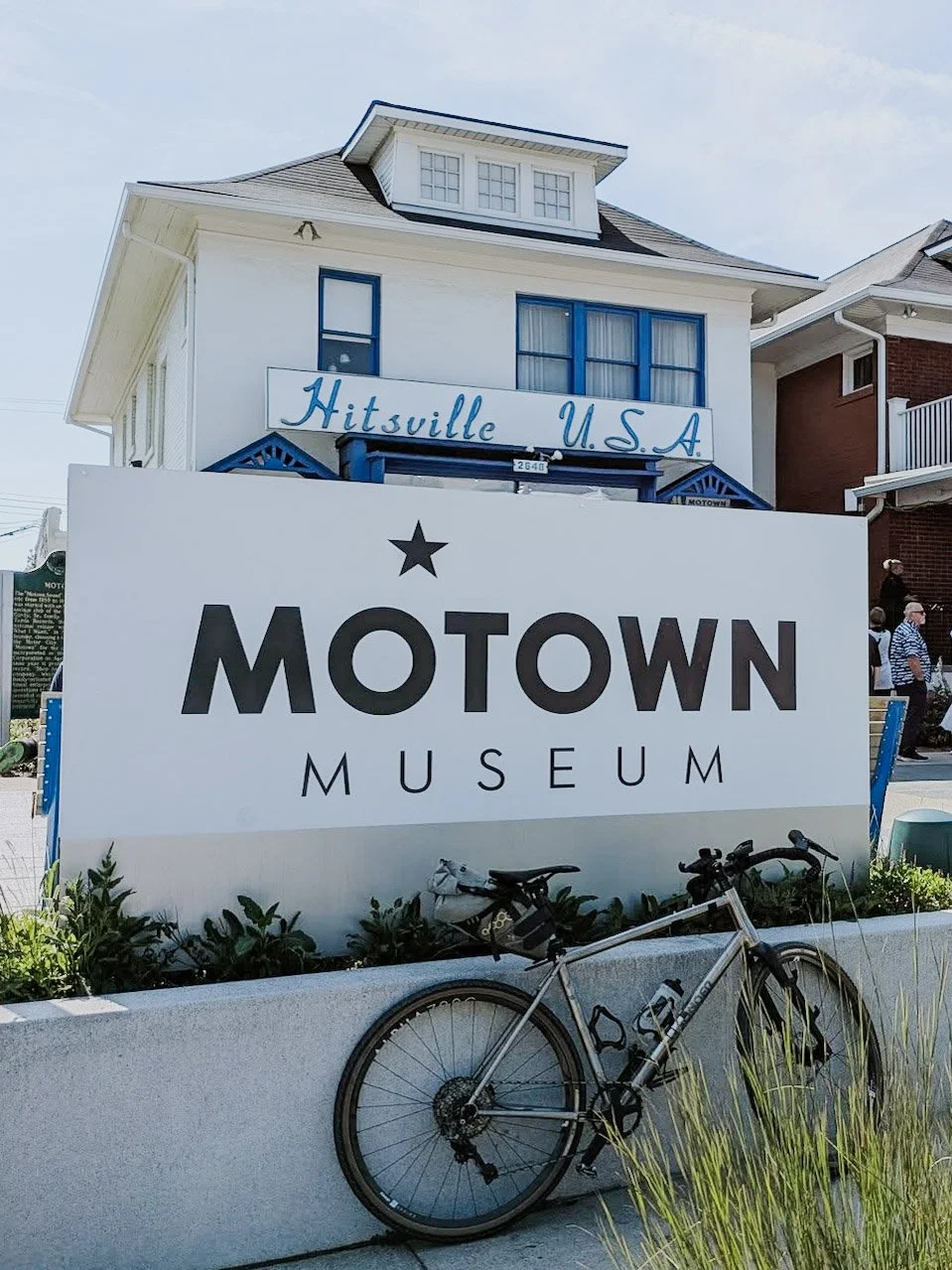
I’ve cycled up to the doors of Motown Records in Detroit and stood there like an idiot, grinning. I’ve ridden to Bethlehem and the Great Wall of China and felt the atmosphere change as I got closer. I’ve pedalled to places where civilisations began, where empires broke, where music exploded, where human beings did their best and their worst.
As a teenager, I was not a good student; reading about history rarely moved me – standing where it happened does - I can see it, feel it, imagine the real people doing the real things. It brings it to life.
Arriving by bike cements the genuine experience. You’re not stepping out of an air‑conditioned bubble; you’ve likely ridden the same route there that people have always used. You’re a bit sweaty, helmet hair doing its thing; you’ve done the journey; you have a better understanding of the culture. You’ve worked to get there – like everyone in the history books did.
Then you wheel your bike into the ticket office and ask, always very politely and slightly sheepishly, “Is there anywhere I can leave this, please?” and someone always replies, “Put it in here.”
So, there you are, wandering around the most significant places in human history, dressed as a cyclist
There’s something brilliantly ridiculous about it – but also deeply grounding. You ask questions, but people also ask you questions: “What brings you here?” For that day, you become part of the story too. History stops being just information and becomes your lived experience.
You stand still as long as you can to try and get it all to sink in – the noise, the fear, the hope, the music, the disputes, the prayers, the love and laughter.
Then, before riding away, you take one last long look. For when you're visiting history like that, really just standing there, your ego shrinks a little. You realise we’re all just passing through on this tiny blue dot of a planet – even if it is by bicycle.
A bike is an incredibly simple machine, but it has enabled me to learn more about our world and my place in it than any classroom or book ever did.
SERENDIPIY
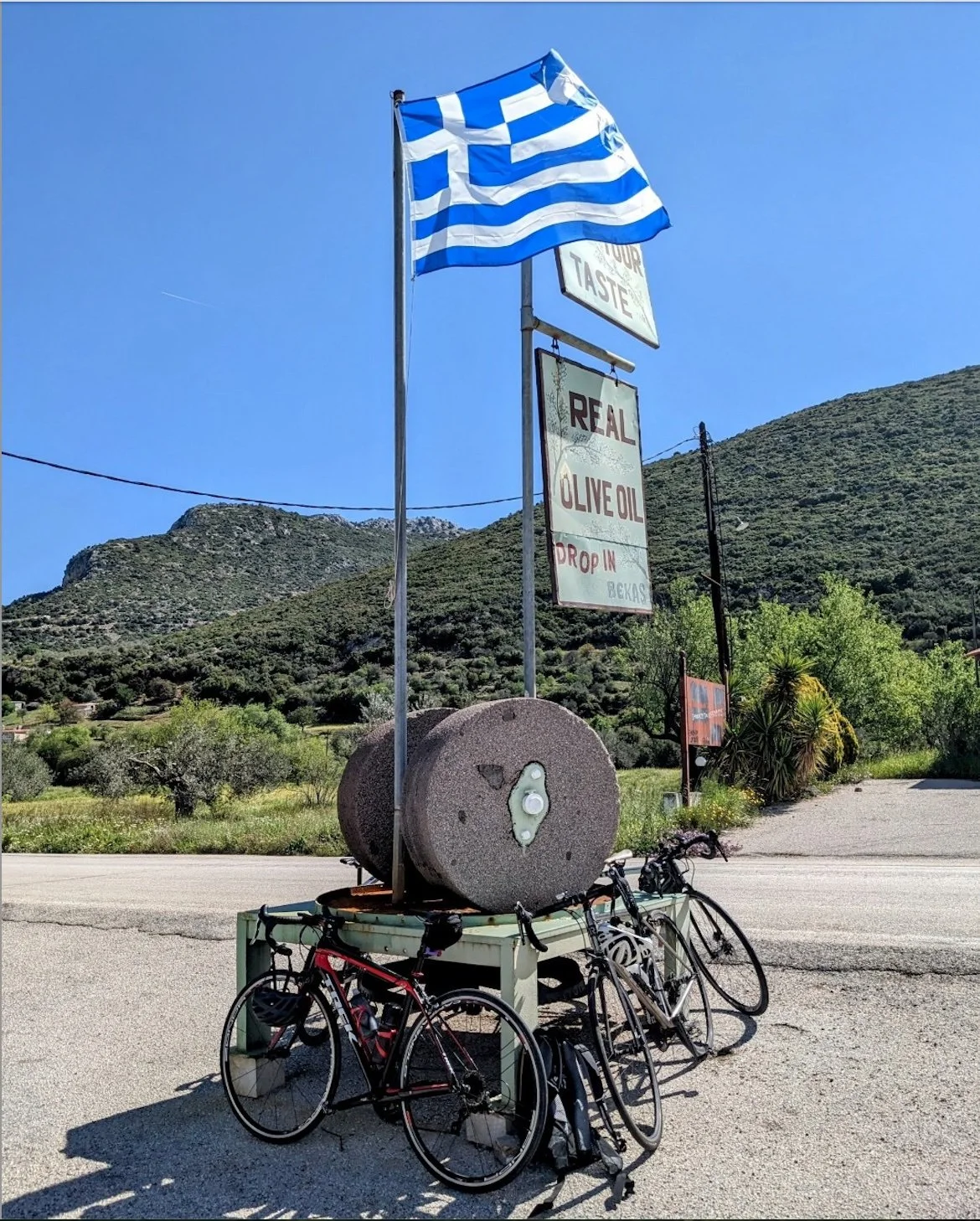
The rides that can change your life
One of the underrated simple joys of riding is discovering what’s waiting around each new corner.
Serendipity – coming across something good you weren’t actually looking for - used to be the bedrock of ordinary, simple pleasure, in the times when we couldn’t plan every single thing we did - an amazing café we stumbled upon, a view that takes your breath away or maybe just bumping into an old friend.
Now, most of our supposed serendipitous moments are spoon-fed to us online - Suggested, filtered and funnelled. We just see more of what ‘they’ already know we like.
On a bike, every single mile is a new and unpredictable experience. You turn a corner and whatever is there - is there. Beautiful or not so beautiful.
Sometimes it’s just a better coffee than expected, sometimes it’s a camel or kangaroo standing in the middle of the road, or sometimes it’s a tough hill that you hate until you reach the top, and the world opens up with such beauty.
Occasionally, what’s around a corner can even change your life.
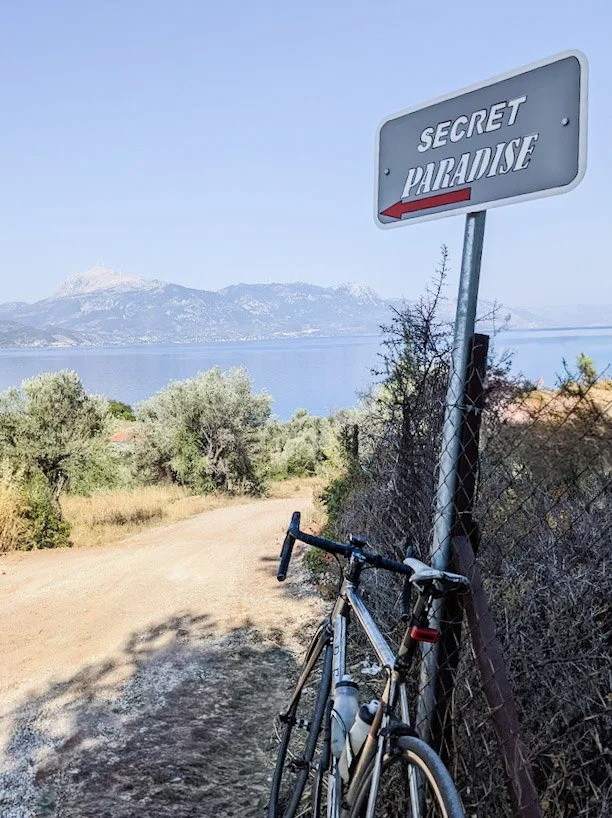
I was riding along the Peloponnese coastline in Greece on a road that had been cut into the rock face, islands sitting on the horizon like they’d been placed there for a brochure. Athens shimmered in the distance. The water was an impossible shade of blue.
As I rounded a corner, a village came into view – I looked up its name - Epidavros. I remember thinking, this is paradise. I even posted a photo and shared my thoughts with my friends from that very corner.
I fell in love with it, and so just a few weeks later, I persuaded Helen to come and see Epidavros for herself. We sat down for a long Greek lunch, and because we had time, conversation drifted where it rarely drifts when we’re both busy at home.
“What are we going to do for the rest of our lives?”
On paper, everything was fine. I had a good career and earned well, but in reality, we were two tired urban midlifers in an industry about to be reshaped by AI, and we’d plateaued. We could keep chasing relevance, or we could choose something more real.
By the time I’d personally finished all the halloumi, we both said it out loud: we could try to build a life here. I could bring people here for cycling holidays. We could step away from the city and do something that feels human again.
We took a financial risk, which appeared reckless. But I’ve ridden enough of the world to trust my instincts. We could step away from predictability for something less certain but far more alive.
I didn’t know then how many happy cyclists we’d host or how many friendships would form. How much our lives would grow, simply because I cycled around that corner.
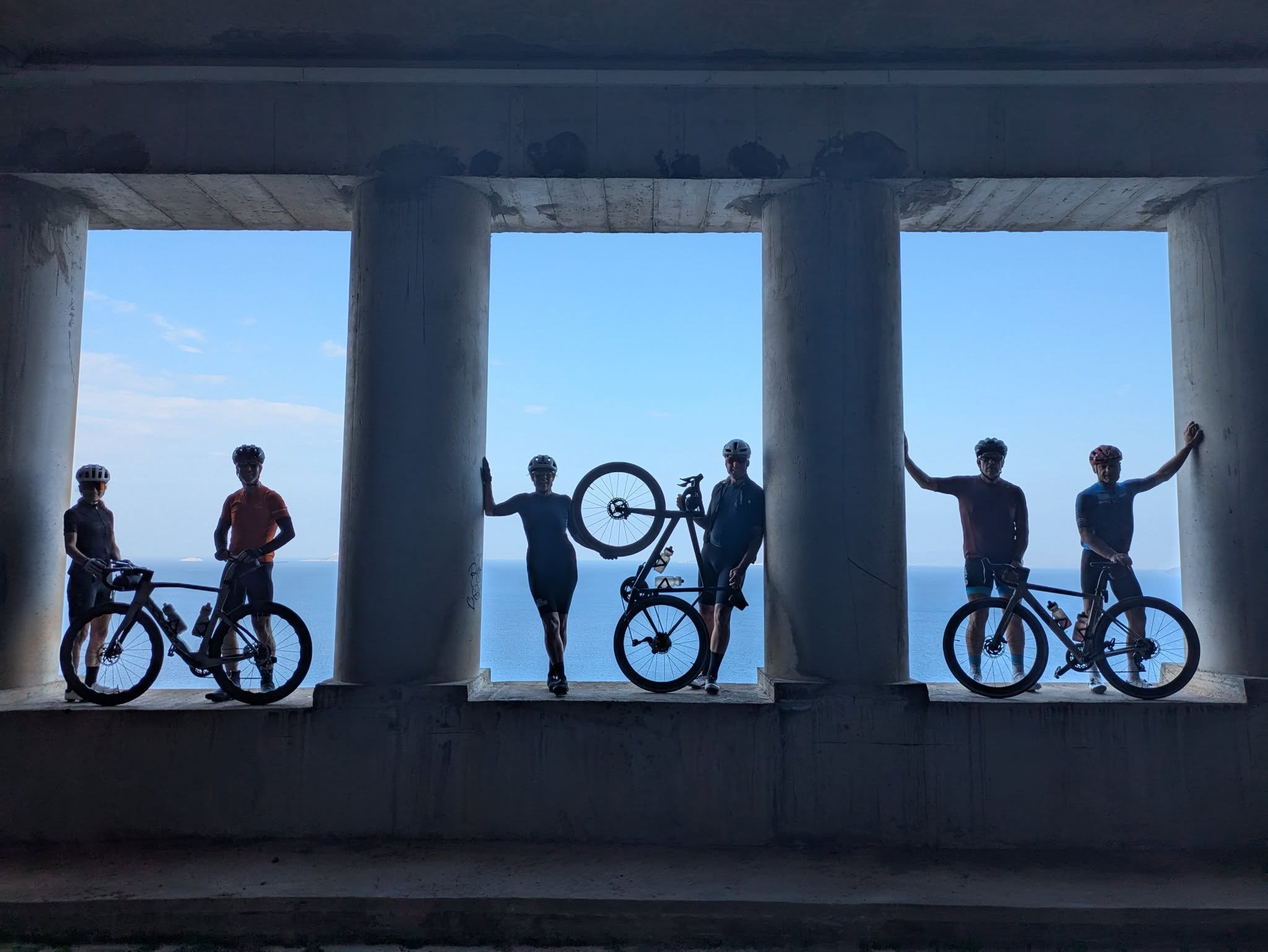
That decision didn’t come from a spreadsheet. It came from turning a corner, out in the unfiltered, unpredictable world and reacting to something amazing I just happened to stumble across. That’s serendipity, that’s simple joy.
If I hadn’t turned that corner, I daren’t think how much time I would still be spending staring at spreadsheets.
Most of the best moments in my life weren’t planned.
A bike creates these unplanned moments constantly - and unexpected, good moments, strung together, are what make life a little bit better.
Good reasons to see the world
Ride in completely different countries
Visit world-famous sites
Experience different cultures
Have your view on life grow
Ride across whole mountain ranges
Create an epic trip
Inspiring people to follow
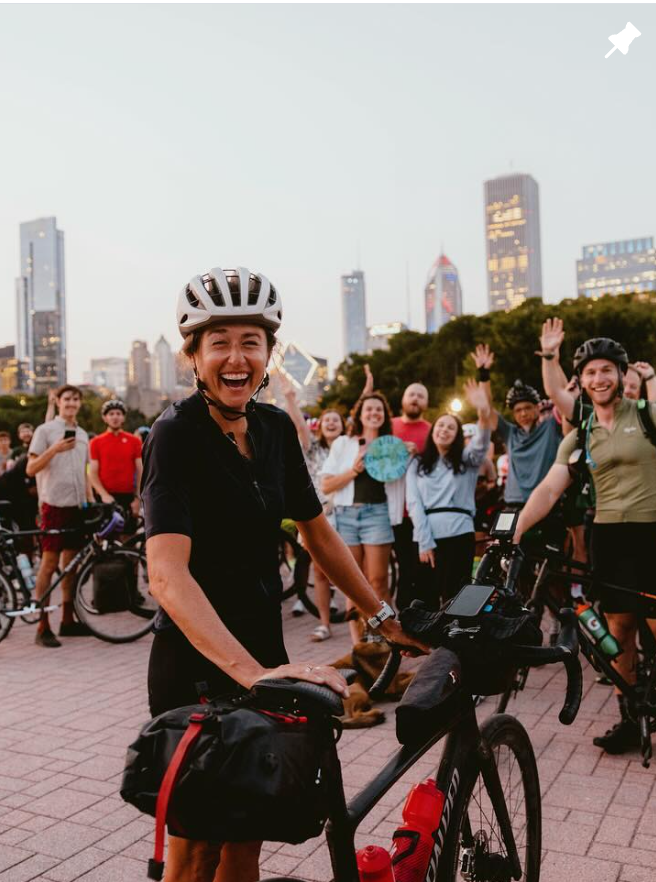
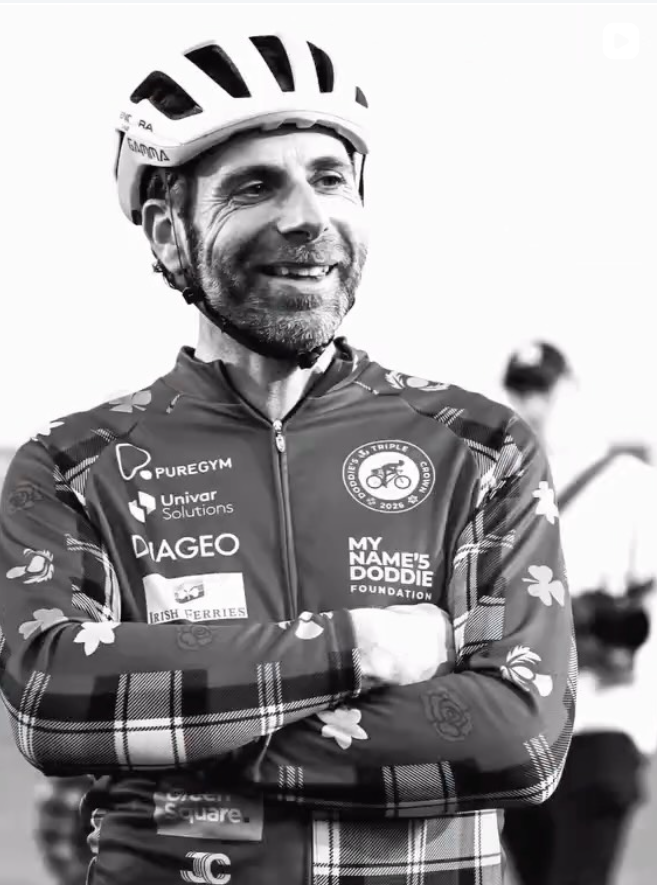
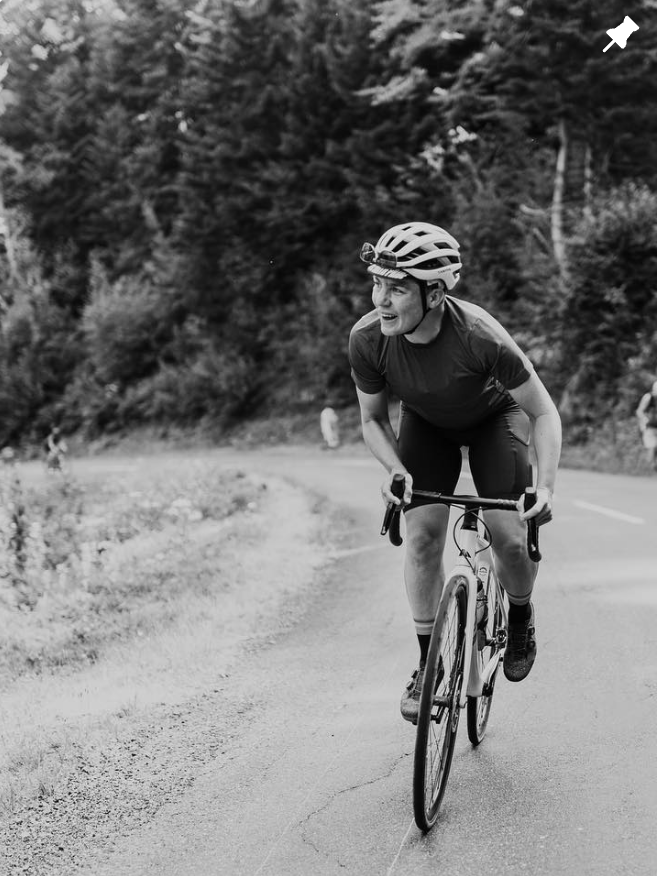
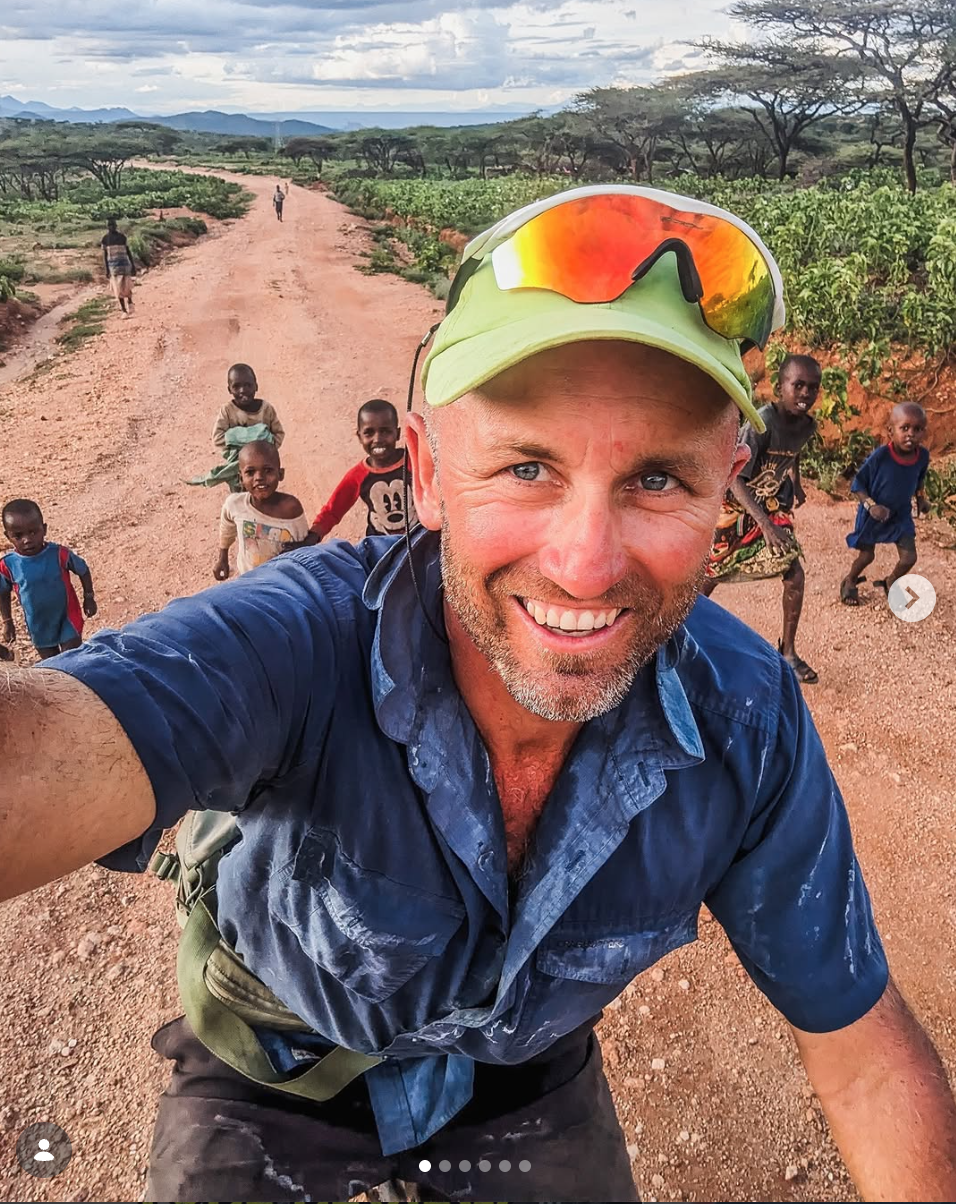
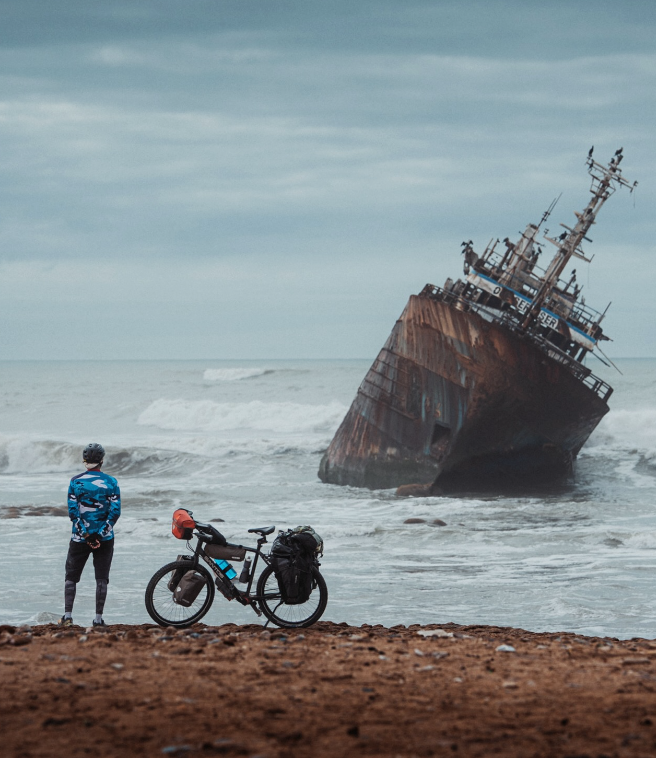
Inspiring and informative posts from a cyclist who’s ridden over 175,000 km in over 95 countries.
Bike messenger turned ultra-endurance cyclist. Author of What Goes Around, and Where There’s A Will.
Mark is a British long-distance cyclist, broadcaster and author. He holds the record for cycling round the world.
Ultra-endurance bike rider and racer
Cycling the world since 2011. 76,000+ km in 74 countries. Inspiring stories of travels, cultures, and life
Useful websites
The premier source for detailed routes, expert gear reviews, and trip planning, featuring a database of over 200,000 km of routes
Run by Tom Allen, the site offers extensive, practical tips and field notes for both seasoned and new adventure cyclists.
7.
COMING HOME
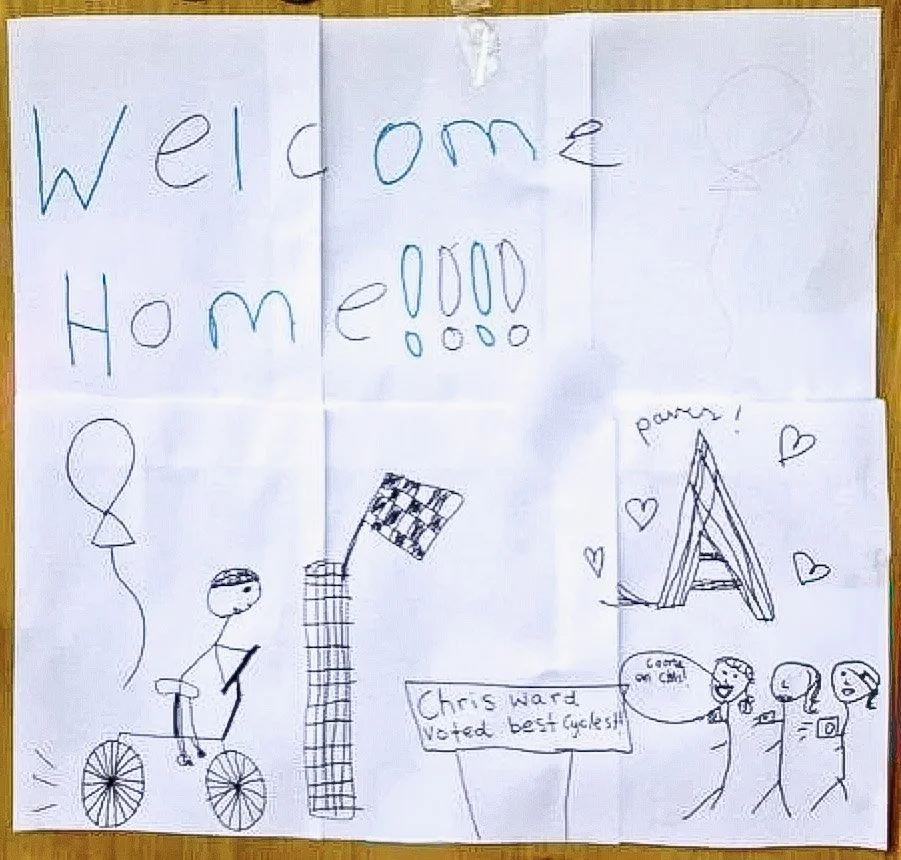
A sense of completion
I have returned from rides muddy, sunburnt, soaked through, windswept, aching, hungry and once or twice in quite a foul mood, brought on by my own bad planning. Even after all that, I still feel better than if I had not gone.
This is one of the hidden strengths of riding a bike: it does not require the ride to be perfect for you to feel better at the end. It might sometimes take the addition of a hot shower or the devouring of a large omelette, but you can have had a puncture, a headwind, a wrong turn, a mediocre coffee stop and legs that felt frustratingly stiff from the first mile and still arrive home more balanced than when you left.
That’s because you have been out in the world, using your body and dealing with real things - and when those simple human needs are met, it turns out they are often all we need.
It gives your head time engrossed in something else, and that restores proportion to the previous thoughts swirling around it.
Putting the bike away and walking through the door is always a relaxing feeling. Knowing that it means I can now be more patient with people, more open, more able to listen, more inclined to laugh and far less trapped in whatever spiralling story I was telling myself before I left.
That makes a real difference to my life.
As we said at the outset, this is not a cycling book. It’s a book about what cycling does for the rest of your life.
It makes you easier to live with and other people easier for you to live with, work seems less consuming, and home feels less like a place where you just exist between days and more like the place where you can relax and be your real self
All rides give you a sense of completion that modern life almost always fails to provide. You start, go somewhere, and finish. It satisfies your mind and body in a simple, old-fashioned way. Whereas much of modern work is abstract and never gets to be called quite finished, there is always one more message, task or thing hanging over till tomorrow. But at the end of the day, a bike ride is something you did and completed and can look back at with a feeling of satisfaction.
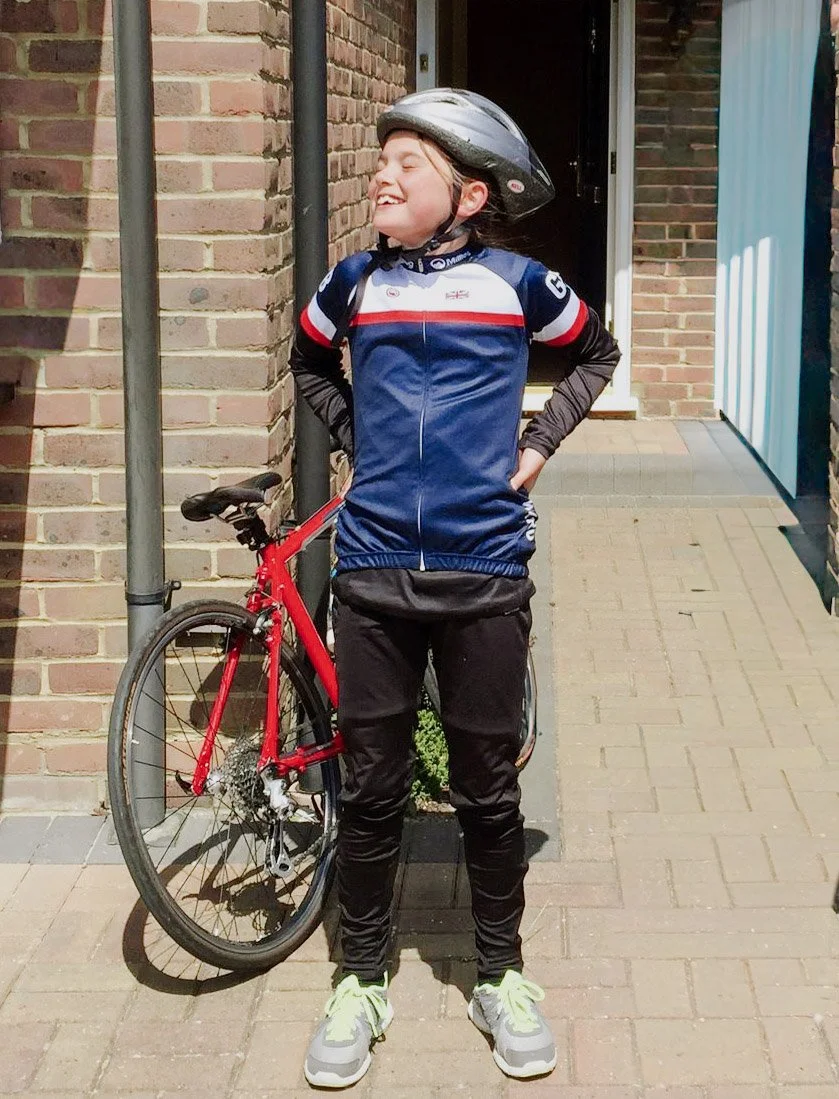
Having a daily feeling of completion, the knowledge that, if nothing else, you’ve at least done this today, should not be underestimated.
And even after the bonus of better sleep, the best bit of the ride will still be with you - that unexpected sighting of the sun, a nice interaction, a different view, fast downhill, a great new bakery, or even the friendly dog that chased you for no good reason. Your day contained something it would not otherwise have contained.
A simple bike ride can clear your head, strengthen your body, widen your world, introduce you to people,
remind you who you are, show you what you are capable of and return you home in a better frame of mind than when you left.
That is a remarkable return for such a very ordinary machine.
You do not need to ride across continents or become an expert; you do not need to prove anything, least of all to yourself.
You just need to go for a ride - then come home and enjoy the change in you.
Somewhere, perhaps tonight, someone will be riding home from work, and they’ll take the longer route without really thinking much about it. They’ll ride through a puddle and not care, and might stop at a pub they’ve never stopped at before and they’ll realise something simple - this is all it takes to make me feel better again.
In the end, that is what this book has been all about, not getting away from your life but going for a ride and coming back to it feeling a little bit better.
8.
ALL YOU NEED TO GO
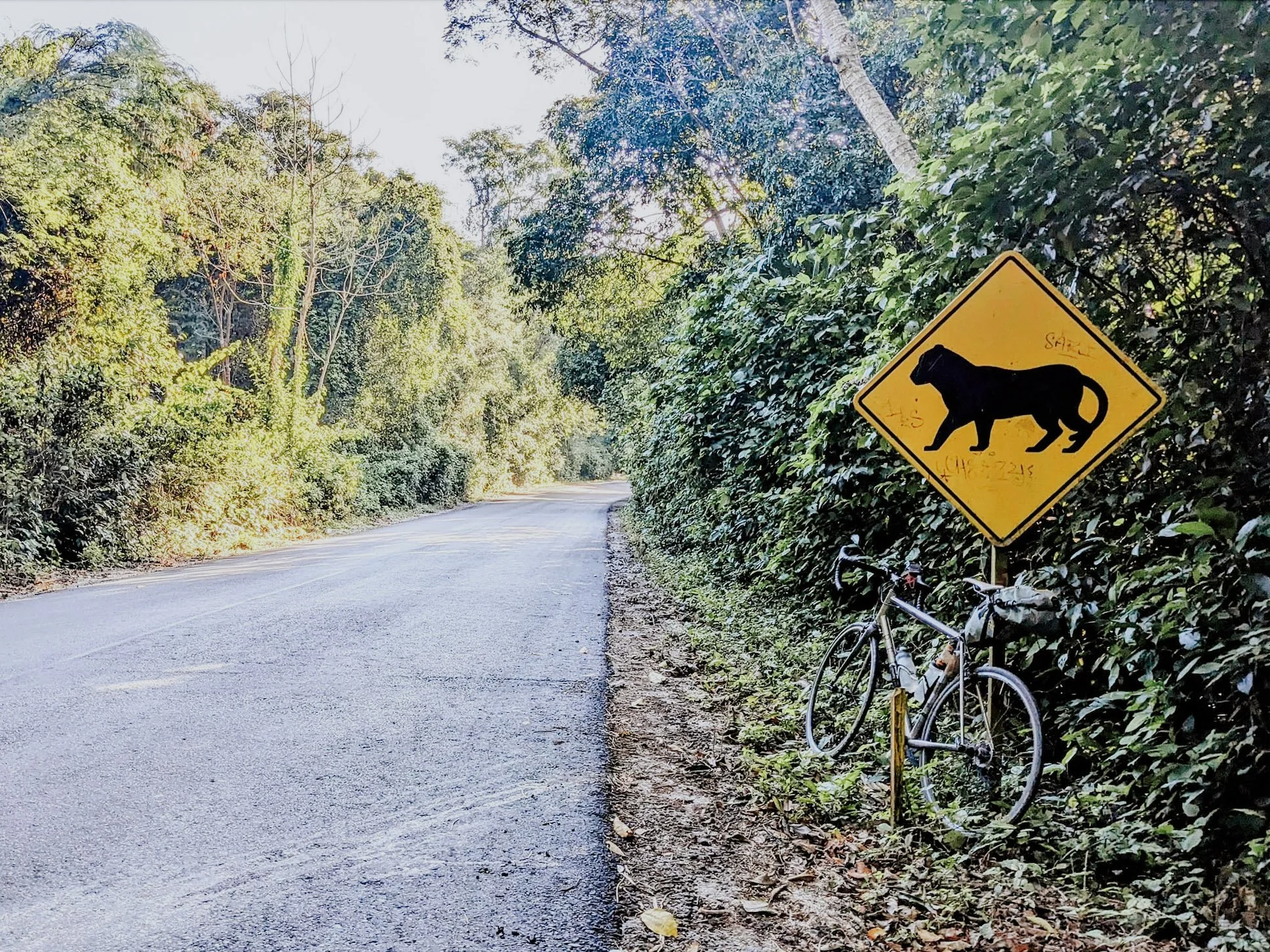
TOP TIPS FOR GETTING THE MOST OUT OF THE TIME YOU HAVE
These are just as applicable if you are riding around the block or around the world.
1. The first rule
If it makes you want to ride, it’s allowed.
2. You don’t need to know everything about your bike
If something goes wrong and you don’t know how to fix it, you have four options for help: an ever-helpful local bike shop, an instructional YouTube video, a question to AI, or a helpful passing human being.
• A local bike shop can fix almost anything.
• YouTube will show you how.
• Someone nearby will usually help.
There’s no embarrassment - there are two kinds of cyclists: those who know everything about bottom brackets, gear ratios and their FTP’s and those who just get on the bike.
3. You don’t need to look like a ‘cyclist’
Unless you are training to win a race, wear what you already own. There is no dress code; if Lycra makes you feel cool or fast, wear it. If it makes you feel uncomfortable, don’t. If you want to design your own cycling kit, you can even do that. No one outside a tiny corner of the internet cares.
4. It is worth knowing one thing - how to mend a puncture
If your bike works, a puncture is likely the only thing that may go wrong on a ride – but nowadays bike tyres are so well made that even punctures should be very rare.
Once you’ve learnt (via a friend or YouTube video) have the four bits needed with you to do it yourself – pump, tyre levers, patches and spare inner tube.
5. Age is no excuse
Riding is one of the few outdoor activities you can keep doing well into later life. Go at your own pace and enjoy the fact that you still can.
6. Cycling is not as dangerous as the media makes out
Accidents make media headlines and are highlighted purely because they attract lots of online comments, whereas ordinary rides don’t. Use a bit of common sense in busy cities, and you will find there are plenty of relaxed and safer routes.
THIRTY MINUTES
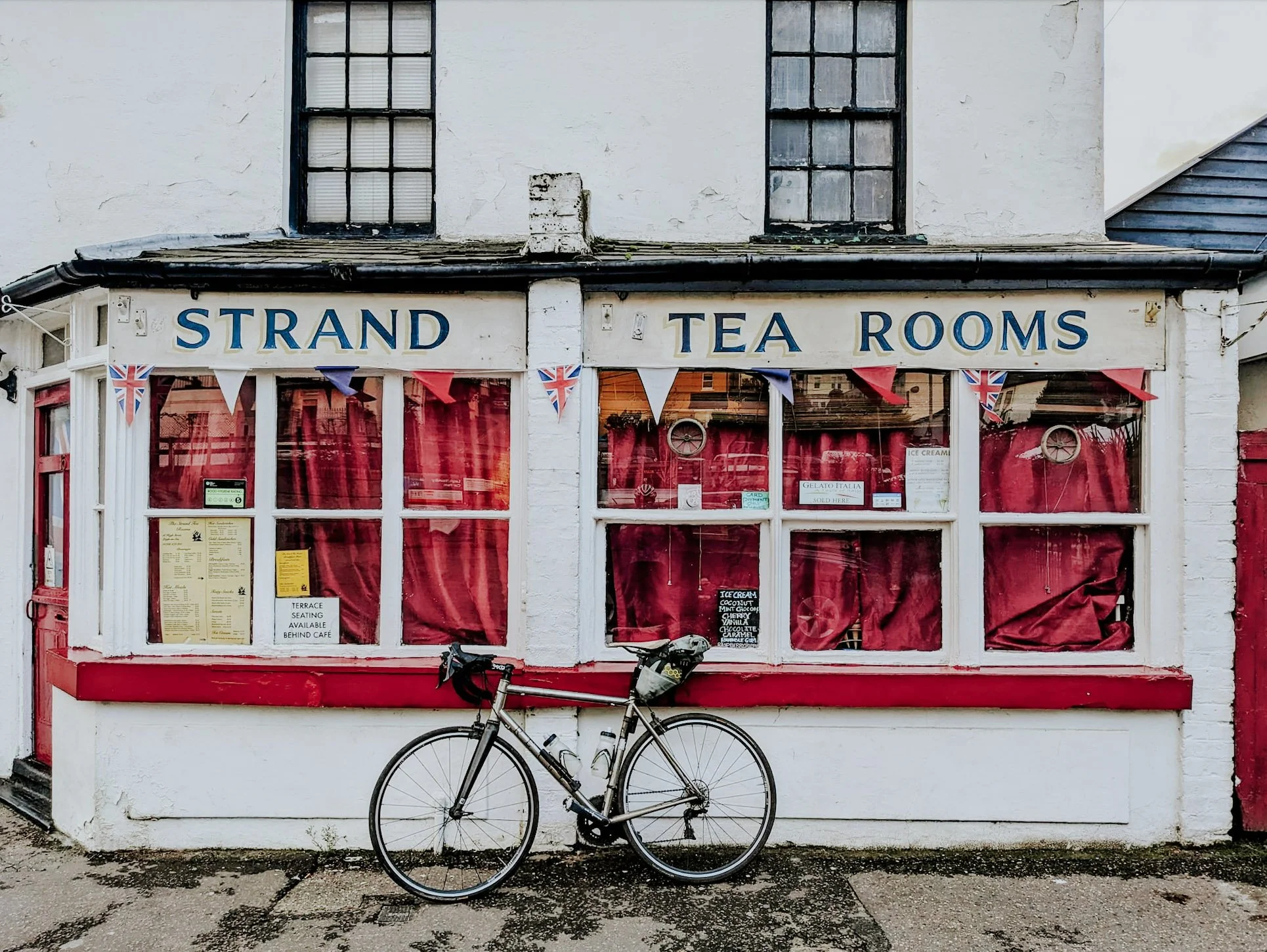
1. If you’ve got time to scroll, you’ve got time to ride
Thirty minutes is all it takes to make a difference to your day.
2. Your bike is good enough (for now)
If it rolls, steers and stops, it’s a bike. If it doesn’t, a bike shop will make it roll, steer and stop. Unless you plan to carry it up Everest, it doesn’t matter if it’s old and heavy. Your mood weighs more than your bike.
3. Don’t wait for the perfect moment
Better weather, more money or quieter months never happen. The day you feel like going for a ride is the perfect day to do it.
4. Don’t rush
Leaving a little earlier is a lot more enjoyable than riding to a deadline. The best rides happen when you are not late.
5 Create artificial deadlines to ride
If you struggle to find the time for a quick ride, plan it for later in the day. You will find that you will finish your work in time for that ride, when, if you didn’t plan it in, the same work would no doubt take you until the end of the day to complete.
A FEW HOURS
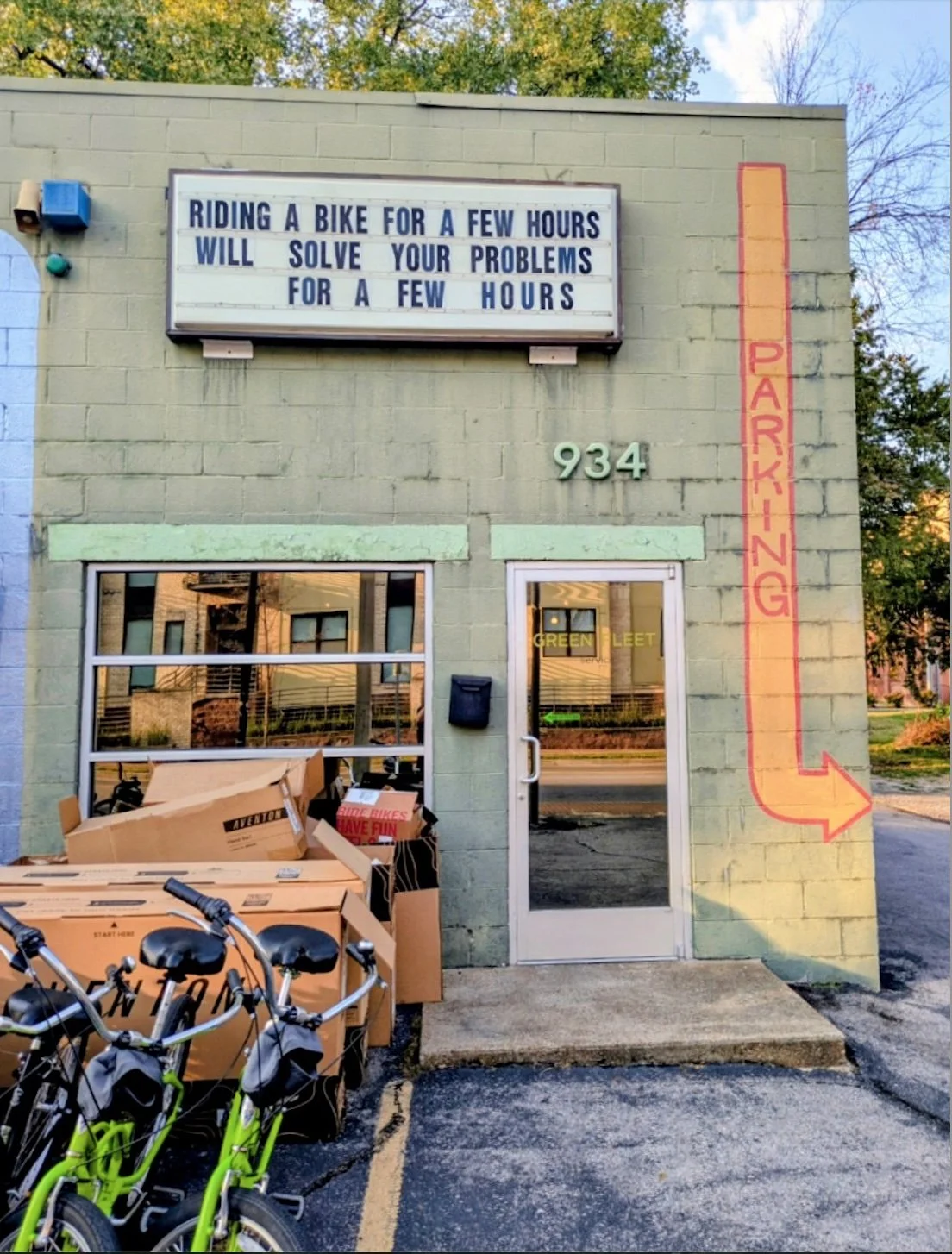
1. Do not let buying ‘kit’ become a barrier
A cheap bike that gets used beats an expensive bike full of upgrades that lives in a hallway. Upgrade your bike or buy a useful gadget only when you genuinely want or need to, not because someone on the internet told you to.
2. You don’t need to impress anyone
Nobody worth knowing is annoyed by you going slower than them. If someone is, let them vanish into the distance and enjoy the quiet. Don’t ever apologise for going slower than someone else. It is not a weakness.
3. E-bikes are not cheating
If an e‑bike gets someone outside, smiling, and moving, it’s doing its job. It’s not cheating. Sometimes it’s the only one that works – from getting youngsters across cities to adults over hills.
4. You don’t need to do the same ride as anyone else
Some people like riding in groups, some like solitude, some like hills, some like flat, some like ten miles, some like the corner shop. All of it counts. Just ride what you want to ride.
5. There is clothing for every type of weather
Waterproof, showerproof, windproof, heat-wicking, breathable. These days, the weather doesn’t need to be an excuse not to ride
6. There are always quiet routes
You don’t need to battle traffic anywhere. At the very least, you can attach your phone to your handlebars and let the map on it guide you to the quietest cycling route - with hills, without hills, on gravel, the most direct, around the houses – the choice is yours.
7 Acknowledge your fellow riders.
If you pass another cyclist coming the other way, give a small nod or wave of acknowledgement – this is the unspoken recognition between two people vulnerably outside, moving under their own power. It’s nothing much, and you may never meet again or even speak the same language, but small connections build to make days feel a bit nicer than they otherwise would.
WHOLE DAY
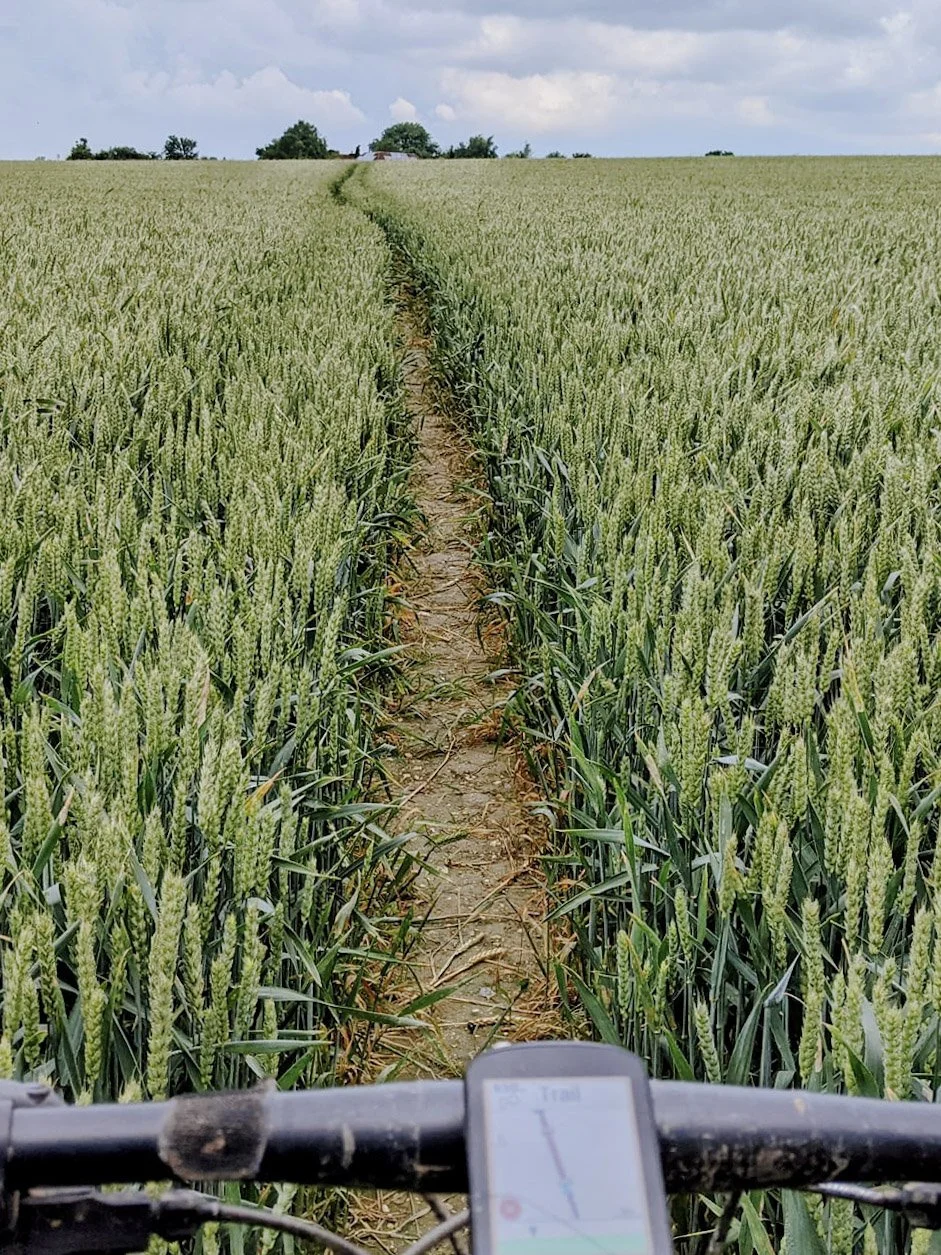
1. You don’t need to wear cycling shoes
Those shoes that make cyclists sound like tap dancers. They attach you to the bike and will help you go a bit faster, but until that’s important, trainers are more than OK.
2. Having a perfect route is not a priority
You can create a route in an app, follow a river, or follow your nose. If you get mildly lost, congratulations: you’ve stopped commuting and started exploring.
3. Riding for a day doesn’t have to mean riding the whole day
Six hours on a bike is a big day for most people. Two hours, coffee. Two hours, lunch. Two hours, finish. Go slower or for less time, and the only difference is that you don’t go as far; the benefits and experience are still the same.
4. Turning back early is not failure
We all have off days – mentally or physically – either our mind or our stomach might want us to be elsewhere.
5. It’s not a test of your character
You don’t have to suffer to reap the benefits. There’s no glory in suffering. If you want a hard ride, do a hard ride. If you want a gentle one, do that.
6 Learn the basics of riding in a group
Almost every cycling club has introductory rides for beginners, where they show you how to best enjoy riding in a group. You don’t have to join the club to try this; you get to learn and see whether this is something you want to do more of.
FEW DAYS
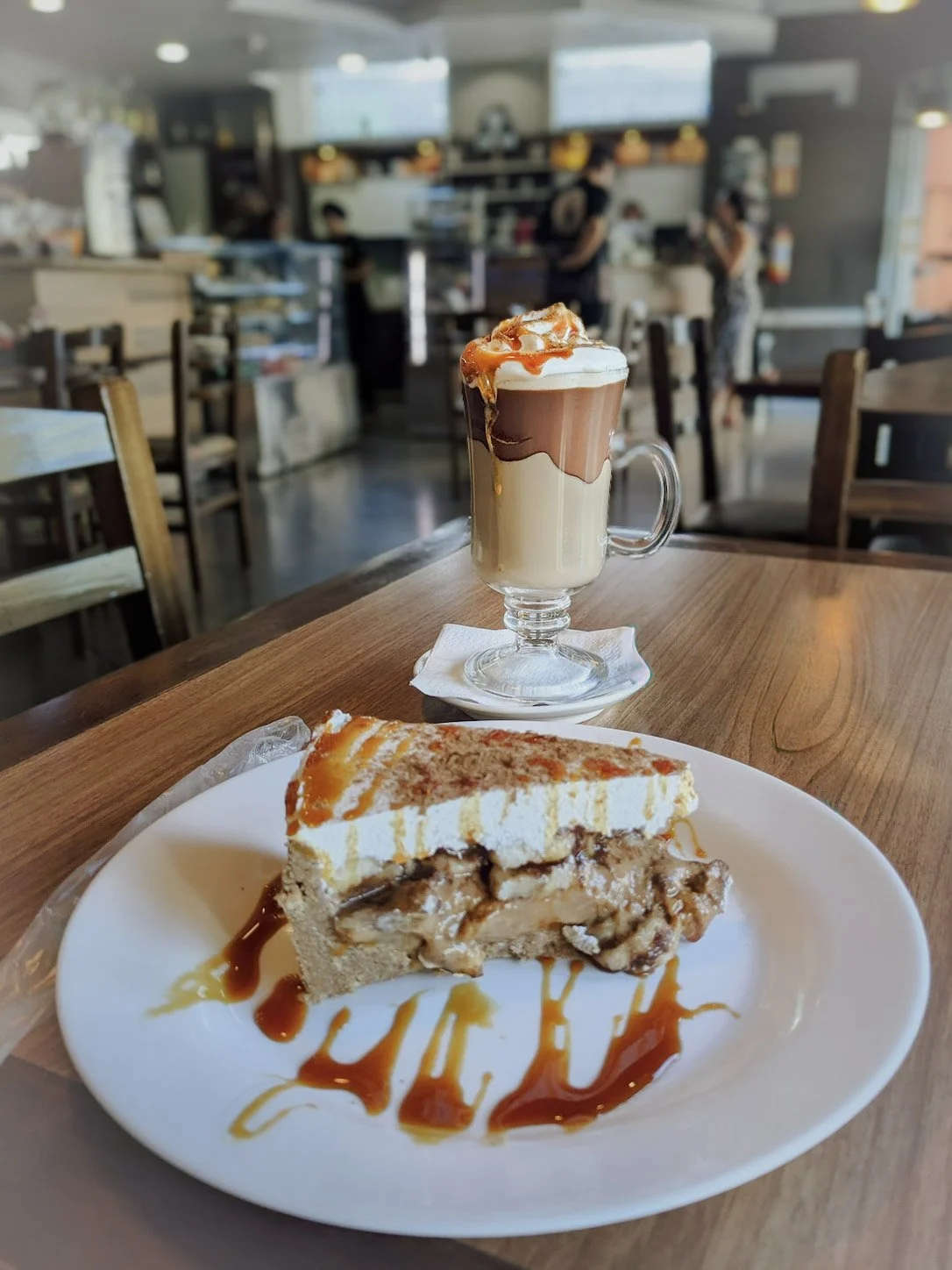
1. You don’t need to eat special food
Unless you’re racing for a medal, just drink water and eat normal food. Bread, fruit, a sandwich, coffee, and cake. If you fancy a gel, have a gel. If you fancy a bacon roll, have that. This is wellbeing, not a laboratory.
2. You don’t need to get ‘fit enough’ first
Peak fitness isn’t required to get on the bike; it’s the side effect of riding it. Ride and your body will get fitter and healthier
Unless you’re racing, you do not need a training plan to do things called ‘intervals’ or ‘hill repeats.’ And you do not need a gym membership. You just need consistency to reap the benefits.
3. Bad days can still end well
Yes, it’s horrible weather, but not horrible enough to make you some sort of hero for simply getting wet, you’re just outside. And the hot shower you might need afterwards provides one of the best feelings available to adults.
4. You don’t need to be brave
Any concern before you leave is usually far worse than anything that actually happens on the road. Start small, go again, and your confidence will grow in tune with your time on the bike.
5. As long as you eat and sleep, you can keep going as long as you want
At the start of a multi-day cycling trip, most people worry about whether they can keep going or will get progressively worn out. But as long as you eat and sleep well, you will get stronger. Your main priority for enjoying a tour isn’t a training plan; it’s having plenty of food and rest along the way.
By day four or five, your body adapts. It always does - and you’ll be surprised how much your food intake reduces.
GOING ABROAD
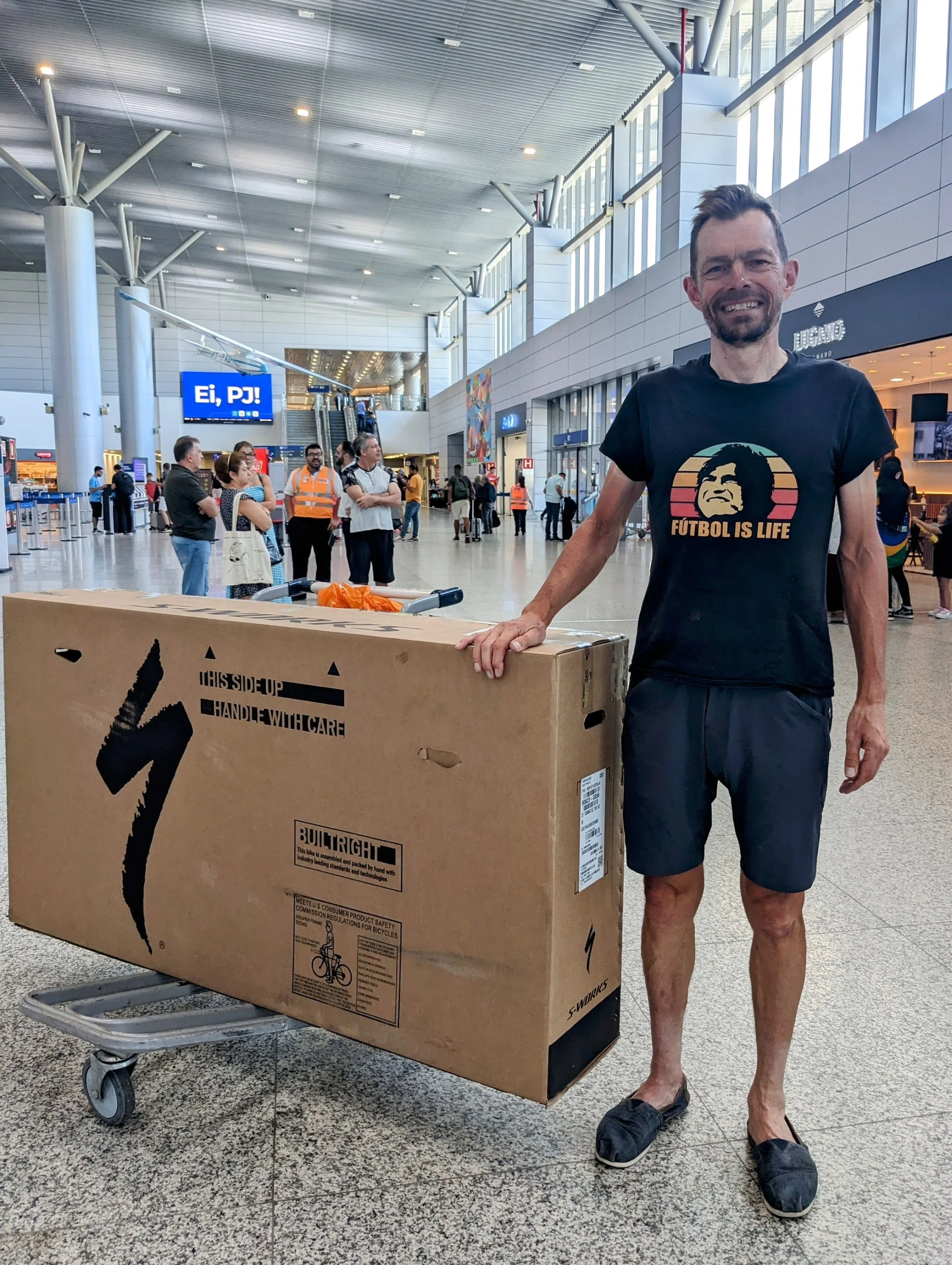
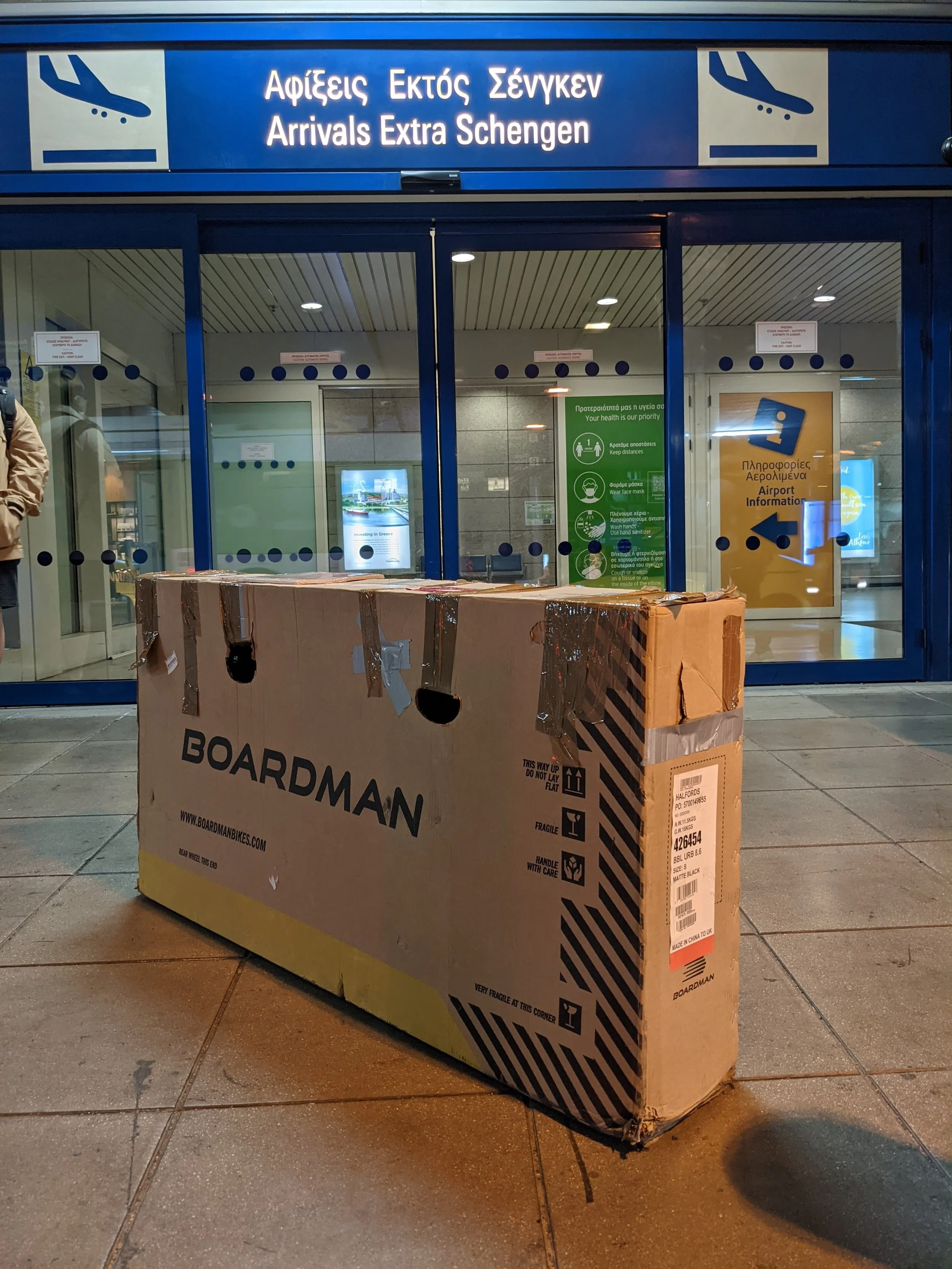
1. Get your bike checked before you travel
Unless you’ve become a bike mechanic, have your bike serviced in your local bike shop before you take it abroad - and if the tyres are worn, replace them with new ones. This will be invaluable money spent to reduce the risk of bike problems, punctures, or stress while you enjoy your trip.
2. You don’t need anything more than a cardboard box
People assume flying with a bike requires expensive cases and complicated logistics. But every brand-new £5,000 bike in a shop arrived in a cardboard box. If it’s good enough for them its good enough for yours.
Ask your local bike shop if they can save a box, and if you’re doing a one-way trip, contact a bike shop near your departure point, and see if they can do likewise.
I’ve arrived in cities, put the bike back together in the arrivals hall, and ridden straight out of the airport. When I’m nearing the end of a one-way trip, I call ahead to another local bike shop and ask if they have an empty box. They always have - Tel Aviv. Budapest. New Orleans. Dhaka. Guatemala City…
3. You don’t need the latest technology
There’s a lot of tech you can use on your bike – a lot of it is useful, but you can also ride anywhere without any of it. It is all optional. Don’t let not having all the latest gear stop you from riding anywhere. Most people riding around the world are on old bikes with a hotchpotch of gear.
4. You never need to be alone
If you ride abroad on your own, you will find people want to talk to you in most places and on most days. If you ride with others or even just one friend, people are too polite to interrupt you, and you can end up riding across whole continents whilst only talking to your riding colleagues.
The world is full of strangers who become friends the moment you share a road together.
5 Dogs, camels and kangaroos will usually leave you alone
Dogs around the world are like those at home; if they’re not asleep or too lazy, they bark at cyclists. If they can be really bothered, some occasionally like to run alongside - but I have never been attacked or bitten by a dog – the same has gone for camels and kangaroos. There is something about cycling that can spook animals, but as long as you’re not encroaching on their owner's property, they will almost always just stand and watch you cycle past.
6 Cycling up a mountain is easier than cycling up a number of smaller hills
In the hills, you are either going up or down; you are working hard, your heart rate is high, then you free-wheel down, relax, and into another short, sharp hill and another spike in your heart rate. The constant stop-start of hills wears you down, but there’s a peaceful, meditative feeling in the steady effort required to cycle up a mountain.
7 Anywhere in the world, a local bike shop is your friend
You don’t work in a cycle shop unless you like cycling and know how to fix a bike. Around the whole world, bike shop owners will invariably let you borrow their pump, help you with any problem, be interested in where you are from and offer advice about where you are going.
8 Google is your translator friend
Don’t speak the language? The translation apps on your phone are phenomenal - for translating live conversations, signposts, menus, price lists, anything. Their use in conversations often results in a fair amount of bemused hilarity.
TO SEE THE WORLD
1. Don’t research the fun out of it
It is all too easy these days to research all the adventure out of an adventure - you can see on your phone every single kilometre of road on your upcoming trip if you really want to. Basic research is useful – where do you want to visit, what do you want to see – but having a loose plan to ride between them often leads to the best experiences.
Leave enough time for surprises that might turn up on any day.
2. You can get the best advice on WhatsApp 24-7
There are actually always a lot of people of all nationalities making their way by bike around different parts of the world, and a lot of them have likely been down the road before you, even when you feel way off the beaten track. There are numerous WhatsApp groups of these cyclists – helping, supporting and aiding each other. Join one for the region you are planning on cycling through.
3 Locals know best
If you want information in advance of a trip, you can best get it by joining a cycling group for the place you are going to on social media and asking what you need to know. There are online groups for cyclists in every city in the world, and members are always keen to help fellow cyclists visiting their hometowns.
4. You don’t need to book everything in advance
Your new cycling destination might appear very alien to you, but fellow humans live there, and like us, they need food, accommodation and petrol – so it is rare to ride anywhere where there aren’t shops and beds available within a few hours cycling.
And unless it is a summer or winter resort in the height of the season, the internet booking sites will still have cheap accommodation available right up until the time you want to lay your head on a pillow.
Once you book every night in advance, you’ve created a schedule you now have to follow. Some of my best memories come from when I’ve asked if I can pitch my tent on someone’s property or even just knocked on hotel doors and asked if they had a room available.
5. You are not a target
In many places, cyclists are often the poorest people on the road - carrying supplies into the dark with no lights on and getting on perfectly well. If you arrive with good lights and a bit of common sense, you do not need to overthink safety
Be sensible, not scared. Most places and people are fine and decent. You are far more visible and far less interesting (for theft) than your anxiety may suggest.
6. Help is everywhere
If you are in a situation where you need help, getting out of that will likely lead to memories you cherish for years – almost anybody you ask will help you, and there is nothing more life-affirming than receiving kindness from strangers.
7. The final rule
Enjoy making your life bigger and better; that’s the whole point.